按市值计价

Search documents
“比特币大户”录入百亿亏损
3 6 Ke· 2026-02-06 07:36
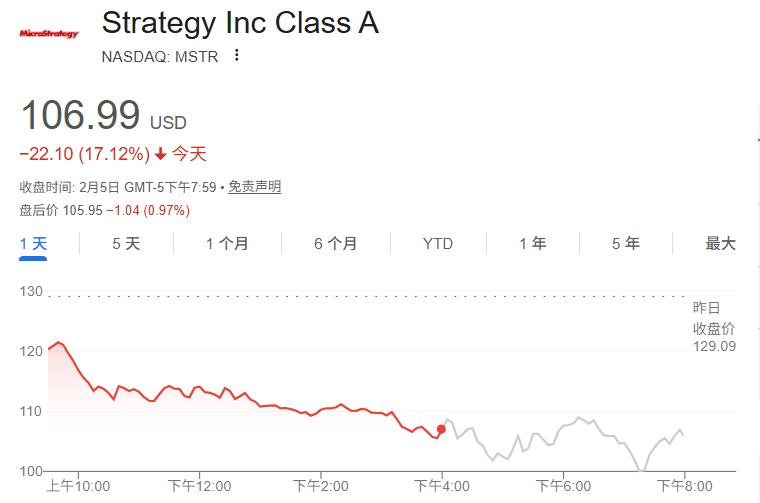
周四(2月5日),Strategy顶着数字资产市场的压力,公布了其2025年第四季度的财报。 Strategy的季度净亏损达到124亿美元,每股收益为-42.93美元,远低于预期的2.97美元。亏损主要源于会计 准则要求的按市值计价(mark-to-market)带来的174亿美元未实现公允价值损失。这一巨大差距引发了对公 司财务健康状况和战略方向的质疑。 截至2025年12月31日,该公司持有713,502个比特币,总成本为542.6亿美元,平均每枚成本为76,052美元, 仍保持这其作为全球最大比特币企业持有者的地位。但是,这也是该公司自2023年以来,其比特币持仓市值 首次跌破其累计成本价。 在投资者对业绩的失望情绪中,Strategy股价周四重挫17.1%。不仅抹去了美国大选后的所有涨幅,也导致该 股较2024年11月的历史高点下跌了近80%。 周五(2月6日),比特币一度向下触及60000美元,日内跌超11%。与去年10月初创出历史新高的12.6万美 元相比,比特币已下跌超52%。 此次大幅度回调对主要的加密货币股票造成了沉重打击,其中迈克尔·塞勒(Michael Saylor)领导的比特币 储备公 ...

美国众议院方案拟为稳定币及加密货币质押寻求税收“避风港”
Xin Lang Cai Jing· 2025-12-20 23:10
格隆汇12月21日|据市场消息,美国众议院的一对两党组合正在制定一项加密货币税收框架。该框架将 为部分稳定币交易提供"避风港",并推迟对通过验证区块链交易获得的奖励(质押奖励)征税。该草案建 议:涉及受监管、挂钩美元且价值低于200美元的稳定币交易将免征资本利得税;同时,纳税人可选择 将奖励的纳税时间推迟五年。此项提案将把加密货币纳入管理证券(在某些情况下为大宗商品交易)的税 收制度中,并允许加密货币交易者使用"按市值计价"(Mark-to-market)的会计处理方法。 ...
观察| 资产暴跌时,钱去了哪里?
未可知人工智能研究院· 2025-12-16 10:02
Core Viewpoint - The article discusses the volatility and illusion of wealth in the AI industry, emphasizing that perceived losses in market value are often just numerical illusions rather than actual wealth being transferred or lost [2][3][4]. Group 1: Market Dynamics and Illusions - The AI industry experienced a dramatic rise and fall in valuations, with companies like SenseTime and Cambricon losing significant market value as the hype around AI waned [2][3]. - The concept of "wealth" in the market is described as a collective illusion, where perceived losses are merely a return to reality rather than actual money disappearing [3][4]. - The valuation mechanisms in the market are compared to AI's propensity for "hallucination," where both can create misleading perceptions based on limited data [6][8]. Group 2: Valuation Mechanisms - The article illustrates how market valuations can fluctuate dramatically based on limited trading activity, leading to significant changes in perceived wealth without any actual change in the underlying assets [9][10]. - It highlights that the majority of stocks remain untraded, yet their valuations are influenced by the prices of a small fraction of shares that do trade [26][28]. - The phenomenon of "mark-to-market" accounting is discussed, where the value of all shares is adjusted based on the price of a few traded shares, leading to widespread valuation changes [10][12]. Group 3: Wealth Creation and Destruction - Wealth is described as not being conserved like physical entities; it can be created or destroyed based on market perceptions and valuations [8][17]. - The article emphasizes that the disappearance of wealth during market corrections is not due to funds being withdrawn but rather a change in collective valuation consensus [28][39]. - The example of a fictional AI chip company illustrates how market sentiment can lead to rapid valuation changes, demonstrating the volatility inherent in the AI sector [9][10][12]. Group 4: Insights on Investment Behavior - Investors are cautioned to be aware of the speculative nature of AI stocks, where hype can lead to inflated valuations that do not reflect true company performance [70][71]. - The article advises distinguishing between the technological value of AI and the market's speculative valuations, which can often diverge significantly [71][72]. - It encourages a rational approach to understanding market fluctuations, recognizing that wealth is not solely defined by stock prices but also by skills and knowledge [73][74]. Group 5: Broader Economic Implications - The article draws parallels between the AI market and the real estate market, illustrating how perceived value can change without any physical alterations to the assets themselves [54][60]. - It discusses the broader economic impact of wealth disappearance, particularly in the context of consumer behavior and economic growth [61][62]. - The phenomenon of wealth illusion is further exemplified through the cryptocurrency market, where valuations can be even more volatile and disconnected from tangible assets [63][64].