
控制权转移

Search documents
电商企业收入如何正确核算?全流程教程:9个步骤零失误,新手也能轻松掌握
Sou Hu Cai Jing· 2026-01-22 08:24
Core Viewpoint - The article emphasizes that e-commerce companies should recognize revenue based on the transfer of control of goods to customers rather than cash receipts, outlining nine key steps for compliant and efficient revenue recognition. Group 1: Preparatory Work - Over 70% of e-commerce companies experience revenue recognition errors due to inadequate preparation, making foundational work essential for smooth implementation [3]. Group 2: Step-by-Step Implementation - Step 1 involves order receipt and contract identification, establishing the basis for revenue recognition [4]. - Step 2 focuses on identifying performance obligations to clarify revenue recognition units [4]. - The article outlines the "Five-Step Model" from the revised Accounting Standard No. 14 on Revenue, which includes identifying contracts, performance obligations, determining transaction prices, allocating prices, and recognizing revenue [5]. - A specialized revenue recognition system should be established to clarify key issues such as revenue recognition timing and refund processing [5]. - Financial personnel must understand the core requirements of the new revenue standards, particularly the concept of control transfer [5]. - Orders must be tracked through a status ledger, with revenue recognition only occurring when the contract conditions are met [5]. Group 3: Revenue Recognition Steps - Step 3 involves determining the transaction price to accurately measure revenue [7]. - Step 4 requires allocating the transaction price among performance obligations [8]. - Step 5 addresses the handling of shipments, ensuring proper accounting for goods dispatched [8]. - Step 6 focuses on the judgment of control transfer, which is critical for recognizing revenue at the right moment [8]. - Step 7 details the revenue recognition and accounting treatment, completing the core revenue recognition actions [9]. Group 4: Handling Variable Considerations - Revenue recognition must account for variable considerations to avoid overstating revenue, which could lead to tax risks [10]. - The allocation of transaction prices must be consistent to ensure comparability in revenue recognition [10]. Group 5: Platform Fees and Refunds - Step 8 emphasizes the correct treatment of platform fees, which should be recorded as sales expenses rather than directly reducing revenue [13]. - Step 9 outlines the process for handling refunds and returns, ensuring timely adjustments to recognized revenue [15][17]. Group 6: Common Pitfalls and Solutions - Common pitfalls include recognizing revenue based on cash receipts, directly deducting platform fees from revenue, and failing to account for variable considerations [18][19]. - Solutions involve strict adherence to control transfer timing for revenue recognition and maintaining accurate records of income and expenses [19]. Group 7: Compliance and Verification - The article provides standards for verifying the accuracy of revenue recognition, ensuring compliance with accounting principles and tax regulations [22]. - Automated tools and data dashboards are recommended to enhance efficiency and accuracy in revenue recognition processes [22]. Group 8: Conclusion and Advanced Techniques - The core logic of e-commerce revenue recognition revolves around control transfer, with nine steps to follow and five common pitfalls to avoid [20]. - Mastery of these processes can significantly improve operational capabilities in revenue recognition [20].


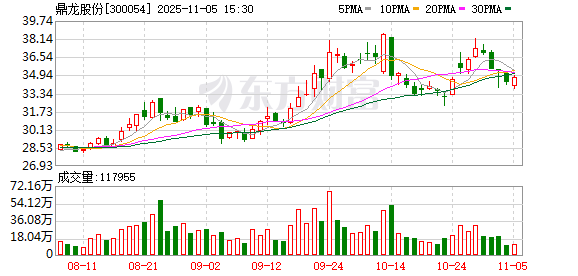
鼎龙股份实控人拟入主中元股份 两家公司将“各过各”
Mei Ri Jing Ji Xin Wen· 2025-11-05 15:35
Core Viewpoint - The control transfer of Zhongyuan Co., Ltd. to the Zhu family of Dinglong Co., Ltd. is a strategic capital operation that reflects a significant shift in ownership and governance, with both companies planning to continue their independent development in their respective fields [2][3][6]. Company Overview - Zhongyuan Co., Ltd. specializes in the research, manufacturing, and sales of products related to power system intelligent recording analysis, time synchronization, distribution network automation equipment, and comprehensive automation systems [3]. - Dinglong Co., Ltd. focuses on semiconductor materials and general printing consumables [3]. Control Transfer Details - The control transfer involves a combination of voting rights entrustment and a private placement of 500 million yuan, with the Zhu family set to control 26.68% of the voting rights in Zhongyuan after the transfer [4][6]. - As of November 3, 2025, Zhu Mengqian holds 4.92% of Zhongyuan's shares, and the original controlling shareholders will entrust a total of 20.71% of their voting rights to the Zhu family [4][5]. Financial Performance - Zhongyuan Co., Ltd. reported a revenue of 554 million yuan in 2024, a year-on-year increase of 23.57%, and a net profit of 77 million yuan, up 28.05% [6]. - In the first three quarters of 2025, Zhongyuan achieved a revenue of 415 million yuan, a growth of 18.65%, and a net profit of 113 million yuan, a significant increase of 69.27% [6]. - Dinglong Co., Ltd. reported a revenue of 1.732 billion yuan in the first half of 2025, a year-on-year increase of 14%, and a net profit of 311 million yuan, up 42.78% [6]. Future Development Plans - Both companies will maintain their independent development strategies, with Zhongyuan continuing to focus on the smart grid sector and Dinglong enhancing its position in the semiconductor materials field [7]. - The new controlling shareholders of Zhongyuan are expected to bring management and decision-making expertise from Dinglong to improve Zhongyuan's governance and operational efficiency [7].


佰仁医疗: 佰仁医疗控股股东和实际控制人行为规则(2025年8月)
Zheng Quan Zhi Xing· 2025-08-27 14:02
Core Points - The document outlines the rules governing the behavior of the controlling shareholders and actual controllers of Beijing Bairen Medical Technology Co., Ltd, aiming to enhance corporate governance and ensure the company's healthy development [1][2][3] Group 1: General Principles - The rules are established to improve the corporate governance structure of the company and ensure its normal operation [1] - Controlling shareholders and actual controllers must comply with laws and regulations, exercising their rights without harming the interests of the company and other shareholders [2] - They are required to act in good faith, maintain the company's quality, and uphold the common interests of all shareholders [3] Group 2: Corporate Governance - Controlling shareholders and actual controllers must establish systems to clarify decision-making processes for significant matters and ensure the company's independence [5] - They should protect the integrity of the company's assets and not infringe upon the company's rights to its property [6] - They are prohibited from influencing the company's personnel independence and financial independence through improper means [9][10] Group 3: Information Disclosure - Controlling shareholders and actual controllers must fulfill their information disclosure obligations, ensuring that disclosed information is truthful, accurate, complete, and timely [6][7] - They must notify the company of significant events that could impact the company's securities trading prices [7][8] - They are required to maintain confidentiality regarding undisclosed significant information and not use it for personal gain [11][12] Group 4: Share Trading and Control Transfer - Controlling shareholders and actual controllers must adhere to legal regulations when trading company shares and must report any changes in shareholding that exceed specified thresholds [38][39] - They are prohibited from increasing their shareholding under certain conditions, such as during specific reporting periods [41] - Any transfer of control must be conducted fairly and without harming the interests of the company and other shareholders [42][43]
