
半导体材料

Search documents
新材料行业月报:几内亚考虑收紧铝土矿供应,具身智能领域首个行业标准正式发布-20260330
Zhongyuan Securities· 2026-03-30 11:22
Investment Rating - The report maintains an investment rating of "Outperform the Market" for the new materials industry [1][8]. Core Insights - The new materials sector underperformed the CSI 300 index in March, with a decline of 11.46%, lagging behind the CSI 300's drop of 4.64% by 6.81 percentage points [8][12]. - The overall market valuation for the new materials index is at a PE (TTM, excluding negative values) of 30.29, which is a decrease of 8.26% from the previous month, indicating a relatively high valuation compared to the overall A-share market PE of 17.84 [21][23]. - The report highlights the continuous growth in demand for new materials driven by advancements in manufacturing and the integration of technologies such as artificial intelligence, suggesting a favorable long-term outlook for the sector [8][21]. Summary by Sections Industry Performance Review - The new materials index's performance in March was weaker than the CSI 300, with a total trading volume of 25,626.40 billion yuan, reflecting a 55.45% increase from the previous month [12][8]. - Most stocks in the new materials sector experienced declines, with only 22 out of 170 stocks rising [17][16]. - The valuation of the new materials sector decreased in March, ranking 10th among 30 major industry sectors in terms of PE [21][23]. Important Industry Data Tracking - Global semiconductor sales reached $82.54 billion in January 2026, marking a year-on-year increase of 46.1% and a month-on-month increase of 3.7% [36][37]. - The export volume of superhard materials and products increased by 15.13% year-on-year in January and February 2026, with export value rising by 21.15% [44][8]. - In March, helium prices surged by 16.51%, while other rare gases showed mixed price movements [8][36]. Industry Dynamics - The report notes that the new materials sector is expected to gradually enter a prosperous cycle as downstream demand recovers and domestic substitution drives growth [8][21]. - The report emphasizes the importance of technological advancements and geopolitical factors that could influence the sector's performance [8][21].



关注Q1业绩有望超预期方向
SINOLINK SECURITIES· 2026-03-29 08:55
Investment Rating - The report maintains a positive outlook on the AI core computing hardware, storage chips and modules, price increase trends (copper-clad laminates, electronic fabrics, passive components, etc.), and semiconductor materials, indicating that Q1 performance is expected to exceed expectations [4][27]. Core Insights - The demand for AI core computing hardware remains strong, with major companies like TSMC, Broadcom, and NVIDIA projecting optimistic revenue for Q1 2026. TSMC expects revenue between $34.6 billion and $35.8 billion, a 4% quarter-over-quarter increase and a 38% year-over-year increase. NVIDIA anticipates revenue of $78 billion for February to April 2026, reflecting a 14.5% quarter-over-quarter increase and a 76.9% year-over-year increase [2][4]. - The storage chip and module sector is experiencing significant price increases, with Micron projecting revenue of approximately $33.5 billion for FY26Q3, a 40% quarter-over-quarter increase and a 260% year-over-year increase. The price of DRAM and NAND continues to rise, with Samsung and SK Hynix announcing price hikes of around 40% for DDR5 chips [2][4]. - The report highlights the ongoing price increases in the PCB supply chain driven by strong AI demand, with companies like 建滔积层板 announcing a 10% price increase for copper-clad laminates [2][4]. - Semiconductor materials are expected to see optimistic Q1 projections due to increased wafer fab utilization rates and the expansion of storage chip production. 鼎龙股份 anticipates a net profit of 240 to 260 million yuan for Q1 2026, representing a year-over-year increase of 70.2% to 84.4% [2][4]. Summary by Sections 1. Consumer Electronics - The report emphasizes the expansion of C-end application scenarios, particularly in AI smartphones and devices, with a focus on Apple's supply chain and the introduction of new products like AI glasses and smart desktops [5]. 2. PCB - The PCB industry maintains a high level of prosperity, driven by demand from automotive and industrial control sectors, alongside AI's large-scale deployment. The report notes that the industry is experiencing price increases for raw materials and copper-clad laminates [6]. 3. Components - The report discusses the structural demand in passive components, with manufacturers expected to raise prices due to high utilization rates and increased costs. The demand for MLCCs in AI applications is projected to grow significantly [20]. 4. IC Design - The storage sector is expected to enter an upward cycle, with increased demand from cloud service providers and consumer electronics. The report highlights the anticipated price increases for DRAM and the potential for domestic alternatives [22][23]. 5. Semiconductor Equipment and Materials - The report notes the ongoing trend of de-globalization in the semiconductor industry, with increased focus on domestic capabilities. Companies in the semiconductor equipment sector are expected to benefit from rising demand for advanced packaging and HBM production [24][25][26]. 6. Specific Companies - Companies like 芯原股份 and 胜宏科技 are highlighted for their strong performance and growth potential in the AI and semiconductor sectors, with significant revenue increases projected for 2025 [28][30].


TCL中环(002129):业绩符合预告,加速一体化布局
HTSC· 2026-03-26 06:59
Investment Rating - The report maintains a "Buy" rating for the company with a target price of RMB 10.91 [7]. Core Insights - The company reported 2025 revenue of RMB 29.05 billion, a year-on-year increase of 2.2%, with a net loss attributable to shareholders of RMB 9.26 billion, which is a reduction in loss by 5.6% compared to the previous year. The results are in line with the earnings forecast [1]. - The company is focusing on accelerating its integrated and global strategic layout, which is expected to benefit from the restructuring of the competitive landscape in the industry due to the clearing of inefficient capacity [1]. - The semiconductor business is anticipated to contribute as a new growth driver for the company [1]. Summary by Sections Silicon Wafer Business - The company has solidified its leading position in the global photovoltaic silicon wafer market, achieving revenue of RMB 12.24 billion in 2025 with a sales volume of 13.35 billion pieces, maintaining the highest market share in the industry. The cost of silicon wafers has decreased by over 40% year-on-year, and EBITDA improved by RMB 19.2 billion, with a gross margin increase of 1.1 percentage points [2]. - The G12 series products saw a year-on-year shipment increase of 40.8%, driven by technological innovation [2]. Battery Module Business - The company has developed a high-efficiency product system for battery modules, achieving revenue of RMB 9.32 billion in 2025, a year-on-year increase of 60.5%, with a sales volume of 15.1 GW, up 82% year-on-year. The overseas market has also achieved a GW-level breakthrough [3]. - The company plans to acquire a new energy company to integrate quality battery module production capacity [3]. Semiconductor Business - The semiconductor materials business generated revenue of RMB 5.71 billion in 2025, a year-on-year increase of 21.8%, with a sales volume of 1,222 MSI, up 24% year-on-year. The gross margin improved by 5.7 percentage points [4]. Profit Forecast and Valuation - The company has adjusted its profit forecasts for 2026-2027, projecting a net loss of RMB 2.33 billion in 2026 and a profit of RMB 2.50 billion in 2027. The target price has been adjusted to RMB 10.91, corresponding to a 39.3x PE for 2026 [5][11]. - The long-term outlook remains positive due to global energy transition supporting medium to long-term demand for photovoltaics [5].

上篇|定调篇・中国新材料的全球格局与三大核心战线
材料汇· 2026-03-23 14:00
Core Insights - The article emphasizes that materials are the foundation of technological advancements and industrial strength, asserting that strong materials lead to strong industries and new technologies [7][10] - It outlines the competitive landscape of the global new materials industry, China's current position, and the critical challenges it faces, along with a proposed framework for future development [7][27] Group 1: New Materials Overview - New materials are defined as recently developed or under-research materials with superior performance compared to traditional materials, characterized by breakthroughs in technology, processes, and market applications [13][15] - The classification of new materials includes categories based on material properties, national strategic planning, and performance characteristics [15][16][18] Group 2: Global Competitive Landscape - The global new materials market is projected to reach $4.6 trillion by 2025, with a compound annual growth rate (CAGR) of 11% from 2015 to 2025, and expected to grow to $8.2 trillion by 2030 with a CAGR of 12% [20][22] - The competitive landscape is divided into three tiers: the first tier includes the US, Europe, and Japan, which dominate high-end products; the second tier includes Russia, South Korea, and China, which are rapidly developing; and the third tier consists of developing countries like Brazil and India [22][27] Group 3: China's New Materials Industry - China's new materials industry has seen significant growth, with total output increasing from 2 trillion yuan to 10 trillion yuan from 2015 to 2025, representing a CAGR of 17.5% [29] - By 2030, China's new materials industry is expected to reach 23 trillion yuan, capturing 40% of the global market share, with a CAGR of 18.1% from 2025 to 2030 [30] Group 4: Policy Evolution - The policy framework for China's new materials industry has evolved from establishing a system to enhancing capabilities, focusing on high-end, safe, and green development [32][33] - The "14th Five-Year Plan" aims to guide the industry towards high-end and green development, with a focus on innovation and security [35] Group 5: Core Challenges - Despite progress, China's new materials industry faces high dependency on imports for high-end materials, with 32% of critical strategic materials being completely absent and 52% reliant on imports [5][42] - There is a disconnect between research and market needs, with long development cycles and insufficient validation environments hindering the commercialization of new materials [44][45] Group 6: Demand Drivers - Emerging industries such as AI, commercial aerospace, and humanoid robotics are driving unprecedented demands for material performance, presenting significant growth opportunities for China's new materials sector [50][49] Group 7: Strategic Development Framework - The article proposes a three-pronged strategy for China's new materials industry, focusing on "fortress materials," "sovereign materials," and "integrated materials" to address national security, supply chain autonomy, and future competitive advantages [52][73] - Fortress materials are critical for national security and major engineering projects, while sovereign materials are essential for key industries to achieve self-sufficiency [55][73]

早盘直击|今日行情关注
申万宏源证券上海北京西路营业部· 2026-03-20 02:46
Market Overview - The A-share market experienced a decline, with all three major indices falling, influenced by the overnight drop in US stocks and escalating tensions in the Middle East. The Shanghai Composite Index briefly fell below the 4000-point mark before a slight rebound at the close, indicating weakened market sentiment. Over 4900 stocks declined, reflecting a significant loss effect, with focus shifting to defensive sectors like oil and gas, and coal [1] Geopolitical Impact - The uncertainty surrounding the oil transportation route in the Strait of Hormuz is expected to affect the price trends of crude oil and the US dollar in the near term. The market's risk appetite will largely depend on whether there is a substantial easing of tensions in the Middle East [1] Future Market Outlook - The ongoing geopolitical uncertainty may influence short-term market dynamics, particularly if crude oil prices rise significantly, which could heighten market concerns and impact A-share sector rotations. The sustained strength of the petrochemical sector may suppress preferences for technology growth sectors, leading to a slower upward trend for indices while individual stock performance lags behind the market [1] Long-term Trends - Despite short-term fluctuations, the long-term upward trend for A-shares remains intact, supported by increased household savings entering the market and a recovery in the performance of A-share listed companies [1] Sector Focus - As March approaches, marking the annual report season, high-performing sectors will attract market attention. Notable sectors include: 1. AI hardware, with a confirmed industry trend and increasing token usage for major AI models, indicating a peak in AI applications by 2026 [2] 2. Semiconductor localization, focusing on semiconductor equipment, wafer manufacturing, materials, and IC design [2] 3. New energy materials benefiting from rapid growth in domestic and overseas storage demand, showing signs of supply shortages and price increases, with a continued upward trend expected through 2026 [2] 4. Price-increasing cycles in non-ferrous metals and chemicals, with anticipated strong annual report performances due to sustained price increases [2]

电子行业:“十五五”规划纲要解读-十五五政策领航,加速推进算力基建国产化
Zhong Guo Yin He Zheng Quan· 2026-03-15 03:24
Investment Rating - The report suggests a positive outlook for the electronic industry, particularly focusing on investment opportunities in domestic semiconductor materials and AI computing infrastructure [4]. Core Insights - The "14th Five-Year Plan" emphasizes the need for innovation in the electronic information and machinery sectors, highlighting the importance of developing high-end and scarce products, and accelerating breakthroughs in key components and materials [4]. - There is a significant focus on the domestic production of semiconductor materials, with recommendations to invest in areas such as photolithography materials, electronic gases, high-purity wet electronic chemicals, and large-size silicon wafers due to their low domestic production rates [4]. - The report identifies investment opportunities in advanced processes, storage chips, and third-generation semiconductor fields, emphasizing the need to enhance manufacturing capabilities and develop high-performance processors and high-density storage [4]. - The importance of domestic AI computing chips is highlighted, with a call for the development of high-performance AI chips and foundational software stacks, as well as innovations in model architecture and algorithm optimization [4]. - The report underscores that the demand for computing power is supported by policies aimed at enhancing digital infrastructure and promoting the digital economy, including the establishment of national computing power facilities [4]. Summary by Sections - **Semiconductor Materials**: Focus on domestic production and investment opportunities in low domestic supply areas such as photolithography materials and electronic gases [4]. - **Advanced Processes and Storage Chips**: Emphasis on improving manufacturing capabilities and developing high-performance components in the semiconductor industry [4]. - **AI Computing Chips**: Highlighting the critical role of domestic AI chips in supporting infrastructure and innovation in AI technologies [4]. - **Policy Support for Computing Demand**: Policies are in place to enhance digital infrastructure and support the growth of the digital economy, ensuring a stable demand for computing power [4].





中国银行董事长葛海蛟与TCL董事长李东生举行工作会谈
Xin Lang Cai Jing· 2026-03-13 12:50
Group 1 - The meeting between the chairman of Bank of China and the chairman of TCL focused on deepening comprehensive cooperation, highlighting TCL's role as a representative of advanced manufacturing in China [1][3] - The "14th Five-Year Plan" outlines 16 goals for national strength, with manufacturing being the top priority, indicating the strategic importance of the manufacturing sector [1][3] - Bank of China aims to leverage its strengths in key areas such as new displays, semiconductor materials, and the photovoltaic industry chain to support TCL's technological breakthroughs and global expansion [1][3] Group 2 - TCL's chairman expressed gratitude for Bank of China's long-term support and discussed TCL's operational status, industry conditions, and future strategic planning [2][4] - TCL is committed to core industries including smart terminals, semiconductor displays, new energy photovoltaics, and semiconductor materials, focusing on enhancing core capabilities and key technologies [2][4] - The collaboration aims to achieve resource sharing and mutual benefits, enhancing core competitiveness to better serve national strategic needs [2][4]


物价温和回升,货币降息降准
泽平宏观· 2026-03-10 04:07
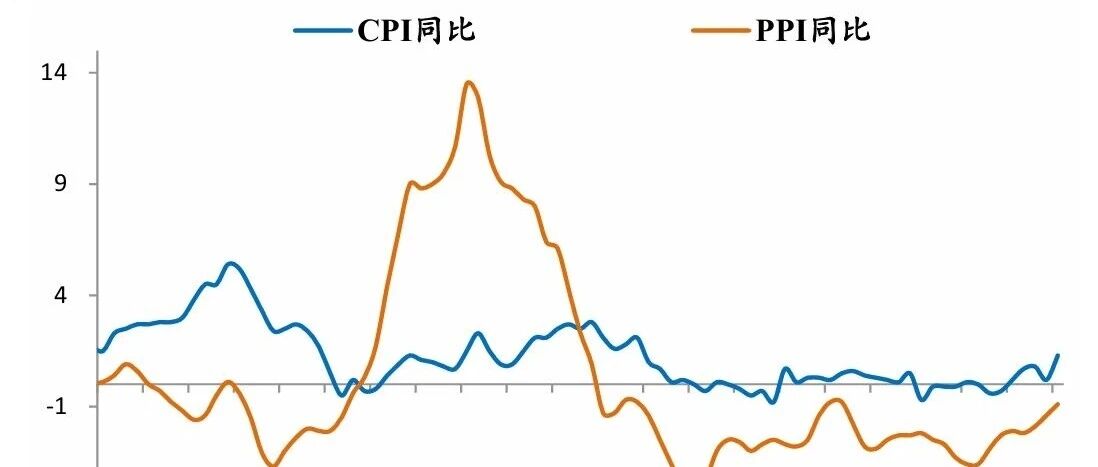
Core Viewpoint - The article discusses the moderate recovery of prices in February, driven primarily by input costs rather than demand, indicating a need for monetary policy adjustments and proactive fiscal measures [1][2]. Group 1: Price Trends - February CPI increased by 1.3% year-on-year, marking a rise of 1.1 percentage points from the previous month, reaching a three-year high [1][7]. - PPI decreased by 0.9% year-on-year, with the decline narrowing by 0.5 percentage points compared to the previous month, continuing a trend of narrowing for three consecutive months [1][22]. Group 2: Factors Influencing Prices - The increase in food prices by 1.7% year-on-year and service prices by 1.1% is attributed to the timing of the Spring Festival [2][9]. - Rising international oil prices and metal prices have intensified input cost pressures, with Brent crude oil futures averaging a 20.7% increase month-on-month [4][22]. - Despite weak overall demand, sectors related to new productive forces, such as semiconductor materials, are experiencing high demand and price increases [2][22]. Group 3: CPI and Core CPI Insights - Core CPI, excluding food and energy, rose by 1.8% year-on-year, reflecting a slight recovery in consumer demand [10][11]. - Service prices saw significant increases, with airfares and accommodation prices rising by 29.1% and 5.4% respectively [10]. Group 4: Pork Price Cycle - The pork price decline is slowing, with a year-on-year decrease of 8.6% in February, but the decline is less severe than in previous months [14][15]. - The current "pig cycle" is still in a downtrend, with production capacity adjustments beginning but not yet sufficient to drive a significant price recovery [14][16]. Group 5: PPI Improvement - PPI's decline is narrowing due to input inflation and strong demand in certain tech sectors, with a year-on-year decrease of 0.9% in February [22]. - Prices in the non-ferrous metal mining and processing sectors increased by over 20% year-on-year, reflecting rising international prices [22][23].
2026科技-3月重视设备-耗材扩产链
2026-03-01 17:23
Summary of Conference Call Records Industry Overview - The semiconductor equipment sector is expected to continue its upward trend due to revised expectations for the "two storage" (两存) expansion, clear signals of overseas storage manufacturers' capacity expansion, and the initiation of equipment bidding in March 2026. The mid-term outlook for "two storage" expansion has been revised upwards to approximately 140,000 to 150,000 wafers [1][3]. Key Points and Arguments Semiconductor Equipment Expansion - The expansion in 2026 for the "two storage" companies is primarily driven by Long Storage's second and third factories and Changxin's new plants in Hefei, Beijing, and Shanghai, with a combined expected expansion of at least 140,000 to 150,000 wafers [1][4]. - The growth rate of equipment orders is expected to approach 100%, indicating a significant increase compared to historical order growth rates of around 30% to 40% [5]. Advanced Logic Capacity - There is a significant supply-demand gap in domestic advanced logic capacity, especially after TSMC halted foundry services for Chinese advanced logic manufacturers. This has led to a substantial increase in demand for domestic advanced process foundry services for AI chips [1][6]. - The overall expansion for advanced logic in 2026 is projected to be around 80,000 wafers, with a growth rate exceeding 50% [7]. Mature Logic and 28nm Demand - The 28nm process is expected to see increased demand due to its applications in SoC, IoT, and automotive chips. The outsourcing of logic die in 3D NAND and DRAM manufacturing is anticipated to drive further demand for 28nm capacity, potentially exceeding one million wafers [8][9]. Important but Overlooked Content Short-term Catalysts - March 2026 will see a concentrated initiation of equipment bidding and order placements, marking a transition from expectation to order fulfillment for storage and advanced logic expansions [10]. - The market is expected to witness significant developments in the listing progress of Longxin and Long Storage, which could occur within the next couple of months [10]. Investment Value and Strategy - The semiconductor sector is viewed as having a favorable investment value due to its current economic climate and the anticipated large-scale expansions in advanced logic, storage, and mature logic [11]. - Investment strategies should focus on companies with high exposure to storage equipment, such as Zhongwei, Tuojing, Jingzhida, and Xinyuanwei, as well as core companies related to advanced logic like Jingce Electronics and Beifang Huachuang [12]. Company-Specific Insights - Zhongwei has shown positive changes in storage customer validation and order opportunities, particularly in the field of measurement equipment [13]. - Beifang Huachuang is expected to see significant order growth, with projections indicating a potential increase in orders to 70 billion yuan in 2026, driven by advanced logic expansion [14]. Market Dynamics - The strategy has shifted from focusing on price increases to emphasizing the importance of equipment and expansion chains as of late February 2026. The equipment sector is anticipated to experience order releases starting in March, marking a critical turning point [15].
中国银河证券:半导体行业销售额再创新高 长期逻辑稳固
智通财经网· 2026-02-27 00:35
Core Viewpoint - The report from China Galaxy Securities indicates that the construction of AI infrastructure in China will continue to be strong through 2026, with a focus on increasing the domestic production rate, leading to positive investment opportunities in semiconductors and related components [1] Industry Data Tracking - Semiconductor sales reached $78.9 billion in December 2025, with a month-on-month growth of 2.7% and a year-on-year growth of 37.1%. The overall semiconductor sales for 2025 hit a record high of $791.7 billion, reflecting a year-on-year increase of 25.6%. All regions except Japan saw growth in semiconductor sales [2] - The global semiconductor manufacturing equipment sales are projected to reach a historical high of $133 billion in 2025, with a year-on-year growth of 13.7%. The market for semiconductor back-end equipment is expected to perform exceptionally well, with sales of testing equipment and packaging equipment anticipated to grow by 48.1% and 19.6%, respectively [2] - The demand for storage is surging due to the explosion of AI demand and supply bottlenecks, leading to an overall upward trend in storage prices. DRAM prices, crucial for AI servers, are expected to rise significantly, driven by high demand for HBM and limited supply of standard DRAM like DDR4 [2] Industry News - Storage demand remains robust, with SK Hynix's DRAM and NAND inventory reduced to about four weeks of supply. TSMC has announced strategic agreements with Micron Technology to establish a long-term relationship for advanced DRAM packaging [3] - ASML researchers have discovered a method to enhance the power of key chip manufacturing equipment, potentially increasing chip production by up to 50% by 2030. SK Hynix has introduced a new H3 architecture concept that integrates high-bandwidth memory (HBM) into a single design [3] Sector Tracking - Over the past month, the semiconductor index underperformed the CSI 300 index by 3.86 percentage points and the electronics index by 1.44 percentage points, with the semiconductor index showing a decline of 3.15% [4] - Over the past year, the semiconductor index outperformed the CSI 300 index by 27.08 percentage points and the electronics index by 1.22 percentage points, with the semiconductor index increasing by 46.38% [4]
