支付变革

Search documents
汪下烟:中国支付的发展变革与未来展望|金融与科技
清华金融评论· 2025-10-26 09:36
Core Viewpoint - The article discusses the evolution of payment systems, emphasizing that the next significant transformation will be driven by the integration of digital currencies and the digital world, with central bank digital currencies (CBDCs) playing a crucial role in this change [3][4]. Payment Evolution - Payment is fundamentally the transfer of currency, closely linked to goods and exchange needs. Historically, payment began with physical currency exchanges, evolving through various stages influenced by economic development [4][5]. - The development of payment systems in China has seen significant changes, from ancient practices to modern mobile payment systems, positioning China at the forefront of global payment innovations [4][5]. Historical Context - The evolution of payment methods can be traced from early physical currencies to modern paper money, highlighting the importance of the separation of currency ownership and transfer through instruments like promissory notes [6][7]. - The emergence of money houses and banks in China facilitated significant changes in payment systems, allowing for remote transactions and the introduction of a notification and bookkeeping model [6][7][8]. Technological Advancements - The introduction of telegraphy marked a milestone in payment systems, enabling faster communication and transaction processing, which significantly improved the efficiency of remote payments [9][10]. - The second major transformation in payment systems is characterized by the digitization of bookkeeping and the rise of information technology, which has fundamentally altered both bookkeeping and notification methods [11].


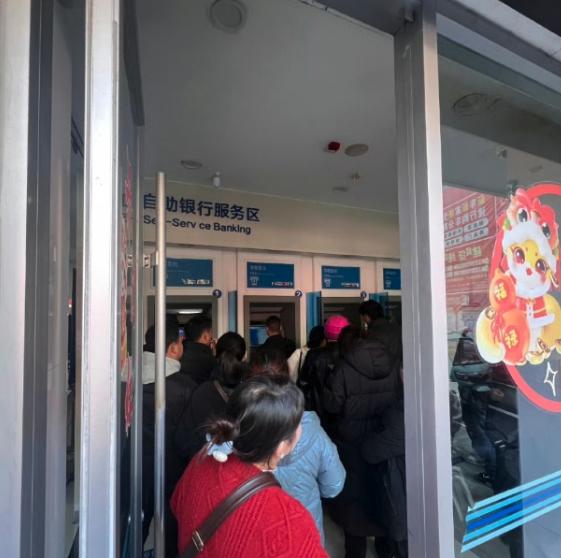
全国 ATM 机撤掉 1/3 ,网友急了
3 6 Ke· 2025-05-27 01:41
Core Insights - The number of ATMs in China has significantly decreased, with a reduction from 1.0977 million at the end of 2019 to 802,700 by the end of 2024, representing a decline of 26.87% over five years [4][10] - The decline in ATM numbers is attributed to the rise of electronic payment methods, which have seen substantial growth in transaction volume and value [11][14] - Banks are implementing "ATM withdrawal plans," leading to the closure or repurposing of ATMs into multifunctional smart terminals [12][16] Industry Trends - The rapid decline of ATMs is reminiscent of the fate of public phone booths and newsstands, which also faced obsolescence due to technological advancements [12] - Electronic payment transactions reached 301.668 billion in 2024, a 35.04% increase from 2019, while the total value of electronic payments was 342.699 trillion yuan, up 31.45% [11] - The emergence of digital currencies is further threatening the existence of ATMs, as they allow for cashless transactions through digital wallets [14] Social Implications - The reduction of ATMs raises concerns for the elderly population, with approximately 297 million individuals aged 60 and above in China, many of whom may struggle with mobile payment technologies [17][20] - Banks are exploring solutions to cater to the needs of older customers, such as implementing facial recognition ATMs and user-friendly interfaces [20] - The future of ATMs may involve strategic placement in high-demand areas like airports and senior communities, while banks may share resources to reduce costs [18][22]