
移动支付

Search documents
紫光国微涨2.09%,成交额8.66亿元,主力资金净流入1496.53万元
Xin Lang Zheng Quan· 2026-02-24 05:11
Core Viewpoint - Unisoc Microelectronics Co., Ltd. (紫光国微) shows a mixed performance in stock price and financial metrics, with a slight increase in stock price recently but a decline over the past 20 days, while demonstrating significant year-on-year growth in revenue and net profit [1][2]. Financial Performance - For the period from January to September 2025, Unisoc achieved a revenue of 4.904 billion yuan, representing a year-on-year increase of 15.05% [2]. - The net profit attributable to shareholders for the same period was 1.263 billion yuan, reflecting a year-on-year growth of 25.04% [2]. Stock Market Activity - As of February 24, the stock price of Unisoc was 79.11 yuan per share, with a trading volume of 866 million yuan and a turnover rate of 1.30% [1]. - The stock has seen a year-to-date increase of 0.38%, a 5-day increase of 1.42%, a 20-day decrease of 6.38%, and a 60-day decrease of 2.55% [1]. Shareholder Information - As of February 10, the number of shareholders for Unisoc was 210,300, a decrease of 0.29% from the previous period [2]. - The average number of circulating shares per shareholder increased by 0.29% to 4,038 shares [2]. Dividend Distribution - Unisoc has distributed a total of 1.419 billion yuan in dividends since its A-share listing, with 750 million yuan distributed over the past three years [3]. Major Shareholders - As of September 30, 2025, the second-largest circulating shareholder was Hong Kong Central Clearing Limited, holding 33.8843 million shares, an increase of 17.09 million shares from the previous period [3]. - Other notable shareholders include Huatai-PB CSI 300 ETF and E Fund CSI 300 ETF, with varying changes in their holdings [3].

春节旅行、生活娱乐交易热 假期前六天微信支付相关交易笔数同比涨超20%
Xin Hua She· 2026-02-24 01:13
Core Insights - The WeChat platform reported a significant increase in payment consumption during the Spring Festival holiday period from February 15 to 20, with transaction volumes for travel and entertainment rising over 20% year-on-year [1] Domestic Travel - Scenic spots in cities like Nanchong and Kaifeng saw transaction volumes increase by over 50% year-on-year, while Suzhou, Huangshan, Xi'an, and Putian experienced over 30% growth in transaction volumes [1] - The transaction amount for duty-free programs in Hainan increased by 81% year-on-year [1] Cross-Border Travel - Offline transaction consumption in Malaysia and the Maldives grew by 131% and 186% year-on-year, respectively [1] - There was a notable increase in transaction volumes from overseas tourists using WeChat to bind international bank cards for offline transactions, with a year-on-year growth of over 28% [1] - WeChat Pay now supports 12 countries and regions with 29 overseas wallets for "foreign use domestically" [1]

两个马年:中国互联网的十二年轮回
Hua Xia Shi Bao· 2026-02-21 10:58
Core Insights - The article discusses the cyclical nature of significant technological advancements in China, particularly focusing on the emergence of WeChat Red Packets in 2014 and the anticipated rise of AI Red Packets in 2026, highlighting the impact of these innovations on mobile payment and user engagement [2][15][19]. Group 1: Historical Context - In 2014, WeChat introduced the Red Packet feature, which unexpectedly transformed the mobile payment landscape in China, allowing WeChat to catch up with Alipay in user engagement [5][6]. - The introduction of the Red Packet feature led to a massive increase in user engagement, with families participating in Red Packet exchanges during the Spring Festival, significantly boosting WeChat's user base [6][8]. - Over the past twelve years, the mobile internet landscape has evolved, with various platforms competing for user attention during the Spring Festival, showcasing a shift from simple monetary exchanges to more complex social interactions [9][13]. Group 2: Current Trends and Future Outlook - In 2026, the focus shifts to AI Red Packets, with major companies like ByteDance, Alibaba, Tencent, and Baidu investing over 4.5 billion yuan to capture the next generation of user engagement [15][18]. - The strategy for AI Red Packets involves integrating AI with everyday services, such as food delivery and ticket booking, to create a more habitual use of AI technology among users [16][20]. - The article suggests that the next significant technological breakthrough will require a universally relatable scenario, similar to how WeChat Red Packets popularized mobile payments [19][22]. Group 3: User Engagement and Retention - Historical data indicates that while Red Packets attract users, they do not guarantee long-term retention, as evidenced by the low retention rates following significant investments by companies like Baidu and Kuaishou [10][11][12]. - The article emphasizes the importance of user engagement metrics post-Spring Festival, indicating that the success of AI Red Packets will depend on users' willingness to interact with AI technology in their daily lives [24].



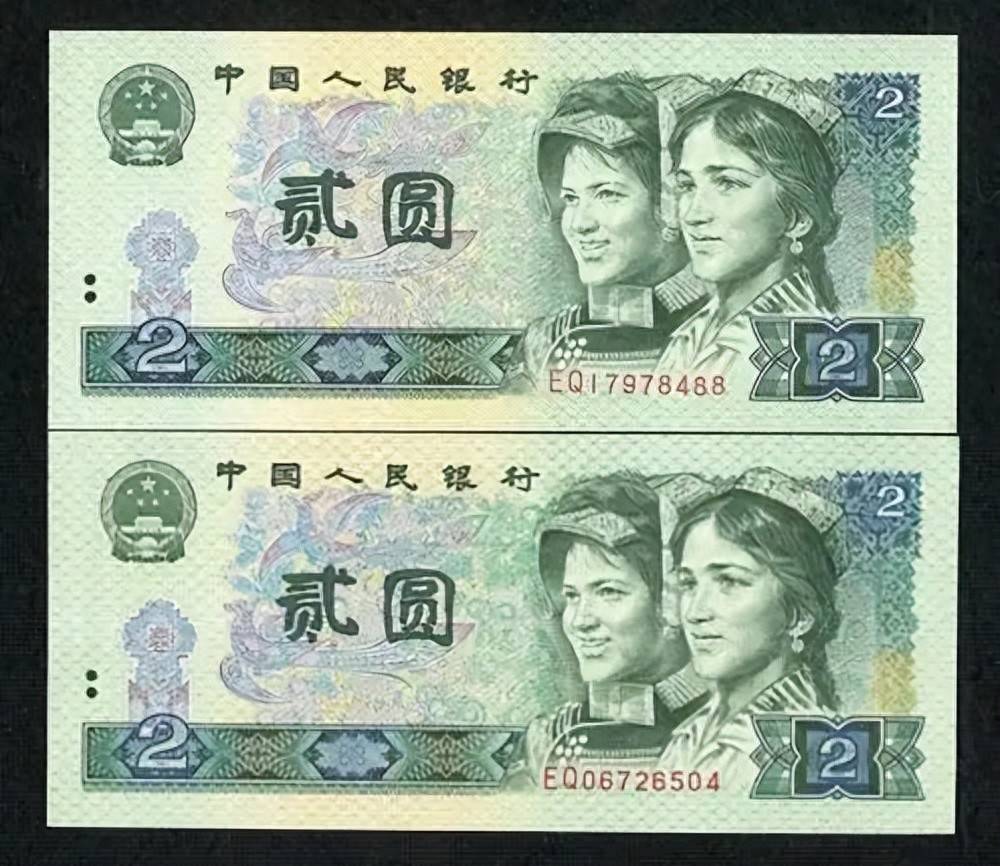
我国为什么要取消2元的人民币?原因很简单,看完您就彻底懂了
Sou Hu Cai Jing· 2026-02-17 11:44
Core Viewpoint - The discontinuation of the 2 yuan banknote reflects the rapid growth of China's economy and the evolution of its currency system, transitioning from physical cash to digital payment methods [5][36][50]. Historical Context - The 2 yuan banknote was first introduced in 1955, symbolizing the spirit of revolution during a time of material scarcity [5][7]. - Over the decades, the design of the 2 yuan banknote evolved, representing national development and unity, with significant changes occurring in the late 1990s [9][11]. Economic Changes - As China's economy grew, the purchasing power of the 2 yuan banknote diminished, leading to its reduced usage in daily transactions [11][13]. - The decline in transaction frequency and the marginalization of the 2 yuan banknote's function prompted its removal from circulation [13][15]. Currency Structure Optimization - The decision to eliminate the 2 yuan banknote was part of a broader strategy to optimize the currency structure, with the introduction of the 20 yuan note filling the gap between the 10 yuan and 50 yuan denominations [17][21]. - The transition to larger denominations improved cash transaction efficiency, reflecting a shift in payment needs as the economy expanded [21][34]. Production and Cost Considerations - The production costs of banknotes are similar across denominations, but the value carried by larger notes like the 100 yuan far exceeds that of smaller notes like the 2 yuan [25][27]. - The high turnover and wear of smaller denominations necessitated continuous production and replacement, leading to increased costs for the central bank [27][29]. Technological Advancements - The rise of digital payment methods has significantly reduced the need for cash transactions, further marginalizing the role of the 2 yuan banknote [46][50]. - The shift towards mobile payments and digital currencies has transformed consumer behavior, making cash payments increasingly rare [46][50]. Collectible Value - Despite its removal from circulation, the 2 yuan banknote has gained collectible value, with certain versions fetching high prices in the market due to their rarity [38][40]. - The transition of the 2 yuan banknote from a currency to a collectible item illustrates its historical significance and the changing landscape of money [36][44].
澳门金管局:2025年第四季澳门移动支付工具交易总额89亿澳门元 按季上升5.4%
智通财经网· 2026-02-13 09:00
Group 1: Mobile Payment - The total transaction amount of local mobile payment tools in Q4 2025 reached 8.9 billion MOP, representing a quarterly increase of 5.4% [2] - The number of transactions increased by 7.4% to 140 million, with an average transaction amount of 85.4 MOP [2] - As of the end of 2025, the number of devices and QR code displays accepting mobile payments reached 111,223 [2] Group 2: Credit Card Issuance and Delinquency - The total credit card credit approved by banks in Macau reached 50.9 billion MOP by the end of 2025, reflecting a quarterly increase of 0.7% [3] - The total accounts receivable for credit cards amounted to 2.8 billion MOP, with overdue accounts exceeding three months dropping the delinquency ratio from 2.7% at the end of September 2025 to 2.5% [3] Group 3: Credit Card Transactions and Repayments - The total credit card transaction amount in Q4 2025 was 6.5 billion MOP, showing a quarterly increase of 3.5% [4] - The number of credit card transactions rose by 6.4% to 13.98 million, while cash advances accounted for 2.3% of the total transaction amount [4] - Total repayments, including interest and fees, decreased by 1.6% to 6.3 billion MOP, while non-cash debit card transactions increased by 9.4% to 520 million MOP [4]
兆日科技股价震荡,资金流向波动较大
Jing Ji Guan Cha Wang· 2026-02-13 08:53
Core Viewpoint - The stock price of Zhaori Technology (300333) has shown a fluctuating trend recently, with a range of 2.33% and an amplitude of 3.36% as of February 13, closing at 10.96 yuan, up 1.86% for the day [1]. Group 1: Stock Performance - As of February 13, the stock price closed at 10.96 yuan, reflecting a daily increase of 1.86% with a trading volume of 34.46 million yuan and a turnover rate of 0.94% [1]. - The stock has experienced a net inflow of 3.49 thousand yuan in main funds on February 13, although there was a significant net outflow of 761.31 thousand yuan on February 12 [2]. - The company's sector, including financial technology and mobile payments, has garnered market attention, but the individual stock performance has been roughly in line with the computer equipment sector, which saw a 0.52% increase over the past five days, slightly underperforming the broader market index [3].

孙正义的“日版支付宝”要上市了
Xin Lang Cai Jing· 2026-02-12 13:19
Core Insights - PayPay plans to file for an IPO with the SEC this month, aiming for a listing on NASDAQ in March, with an expected market valuation exceeding 3 trillion yen (approximately $19.6 billion) [3] - The company, a joint venture between SoftBank's telecom subsidiary and LY Corp., currently holds a 66% stake, with the remaining 34% owned by SoftBank's Vision Fund 2 [3] - PayPay commands about 70% of Japan's smartphone payment market and has turned EBITDA positive in the fiscal year 2023 [3] - The company is shifting towards a pan-Asian growth strategy due to Japan's aging population and declining domestic growth potential, with plans for overseas expansion and potential acquisitions [3] - PayPay has already launched services in South Korea and announced a partnership with Visa to establish a payment service joint venture in the U.S. [3] Financial and Market Data - PayPay's consolidated total payment volume in Japan for the fiscal year 2024 is projected to be 15.4 trillion yen [4] - SoftBank aims to leverage the IPO to raise funds, potentially investing up to $30 billion in OpenAI's next funding round after a previous investment of $22.5 billion [5] - SoftBank's total investment in OpenAI has reached $34.7 billion, with estimated paper gains of $19.8 billion as of December last year [5]


逆势资金冲向洼地!单日南向资金净流入创去年9月以来新高,恒生科技ETF(513130)本周累计获超31亿元资金加仓
Mei Ri Jing Ji Xin Wen· 2026-02-06 05:21
Group 1 - The southbound capital has significantly increased, with a cumulative net purchase exceeding 41.2 billion HKD, including net purchases of over 13.3 billion HKD and 24.9 billion HKD on February 4 and 5, respectively, marking a new high since September 2025 [1] - Current global dollar cycle is at a peak decline, and the RMB has transitioned from depreciation to a mild appreciation phase, combined with foreign capital inflow and a shift from valuation recovery to profit-driven growth, suggesting a favorable re-pricing window for Chinese equity assets [1] - Despite recent fluctuations in the Hong Kong tech sector, funds are actively positioning through ETFs, with the Hang Seng Tech ETF (513130) seeing a net inflow of over 3.1 billion HKD in the past four trading days, contributing to an increase in its latest share count to 67.5 billion [1] Group 2 - The Hang Seng Tech ETF (513130) is a key product for investing in the Hong Kong tech sector, tracking the Hang Seng Tech Index, which includes competitive and high-potential tech companies in areas like internet, mobile payments, cloud computing, AI, and semiconductors, currently valued at a low percentile of 29.23% over the past five years [2] - The ETF supports intraday T+0 trading, with a low annual management fee of 0.2%, potentially enhancing investment efficiency and reducing costs for investors [2] - The fund manager, Huatai-PB Fund, is one of the first ETF managers in China, with a strong track record in industry ETFs and broad-based, dividend-themed indices, offering a range of products that may serve as defensive options in a "barbell strategy" [2]
金融科技ETF(159851):金融科技投入加大,板块掘金正当时
Xin Lang Cai Jing· 2026-02-05 01:38
Group 1 - The core viewpoint of the article highlights that the financial technology sector is entering a phase of "quality improvement and expansion," driven by policy support and accelerated AI penetration, with expected investment growth to 651.5 billion yuan by 2028 [3][10]. - The scale of financial technology investment by domestic financial institutions has been increasing year by year, with projections showing a steady rise from 2,691 billion yuan in 2022 to 6,515 billion yuan in 2028 [4][10]. Group 2 - The financial technology sector is characterized by high elasticity and serves as a barometer, heavily investing in computer and non-banking financial sectors, which combine financial cycles and technology growth attributes [6][10]. - The thematic concept distribution within financial technology includes internet brokerage, financial IT, AI applications, mobile payments, and the Hongmeng concept, indicating a broad coverage of popular sectors [6][11]. Group 3 - The top ten weighted stocks in the financial technology index account for 51.09% of the index, focusing on leading internet financial companies such as Dongfang Caifu, Tonghuashun, and Guidan [12][14]. - The average market capitalization of the constituent stocks is 23.389 billion yuan, with over 47% of the stocks having a market cap below 10 billion yuan, highlighting the potential for growth in small-cap stocks [13][14].

浦发银行信用卡支持消费者将Visa卡绑定Apple Pay,让境外支付体验更便捷、更安全
Zhong Guo Jin Rong Xin Xi Wang· 2026-02-03 09:04
Core Viewpoint - Shanghai Pudong Development Bank (SPDB) has announced the support for its Visa credit card holders to bind their cards to Apple Pay, enhancing the value and service quality for cardholders [1] Group 1: Payment Features - Apple Pay allows consumers to make payments in various scenarios, including overseas merchants, mobile apps, and online websites [1] - In-store payments can be completed by double-clicking the side button on an iPhone or Apple Watch, enabling contactless payment without opening any other apps [2] - Payments made through apps or websites on iPhone and iPad are faster and more convenient, eliminating the need to create accounts or repeatedly enter personal information [2] Group 2: Security and Privacy - Security and privacy are central to Apple Pay, with actual card numbers not stored on devices or Apple servers [3] - A unique device account number is generated using Visa's tokenization technology, which is encrypted and securely stored in the device's secure element [3] Group 3: Card Setup - Setting up Apple Pay is straightforward, requiring users to open the Wallet app on their iPhone and follow prompts to add the SPDB Visa credit card [4] - Cards can also be added directly through the SPDB app, allowing immediate use on compatible devices [4] Group 4: Rewards and Benefits - Cardholders can continue to enjoy the same rewards and benefits as with the physical card, along with exclusive offers for Apple Pay transactions [5] - New promotions include a 100% cashback on the first Apple Pay transaction (up to $3) and 2% cashback on overseas transactions, with a monthly cap of $15 [5] - Additional exclusive benefits are available for travel and overseas living scenarios through Visa's offerings [5]


