放射性药物

Search documents
药渡每周渡选3月9日-3月15日
药渡· 2026-03-19 06:30
Investment Rating - The report does not explicitly state an investment rating for the industry Core Insights - The global biopharmaceutical industry is experiencing a surge in capital market activities, with numerous collaborations and financing deals taking place, indicating a robust investment environment [4][16] - Significant clinical advancements are reported in various therapeutic areas, including metabolic diseases, oncology, and immunology, showcasing the industry's innovation potential [5][8] - The trend of accelerating capitalizations and upgrading research and development models is evident, with companies increasingly focusing on AI-driven drug development and advanced therapeutic modalities [5][16] Summary by Sections Global Biopharmaceutical Industry Dynamics - The report highlights a series of strategic collaborations and financing activities, including Yuan Yi Bio's acquisition of CNS drug RAP-219 rights for up to $328 million and GSK's sale of linerixibat global rights for up to $690 million [4][16] - Merck's termination of its collaboration with Hengrui for the global rights to HRS-1167, originally valued at €1.4 billion, reflects a trend of prioritizing high-potential projects [4][16] Major Events in the Global Biopharmaceutical Industry - Vertex's Povetacicept shows promising results in treating IgA nephropathy, with a 49.8% reduction in 24-hour urine protein creatinine compared to placebo [9] - GSK's licensing agreement with Alfasigma for linerixibat includes a $300 million upfront payment and potential milestone payments totaling up to $690 million [6][16] Important Clinical Developments - Vertex's Povetacicept demonstrates significant clinical efficacy in a Phase III trial, indicating a potential shift in treatment paradigms for IgA nephropathy [9] - New clinical data from various companies, such as Ultragenyx's Avalotcagene ontaparvovec, shows a 18% reduction in plasma ammonia levels in patients with ornithine transcarbamylase deficiency [10][12] Investment and Transaction Events - The report details multiple financing rounds, including over $100 million raised by Aikang Bio in Series A3 funding, and nearly $100 million raised by Yili Pharma [17][20] - The strategic collaboration between Huazhong Pharmaceutical and Roche aims to enhance the commercialization of T-DM1 in mainland China, leveraging both companies' strengths [26] Regulatory Dynamics - The report notes significant regulatory approvals in China, including the approval of innovative drugs for chronic kidney disease and vitiligo, indicating a supportive regulatory environment for new therapies [29][30] - The FDA has streamlined the development process for biosimilars, which may enhance the market entry of new products and improve patient access [34][35]
先通医药港股IPO招股书失效
Zhi Tong Cai Jing· 2025-11-26 23:18
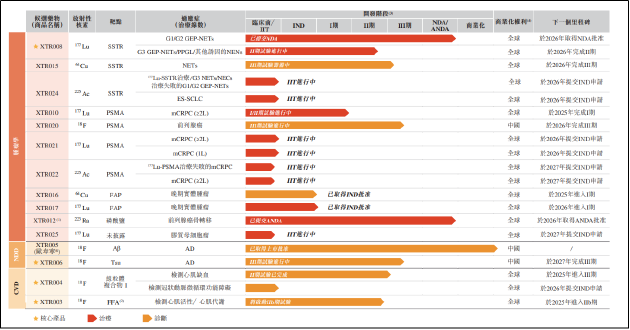
Group 1 - The core viewpoint of the article is that Beijing Xiantong International Pharmaceutical Technology Co., Ltd. (Xiantong Pharmaceutical) submitted its Hong Kong IPO prospectus on May 26, 2025, which has now expired after six months [1] - Xiantong Pharmaceutical is a leader in the Chinese radiopharmaceutical market, focusing on the development and commercialization of innovative radiopharmaceuticals with the potential to be the first listed or best-in-class in China [2] - As of the last feasible date (May 16, 2025), Xiantong Pharmaceutical's pipeline targets three major areas: oncology, neurodegenerative diseases, and cardiovascular diseases, including 15 assets, with four core products being XTR008, XTR006, XTR004, and XTR003 [2]


ASP Isotopes(ASPI) - 2025 Q3 - Earnings Call Transcript
2025-11-21 14:32
Financial Data and Key Metrics Changes - Total radiopharmaceutical revenues for Q3 2025 were $1.3 million, an 18% increase compared to Q3 2024, and year-to-date revenues reached $3.6 million, a 24% increase versus 2024 [31] - Year-to-date total operating expenses increased by $16.5 million, or 84%, from $19.7 million in 2024 to $36.2 million in 2025 [32] - Net loss from operations for year-to-date 2025 was $34.9 million, compared to $18.7 million for the same period in 2024 [32] - Cash balance as of September 30, 2025, was $113.9 million, reflecting net proceeds of approximately $56 million from common stock issuance during Q3 2025 [34] Business Line Data and Key Metrics Changes - The multi-isotope plant in South Africa is currently enriching silicon-28 and has shipped commercial samples validated for isotopic purity [4] - The nuclear medical segment has seen growth in volumes and doses sold, leading to increased revenues [9] - The carbon plant is expected to start producing carbon-14, with the first full batch anticipated in January 2026 [8] Market Data and Key Metrics Changes - The acquisition of Renergen is expected to enhance the company's capabilities in the semiconductor gas vertical, with regulatory approvals nearly complete [5] - The company has secured a contract for silicon-28 and aims to fulfill customer orders by 2026 [4] Company Strategy and Development Direction - The company aims to diversify its operations beyond South Africa and expand its radiopharmaceutical footprint globally [70] - Quantum Leap Energy (QLE) plans to secure the nuclear supply chain and has raised $64.3 million via convertible notes to support its initiatives [13][14] - The acquisition of Skyline Builders is part of a strategy to secure critical material supply chains essential for the U.S. and ASP Isotopes [21] Management's Comments on Operating Environment and Future Outlook - Management expressed optimism about the operational capabilities and customer relationships, emphasizing the positive feedback from customers regarding the enrichment processes [38] - The focus for the next six months includes completing the Renergen acquisition and achieving operational de-risking by the end of Q1 2026 [39][40] - The company is committed to providing further guidance on revenue projections as clarity improves internally [52][53] Other Important Information - The company is planning to begin construction of new plants in various locations, including Iceland, the U.S., and the U.K., during 2026 [29] - The first quantum enrichment plant is producing ytterbium-176, with commercial quantities expected in the first half of 2026 [7] Q&A Session Summary Question: Can you talk about the delays in shipping Silicon-28? - Delays were due to the complexity of the production process and modifications made after customer visits, which improved the customer-supplier relationship [37][38] Question: When do you expect to achieve operational de-risking in respect of Renergen? - Operational de-risking is expected by the end of Q1 2026, focusing on completing phase 1C of the project [39][40] Question: When will the company begin to recognize revenue in its isotopes enrichment segment? - Revenue recognition for carbon is expected by the end of December, with silicon isotopes anticipated in the first half of 2026 [41][42] Question: What did the customers say about our samples of both Ytterbium and Silicon? - Customers were pleased with the results of the samples, indicating that the technology works effectively [44][47] Question: Is the $50-$70 million revenue opportunity in 2026 and 2027 still valid? - The company is not changing previous guidance and will provide updates as more clarity is achieved [49][50][52] Question: Can you help us understand the capital commitment in 2026 for new facilities? - Detailed breakdowns of capital commitments and revenue opportunities will be provided in future updates [54][55] Question: Can you discuss the opportunity for LEU Plus? - LEU Plus is a new focus based on customer inquiries, aimed at increasing power density and extending the life of existing nuclear power plants [56][60] Question: Should we model the $3 million revenue from Skyline Builders going forward? - The revenue from Skyline Builders is not expected to continue, as the focus will shift away from construction [64][66]

Lantheus Holdings(LNTH) - 2025 Q3 - Earnings Call Transcript
2025-11-06 14:02
Financial Data and Key Metrics Changes - Consolidated net revenue for Q3 2025 was $384 million, an increase of 1.4% year-over-year [15] - Gross profit margin decreased to 63.5%, down 471 basis points, primarily due to unfavorable pricing impacts and the inclusion of new acquisitions [16] - Net income for Q3 was $27.8 million, with adjusted net income at $85.7 million, a decrease of 30.9% [17] - Operating cash flow totaled $105.3 million, down $69.8 million from the prior year [17] - Free cash flow was $94.7 million, $64.6 million lower than the prior year [18] Business Line Data and Key Metrics Changes - Sales from the Radiopharmaceutical Oncology segment (Polarify) were $240.6 million, down 7.4% year-over-year, with U.S. volumes up 3.3% [15][7] - Precision diagnostic revenue increased by 25% to $129.7 million, with Definity sales at $81.8 million, up 6.3% [15] - NeuroSeq contributed $20.4 million in sales during the quarter [15] Market Data and Key Metrics Changes - The U.S. Alzheimer's disease radiodiagnostic market is expected to grow significantly, driven by rising prevalence and expanded PET imaging guidelines [10] - The company anticipates low single-digit volume growth for Polarify for the remainder of 2025, offset by price compression due to government price resets [9] Company Strategy and Development Direction - The company announced a leadership transition plan, with Brian Markison retiring and Mary Anne Heino assuming the role of Executive Chairperson and interim CEO [3][4] - The focus remains on executing the commercial strategy for the prostate cancer franchise and preparing for the launch of the new F18 PSMA PET formulation [7][22] - The company is advancing its strategic diversification plan, including the integration of recent acquisitions and preparing for four near-term product approvals [22] Management's Comments on Operating Environment and Future Outlook - Management expressed confidence in the stabilization of the PSMA market and the ongoing growth of Polarify and NeuroSeq [25][31] - The company is closely monitoring competitive dynamics in the market, particularly with the introduction of new products [50] - Management does not anticipate significant changes in the reimbursement landscape for 2026 but expects potential changes in 2027 [56] Other Important Information - The company completed the acquisition of Life Molecular Imaging for approximately $309 million [18] - The effective tax rate for the quarter was 26.9% [17] Q&A Session Summary Question: Strategies for Polarify and NeuroSeq - Management noted stabilization in the PSMA market and increasing customer return to Polarify, with a focus on availability and expansion for NeuroSeq [25] Question: 2026 Guidance and Market Resets - Management refrained from providing specific guidance for 2026 but highlighted stabilization in account base and volume growth for Polarify [29][31] Question: Management Changes - The retirement of Brian Markison was described as a personal decision, while Paul Blanchfield's departure was for a new opportunity [33] Question: Competitive Landscape in Alzheimer's Imaging - MK-6240 is positioned as a second-generation tau agent with significant competitive advantages in sensitivity and specificity [40][42] Question: Pricing Stabilization Factors - Management attributed pricing stabilization to disciplined pricing strategies and high service quality [45][48] Question: Medicare Hospital Outpatient Rule - Management indicated ongoing lobbying efforts for a transition to ASP pricing but does not anticipate significant changes for 2026 [56] Question: Growth Trajectory Post-Acquisition - Management reported strong growth from NeuroSeq, with expectations for continued growth driven by expanded geographic presence [59][61]

先通医药冲刺“核药第一股”:持续亏损现金流欠佳,偿债能力偏弱
Xin Lang Cai Jing· 2025-06-27 00:58
Core Insights - The enthusiasm for biopharmaceutical companies to list in Hong Kong remains strong, with Xiantong Pharmaceutical recently submitting its listing application to the Hong Kong Stock Exchange, expected to become the first "nuclear medicine" stock in Hong Kong [1][2] - Xiantong Pharmaceutical focuses on the Chinese radioactive drug market, aiming to develop and commercialize innovative radioactive drugs, with a pipeline that includes 15 assets across oncology, neurodegenerative diseases, and cardiovascular diseases [1][2] Industry Overview - The global radioactive drug market is experiencing rapid growth, with a projected market size increase from $9.7 billion in 2024 to $57.3 billion by 2035, representing a compound annual growth rate (CAGR) of 17.5% [2] - Since 2021, over 80 related transactions have occurred globally, involving major multinational pharmaceutical companies, while China has seen more than 15 transactions during the same period [2] Company Financials - In 2023 and 2024, Xiantong Pharmaceutical reported revenues of 10.23 million and 44.06 million yuan, respectively, with net losses of 309 million and 156 million yuan [3][4] - The company’s revenue sources include sales of pharmaceutical products, licensing income, and CRO/CDMO services, with a significant increase in revenue expected in 2024 due to increased orders for CRO/CDMO services [3][4] Research and Development - Xiantong Pharmaceutical has a dedicated R&D team of 196 members, with R&D expenses accounting for the highest proportion of total costs, indicating a strong focus on product development [5][6] - The company is advancing its core product, XTR008, which is in the registration phase and is expected to submit a New Drug Application (NDA) in March 2025, with approval anticipated in 2026 [2][5] Cash Flow and Debt - The company has consistently negative operating cash flow, with net cash used in operating activities of -306 million and -277 million yuan for 2023 and 2024, respectively [6][7] - Xiantong Pharmaceutical's current ratio is below 1, indicating potential short-term liquidity risks, as current liabilities significantly exceed current assets [7] Funding and Future Plans - Since 2017, Xiantong Pharmaceutical has completed nine rounds of financing, raising over 2.9 billion yuan, with a post-investment valuation of approximately 5.188 billion yuan as of December 2024 [7][8] - The funds raised from the IPO will primarily be used for R&D and registration of core products, development of other candidates, enhancing sales and marketing capabilities, and establishing new production bases [7][8]
先通医药IPO:研发趋于内卷蓝海窗口日益狭窄 递表前已有投资者清仓退出
Xin Lang Zheng Quan· 2025-06-20 07:54
Core Viewpoint - Xiantong Pharmaceutical is preparing for an IPO on the Hong Kong Stock Exchange, focusing on the development and commercialization of radiopharmaceuticals, but faces significant competition and market challenges [1][2]. Company Overview - Xiantong Pharmaceutical is one of the earliest companies in China engaged in nuclear drug research and development, having previously listed on the New Third Board in 2016 [1]. - The company is the first in China to receive approval for innovative radiopharmaceuticals and has completed clinical trials for therapeutic radioligands [1][2]. Market Position and Competition - The core diagnostic drug, Oweining®, is facing intense competition shortly after its launch, with a narrowing "blue ocean" window [1][4]. - The therapeutic pipeline is crowded with targets such as SSTR and PSMA, with strong competitors like Novartis and Dongcheng [1][7]. - The nuclear pharmacy resources are dominated by major players, controlling 94% of the market, making it difficult for Xiantong to establish its own [1][9]. Financial Performance - In 2023 and 2024, Xiantong achieved revenues of 10.232 million and 44.064 million yuan, respectively, with product sales contributing minimally [3][4]. - The company reported losses of 309 million yuan in 2023 and 156 million yuan in 2024 [3]. Research and Development Pipeline - Xiantong has 15 pipeline assets, with two products, XTR008 and XTR012, expected to receive NDA and ANDA approvals by 2026 [2][5]. - The pipeline includes several diagnostic radiopharmaceuticals, with increasing competition in the domestic market [5][6]. Industry Trends - The global market for radiopharmaceuticals is evolving, with a shift towards therapeutic applications, projected to dominate the market by 2030 [7]. - The construction of nuclear pharmacies is capital-intensive and time-consuming, creating barriers for new entrants [9]. Investor Sentiment - Prior to the IPO application, several investors exited their positions, raising concerns about the company's stability and future prospects [10][11].
两年亏4.65亿!先通医药冲刺港股“核药第一股”:盈利模式单一,研发开支反常下滑
Shen Zhen Shang Bao· 2025-06-08 06:03
Core Viewpoint - The company, Xiantong Pharmaceutical, is preparing for an IPO on the Hong Kong Stock Exchange, aiming to become the first publicly listed company in China's radiopharmaceutical sector, despite facing significant financial losses and challenges in commercialization [1][3][4]. Company Overview - Xiantong Pharmaceutical was established in 2005 and is a leader in the Chinese radiopharmaceutical market, focusing on the development and commercialization of innovative radiopharmaceuticals [3]. - The company has received approval for its innovative radiopharmaceuticals and aims to launch its core products, which include XTR008, XTR006, XTR004, and XTR003 [4]. Financial Performance - The company reported cumulative losses of 465 million RMB over the past two years, with projected revenues of 10.23 million RMB in 2023 and 44.06 million RMB in 2024, indicating a significant year-on-year growth of 330% in 2024 [4][5]. - Despite the revenue growth, the company has not achieved profitability, with losses of 309.23 million RMB in 2023 and 156.12 million RMB in 2024 [5][6]. Research and Development - Xiantong Pharmaceutical's R&D expenditures have decreased, with 297 million RMB in 2023 and 228 million RMB in 2024, raising concerns about its innovation sustainability [8][9]. - The company has a pipeline of 15 assets, with core products primarily targeting oncology, neurodegenerative diseases, and cardiovascular diseases [4]. Market Position and Challenges - The company faces challenges typical of innovative pharmaceutical firms, including high R&D costs and a lengthy commercialization process, which contribute to its ongoing financial losses [7][8]. - Xiantong's revenue model is considered single-faceted, relying heavily on CRO/CDMO services, which accounted for over half of its revenue in 2024 [8]. Shareholder Structure - The company has a notable shareholder base, including prominent investment institutions, with the founder holding 11.32% of shares directly and controlling 27.03% through related parties [10][11][13]. - High executive compensation has raised concerns among investors, particularly in light of the company's financial losses [13].
北京先通港股IPO:发展成本高昂且候选产品尚未确保成功
Jin Rong Jie· 2025-06-03 09:49
Core Viewpoint - Beijing Xiantong International Pharmaceutical Technology Co., Ltd. is a leader in the Chinese radiopharmaceutical market, aiming to develop and commercialize innovative radiopharmaceuticals with the potential to be the first listed or best-in-class in China [1][2]. Company Overview - The company has submitted a listing application to the Hong Kong Stock Exchange, with China International Capital Corporation Hong Kong Securities Limited and CITIC Securities (Hong Kong) Limited as joint sponsors [1]. - Beijing Xiantong is the first company in China to receive approval for innovative radiopharmaceuticals and to obtain production licenses as a drug marketing authorization holder [1]. Product Pipeline - The product pipeline includes a complementary combination of diagnostic and therapeutic radioligands, focusing on oncology, neurodegenerative diseases, and cardiovascular diseases, with a total of 15 assets [2]. - Four core products are highlighted: XTR008, XTR006, XTR004, and XTR003, with three nearing commercialization and eight in clinical or IND supportive stages [2]. - The pipeline includes four potential first-in-class or best-in-class assets and four assets based on the development of the top five global best-selling radiopharmaceuticals by 2024 [2]. Financials - Research and development expenses for 2023 and 2024 are projected to be RMB 297.0 million and RMB 228.0 million, respectively [2]. - The R&D costs for core products in 2023 and 2024 are RMB 152.9 million and RMB 96.6 million, accounting for 51.4% and 42.3% of total R&D expenses, and 38.7% and 26.9% of total operating expenses for the respective periods [2]. - The company has launched two products in China: XTR005 (trade name: Oweining®) and adenosine injection (trade name: Oudalai®) [2]. Challenges - The company's business and financial outlook heavily depend on the success of its clinical and preclinical products [3]. - There are significant risks associated with the development of radiopharmaceuticals, including the need for specialized knowledge and qualifications across multiple disciplines [3]. - The operational complexity and cost pressures are heightened due to the requirement for expertise in handling radioactive materials and operating large equipment [3].
先通医药递表港交所 聚焦放射性药物赛道
Zhong Guo Zheng Quan Bao· 2025-05-28 15:16
Core Viewpoint - Xiantong Pharmaceutical is applying for H-share listing in Hong Kong, aiming to capitalize on its leadership in the Chinese radiopharmaceutical market, focusing on the development and commercialization of radiopharmaceuticals [1] Group 1: Company Overview - Xiantong Pharmaceutical was listed on the New Third Board in 2016 and delisted in 2018 [1] - The company is a leader in the Chinese radiopharmaceutical market, focusing on the development and commercialization of radiopharmaceuticals [1] Group 2: Product Pipeline - The company’s pipeline targets three major disease areas: oncology, neurodegenerative diseases, and cardiovascular diseases, with 15 assets including four core products: XTR008, XTR006, XTR004, and XTR003 [2] - XTR008 is a targeted radioligand for treating neuroendocrine tumors, with a new drug application (NDA) submitted in April 2023, expected to receive approval by 2026 [2] - XTR005, a PET imaging agent targeting Aβ, was approved by the National Medical Products Administration (NMPA) in September 2023, becoming the first approved Aβ-targeting PET tracer in China [3] - The company has established partnerships with over 50 medical institutions in the Beijing-Tianjin-Hebei and Guangdong regions for the sale of XTR005 [3] - Adenosine injection, a non-pipeline product, has been approved for two indications related to myocardial perfusion imaging and CAD diagnosis [3] Group 3: Production Capabilities - Xiantong Pharmaceutical has established two production bases in Wuxi, Jiangsu Province, and Zhongshan, Guangdong Province, with a total building area exceeding 20,000 square meters and 12 commercial-scale production lines [4] - A new production base is under construction in Mianyang, Sichuan Province, expected to be operational by Q3 2025 [4] Group 4: Financial Performance - In 2023 and 2024, the company expects revenues of 10.23 million and 44.06 million respectively, with net losses of 309 million and 156 million [5] - R&D expenditures for 2023 and 2024 are projected to be 297 million and 228 million respectively, with core product R&D costs accounting for 51.4% and 42.3% of total R&D expenditures [5] Group 5: Industry Outlook - The radiopharmaceutical industry has significant growth potential driven by market demand, policy support, and technological advancements, particularly in oncology, neurology, and cardiology [7] - However, the industry faces challenges such as high R&D costs and long development cycles, which require substantial financial and technical resources [7]
先通医药冲刺港交所:中国首家获得创新放射性药物上市批准的企业
IPO早知道· 2025-05-27 01:29
Core Viewpoint - The Chinese radiopharmaceutical market is at a growth inflection point, with significant potential for expansion driven by technological advancements and increasing market demand [7]. Company Overview - Xiantong Pharmaceutical, established in 2005, is focused on developing and commercializing innovative radiopharmaceuticals, aiming to be the first listed company in China with first-in-class or best-in-class potential [1][6]. - The company has submitted its IPO application to the Hong Kong Stock Exchange, with plans to raise funds primarily for R&D and commercialization of core products [8]. Product Pipeline - Xiantong Pharmaceutical's pipeline includes 15 assets focusing on oncology, neurodegenerative diseases, and cardiovascular diseases, with four core products: XTR008, XTR006, XTR004, and XTR003 [1][5]. - XTR008 is a targeted radioligand for treating neuroendocrine tumors, currently in the registration phase [2]. - XTR006 is a PET diagnostic radioligand for suspected Alzheimer's disease, positioned as a potential best-in-class product [5]. - XTR004 is a PET myocardial perfusion imaging agent, and XTR003 is a first-in-class PET radioligand for myocardial fatty acid metabolism imaging [3][5]. Market Potential - The global radiopharmaceutical market is projected to grow from $9.7 billion in 2024 to $57.3 billion by 2035, at a compound annual growth rate (CAGR) of 17.5% [7]. - The Chinese radiopharmaceutical market is expected to increase from 7.4 billion RMB in 2024 to 75.8 billion RMB by 2035, with a CAGR of 23.5% [7]. Investment and Funding - Xiantong Pharmaceutical has attracted investments from several prominent institutions, indicating strong market confidence [8]. - The funds raised from the IPO will be allocated to core product development, candidate product R&D, enhancing sales and marketing capabilities, and establishing a new production base in the Beijing-Tianjin-Hebei region [8].