政策中性

Search documents
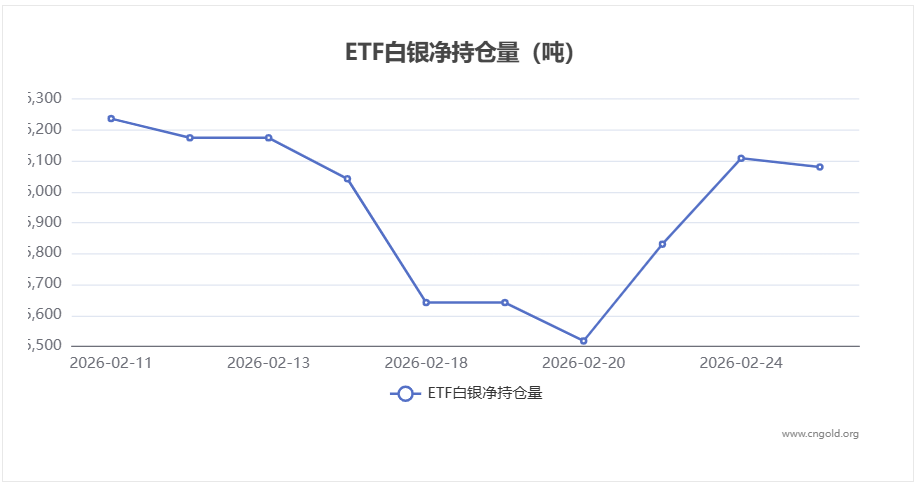
【白银etf持仓量】2月25日白银ETF较上一交易日减少28.18吨
Jin Tou Wang· 2026-02-26 08:41
Group 1 - The iShares Silver Trust, the world's largest silver ETF, reported a holding of 16,079.74 tons of silver as of February 25, a decrease of 28.18 tons from the previous trading day [1] - On February 25, the spot silver price closed at $89.17 per ounce, marking an increase of 2.39%, with an intraday high of $91.27 and a low of $86.51 [1] Group 2 - Federal Reserve officials highlighted that inflation remains a key issue for the Fed, with differing views on the current policy stance being neutral [3] - There are discussions regarding the impact of artificial intelligence on the workforce, with some officials cautioning against immediate conclusions about job replacement [3] - The outgoing Atlanta Fed President emphasized the importance of maintaining the independence of the Federal Reserve [3]

盾博:美联储新理事抛出“降息风暴”,为何业内大佬们却不买账?
Sou Hu Cai Jing· 2025-10-01 06:45
Core Viewpoint - The recent comments by new Federal Reserve Board member Stephen Milan have sparked significant interest due to his unconventional stance on monetary policy, advocating for aggressive interest rate cuts to align with perceived economic realities [1][3]. Group 1: Stephen Milan's Position - Milan argues that the current benchmark interest rates are disconnected from actual economic conditions, suggesting a need for "extraordinary" rate cuts to quickly adjust policy [3]. - His theory is based on structural changes in the economy, including trade, labor markets, taxation, and regulation, which he believes have lowered the necessary interest rates to prevent overheating [3]. - He warns that the current level of policy tightening is severely underestimated, and failing to implement aggressive rate cuts could threaten economic health [3]. Group 2: Reactions from Economists - Milan's views have faced criticism from Wall Street, with JPMorgan economist Michael Feroli highlighting significant flaws in his arguments, claiming they lack sufficient evidence and persuasiveness [3]. - Renaissance Macro Research's Neil Dutta acknowledges that the neutral interest rate may indeed be lower than the Fed's current estimates, but he questions Milan's extreme position, suggesting that if his theory were correct, the economy and financial markets would have reacted more dramatically [4]. Group 3: Federal Reserve's Internal Dynamics - Other Federal Reserve members appear cautious, with most maintaining a reserved stance on further easing despite a recent rate cut [4]. - St. Louis Fed President emphasizes limited room for policy easing in the context of persistently high inflation, while San Francisco Fed President supports further action but remains non-committal on timing [4]. - The conflicting views within the Fed highlight a decision-making dilemma, balancing signs of labor market weakness against stable economic growth and inflation indicators above target [4]. Group 4: Future Implications - Milan's position may reflect a unique interpretation of economic structural changes, suggesting that traditional policy frameworks may no longer capture economic realities [5]. - The ongoing debate over aggressive rate cuts raises questions about whether Milan's approach will be seen as prescient or misguided, warranting close observation [5].