
政策滞后

Search documents
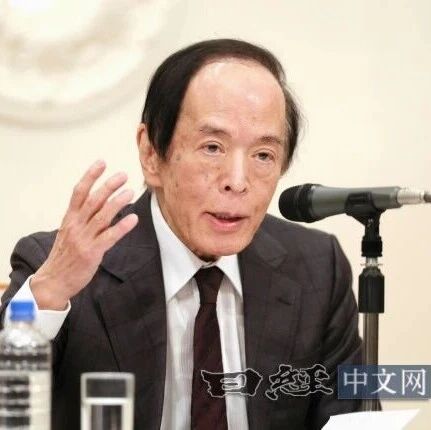
日元升值乏力,日本央行总裁发言“力度不足”
日经中文网· 2025-12-02 08:00
Core Viewpoint - The Bank of Japan's Governor Kazuo Ueda hinted at a possible interest rate hike in December, which initially strengthened the yen against the dollar, but the impact was short-lived as the yen fell back to the 155 yen range shortly after [2][4]. Group 1: Interest Rate Policy - Ueda stated that a "proper judgment" regarding a potential interest rate hike would be made at the monetary policy meeting on December 18-19, while emphasizing that even if rates are increased, the overall monetary policy would remain accommodative [4]. - The statements from Ueda suggest an increased likelihood of a rate hike in December and indicate that there is still room for future increases, reflecting a careful communication strategy with the current government [5]. Group 2: Market Reactions and Concerns - Despite the hints of a rate hike, Ueda's comments did not provide any clues about the pace of potential increases, leading to concerns about the Bank of Japan falling into a "policy lag" where actions do not keep pace with economic developments [5]. - The rising concerns among the Japanese public regarding inflation and the increasing "expected inflation rate" complicate the decision to maintain an accommodative stance [5]. Group 3: Fiscal Issues and Currency Impact - Japan's fiscal problems continue to weigh on the yen's depreciation, with HSBC noting that changes in the Japanese government bond yield curve have significantly impacted the exchange rate [6]. - The yield spread between newly issued 2-year and 30-year Japanese government bonds has widened from approximately 2.20% to about 2.39%, indicating increased fiscal risk [6]. - If the Bank of Japan signals a commitment to policy normalization after a rate hike, it could lead to higher medium-term bond yields, exacerbating the government's interest burden [6].

Juno markets官网:安联推迟美联储降息预期至12月通胀与经济博弈
Sou Hu Cai Jing· 2025-06-24 03:36
Core Insights - Allianz Group has adjusted its forecast for the Federal Reserve's first interest rate cut from October to December 2025, reflecting complexities in the U.S. economy between persistent inflation and resilient growth [1][2] - The May U.S. CPI data showed a year-on-year increase of 2.4% but a month-on-month slowdown of 0.1%, indicating potential inflationary pressures despite a temporary cooling [1][2] - The labor market remains strong, with low unemployment rates, creating a paradox where robust employment supports consumption while raising concerns about a wage-inflation spiral [2][3] Economic Indicators - The forecast for U.S. GDP growth in Q2 2025 has been revised down to 1.4%, yet corporate earnings resilience and consumer confidence remain in the expansion zone [3] - The Federal Reserve has raised its core PCE forecast for 2025 to 3.1%, aligning with Allianz's view on the risks of transitory shocks evolving into persistent inflation [2][3] Market Reactions - Following Allianz's adjustment, the U.S. dollar index rose by 0.27%, while the euro fell to 1.1490, indicating market pricing for a later-than-expected rate cut by the Federal Reserve [3][4] - The yield on 10-year U.S. Treasury bonds decreased to 4.1%, reflecting a rare combination of a strong dollar and rising bond prices amid economic slowdown concerns [3][4] Asset Allocation - SPDR Gold ETF holdings decreased by 23 tons in the third week of June, contrasting sharply with the previous surge when gold prices exceeded $2400 [4] - Market expectations for a December rate cut have risen from 35% to 58% over the past month, suggesting potential for further adjustments in market pricing [4][5] Global Policy Implications - Allianz's forecast adjustment is triggering global policy ripple effects, with the interest rate differential between the Eurozone and the U.S. widening to 225 basis points following the European Central Bank's eighth rate cut [4][5] - Emerging markets are experiencing increased capital flow uncertainty, with significant foreign capital outflows from Brazil and India, totaling $4.7 billion, the highest since November 2024 [4][5] Structural Risks - The divergence in monetary policy between the ECB and the Fed is leading to a reconfiguration of global asset pricing models, particularly in light of potential new tariff policies from the U.S. government [5] - The tension between inflation targets and economic realities is compressing the Federal Reserve's policy space, highlighting structural risks that may be obscured by current economic resilience [5]
美联储恐重蹈“政策滞后”覆辙!再不降息就晚了?
Jin Shi Shu Ju· 2025-06-17 06:40
Core Viewpoint - The market widely anticipates that the Federal Reserve will maintain interest rates, with a probability exceeding 99%, but some experts worry that the Fed may "miss the best opportunity for action" [1] Group 1: Economic Indicators - Recent inflation data has been relatively mild, leading the Fed to feel optimistic, but price declines have not yet reached the threshold for initiating rate cuts [1] - Concerns over tariffs and the Israel-Palestine conflict have raised worries about rising oil costs, adding new uncertainty to the inflation outlook [1] - The consensus for the unemployment rate by 2026 has increased from 4.3% to 4.6%, indicating a more pessimistic view of the labor market [1] Group 2: Expert Opinions - Analysts from Manulife Investment suggest that uncertainty around tariffs is clouding the outlook for rate cuts this year, and that the Fed may wait until the Jackson Hole meeting in August to provide clearer signals [2] - Simona Mocuta from State Street Global Advisors advocates for rate cuts this summer to sustain economic growth, noting that the current situation is reminiscent of the emergency rate cuts in September 2024 [2] - Mocuta emphasizes that maintaining strong consumer spending relies on a stable job market, which is crucial to avoiding recession [2]