散户投资策略

Search documents
侃股:散户追热点不具性价比
Bei Jing Shang Bao· 2025-11-25 10:59
Core Viewpoint - The article emphasizes that chasing hot sectors in the A-share market can lead to high trading costs and low profitability for retail investors, suggesting three strategies to mitigate these issues [1][2][3]. Group 1: Issues with Chasing Hot Sectors - Frequent chasing of hot sectors incurs high trading costs, including commissions and stamp duties, which can erode investment returns [1]. - Retail investors often fall into a vicious cycle of buying high and selling low due to emotional trading driven by market sentiment, leading to poor investment outcomes [1]. Group 2: Suggested Strategies - The first strategy is to proactively invest in potential hot sectors before they gain market attention, requiring foresight and analytical skills to identify sectors with growth potential [2]. - The second strategy involves diversifying investments across multiple sectors to reduce the impact of volatility in any single sector, suitable for risk-averse investors seeking stable returns [2]. - The third strategy is to invest in mutual funds for long-term holding, managed by professional fund managers, which can help avoid the pitfalls of emotional trading and reduce transaction costs [3].
买股卖币!美国散户抄底“区别对待”,比特币自2020年7月来首次跌破“生产成本”
华尔街见闻· 2025-11-21 11:19
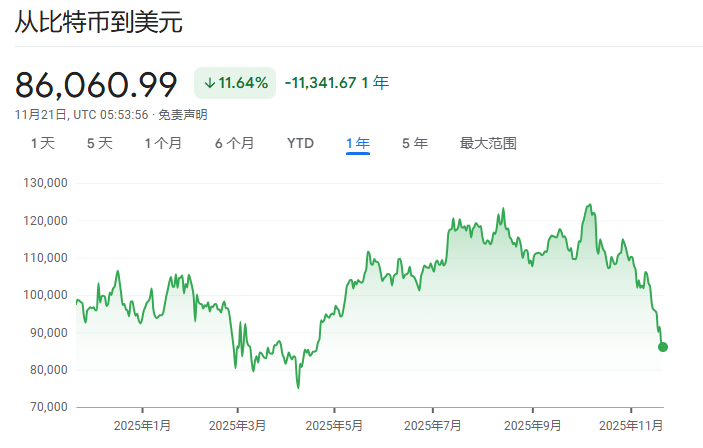
Core Viewpoint - The article highlights a significant divergence in investor behavior between the cryptocurrency and stock markets, with retail investors selling off substantial amounts of cryptocurrency while actively buying stocks, indicating a differentiated view of these asset classes [1][4][5]. Cryptocurrency Market Summary - Retail investors have sold approximately $4 billion worth of spot Bitcoin and Ethereum ETFs since November, surpassing the previous monthly record set in February [1][6]. - Bitcoin's price has fallen below its estimated production cost of $94,000 for the first time since July 2020, indicating a loss of support from mining costs [9]. - The sell-off in the cryptocurrency market has been primarily driven by non-native cryptocurrency investors, particularly retail investors using spot ETFs [6][12]. - The adjustment in the cryptocurrency market has seen a shift from native investors to traditional investors as the main drivers of market movements [9][12]. Stock Market Summary - In contrast to the cryptocurrency market, retail investors have shown strong enthusiasm for buying stocks, with a net inflow of $96 billion into global stock ETFs as of November 18, 2023 [4][12]. - The projected total net inflow for stock ETFs in November could reach $160 billion, maintaining the momentum seen in September and October [4][12]. - Retail investors are treating stocks and cryptocurrencies as distinct asset classes, as evidenced by their selective investment strategies [15]. MicroStrategy Risk Analysis - MicroStrategy, a major holder of Bitcoin, faces significant risks of being removed from key indices like MSCI, which could trigger up to $8.8 billion in passive fund outflows [5][20][23]. - The company's market capitalization is estimated at $59 billion, with approximately $9 billion attributed to passive funds tracking major indices [19]. - If removed from these indices, MicroStrategy's valuation premium could be severely impacted, potentially leading to a ratio of its market value to Bitcoin holdings approaching 1, indicating a loss of operational valuation [21][23].



买股卖币!美国散户抄底“区别对待”,比特币自2020年7月来首次跌破“生产成本”
Hua Er Jie Jian Wen· 2025-11-21 06:39
Group 1: Market Trends - Retail investors in the U.S. have shown contrasting investment strategies in November, aggressively buying stocks while selling off cryptocurrency ETFs [1][4][5] - Approximately $4 billion worth of spot Bitcoin and Ethereum ETFs have been sold by retail investors in November, surpassing the previous record set in February [1][5] - Bitcoin's price has fallen below its estimated production cost of $94,000 for the first time since July 2020, indicating a significant market adjustment [1][8] Group 2: Stock Market Activity - In stark contrast to the cryptocurrency market, retail investors are actively "buying the dip" in the stock market, with a net inflow of $96 billion into global stock ETFs as of November 18 [4][11] - The projected total net inflow for stock ETFs in November could reach $160 billion, maintaining the strong momentum seen in September and October [4][11] - Retail investors have demonstrated a selective allocation strategy, continuing to buy stocks while selling cryptocurrency ETFs during specific months [14] Group 3: MicroStrategy's Risks - MicroStrategy, a major holder of Bitcoin, faces significant risks of being removed from key indices like MSCI, which could trigger up to $8.8 billion in passive fund outflows [4][18][20] - The company's stock performance has lagged behind Bitcoin, with its valuation premium shrinking considerably due to concerns over potential index exclusion [15][19] - The decision regarding MicroStrategy's index inclusion will be announced on January 15, which is a critical risk point for the company [18][20]
北京私募大佬罕见发声:为什么庄家敢打压股价,不怕别人抢廉价筹码?看懂此文持股不慌
Sou Hu Cai Jing· 2025-10-03 01:43
Core Viewpoint - The article discusses the dynamics between retail investors and institutional traders (referred to as "庄家" or "stock operators") in the stock market, emphasizing the challenges retail investors face in understanding and countering the strategies employed by these operators. Group 1: Market Dynamics - Institutional traders are not able to monitor individual retail investors' accounts but can analyze market trends and investor behavior through various indicators [1] - The number of listed companies has increased to 3,628, making it less likely for retail investors to encounter institutional traders [1] - Retail investors often prefer to invest in "庄股" (stocks manipulated by operators), which carry higher risks due to the lack of transparency regarding the operators' funding sources [1] Group 2: Trading Strategies - Institutional traders often accumulate shares at low prices before driving prices down to force retail investors to sell their shares, a tactic known as "洗盘" [5] - The process involves institutional traders holding a small percentage of shares initially, then selling to create panic among retail investors, allowing them to buy back at lower prices [5] - Once they have accumulated enough shares, they will raise the stock price, profiting from the retail investors who sold at a loss [5] Group 3: Retail Investor Behavior - Retail investors tend to panic and sell when stock prices drop, which plays into the hands of institutional traders [5] - The article suggests that if retail investors could unite and hold onto their shares, they could counteract the strategies of institutional traders [7] - However, the reality is that retail investors often lack the coordination and discipline to resist selling during downturns [7] Group 4: Market Psychology - The article highlights the emotional aspects of trading, noting that retail investors must develop the ability to endure market fluctuations and not succumb to fear or greed [9][10] - It emphasizes the importance of gathering information, conducting thorough research, and maintaining a disciplined approach to investing [8][9] Group 5: Technical Analysis - The article provides insights into volume analysis, indicating that price movements without significant volume changes may not be sustainable [11][13] - It discusses various volume-related patterns that can signal potential market reversals or continuations, which are crucial for making informed trading decisions [15][18][20]