
数字人民币智能合约

Search documents
如何看待数字人民币当前发展机遇
2026-03-22 14:35
Summary of Key Points from the Conference Call on Digital Renminbi Development Opportunities Industry Overview - The conference call discusses the development of Digital Renminbi (DCEP) as it transitions from M0 (cash) to M1 (interest-bearing deposits) starting January 2026, which will significantly impact the banking sector and its operations [1][2][3]. Core Insights and Arguments - **Transition to M1**: The shift from M0 to M1 allows Digital Renminbi to be included in bank deposits, enabling banks to leverage this for increased earnings through interest differentials, transforming related business units from cost centers to profit centers [1][2][3]. - **Expansion of Operating Institutions**: The number of operating institutions has expanded to 22, with 12 new banks added, aiming to enhance penetration in corporate business and create competitive pressure on third-party payment systems [1][2]. - **High IT Investment Requirements**: Existing institutions require annual operational and upgrade investments of approximately 8-10 million RMB, while new institutions need initial budgets exceeding 18 million RMB for software and hardware setup [1][7]. - **Standardization of Smart Contracts**: A unified standard for smart contracts is expected by 2025, which will enhance the application of Digital Renminbi in various sectors, including education and construction [1][3]. - **Cross-Border Payment Improvements**: The M1 phase alleviates previous bottlenecks in cross-border payments, allowing for larger trade settlements without reducing bank liabilities, thus accelerating the adoption of Digital Renminbi in international transactions [1][4]. Additional Important Content - **Policy Changes**: The transition to M1 includes significant policy changes, such as the inclusion of Digital Renminbi in the deposit reserve management framework, which will enhance banks' willingness to promote its use [3][4]. - **Impact on Non-Operating Banks**: Non-operating banks face customer resource loss as corporate deposits will directly count towards operating institutions, necessitating an expansion of the operating institution base [2][3]. - **Future Policy Directions**: Future policies may focus on promoting the circulation of Digital Renminbi, including potential economic stimulus measures like issuing consumption vouchers [4][5]. - **Government Support**: Local government policies, such as those in Fuzhou, have been crucial in promoting the use of Digital Renminbi, indicating that government backing will be essential for broader adoption [5][6]. - **Market Dynamics**: The entry of new operating institutions is expected to alter the market dynamics, increasing competition and encouraging existing institutions to expand their business scenarios [6][10]. - **Ongoing IT Expenditures**: IT expenditures for Digital Renminbi systems are not one-time costs but require ongoing investments to support continuous upgrades and the development of peripheral systems [8][9]. Conclusion - The Digital Renminbi is poised for significant growth and transformation as it moves to the M1 phase, with substantial implications for the banking sector, cross-border payments, and overall economic activity. The combination of policy support, technological advancements, and market dynamics will play a critical role in its successful implementation and adoption [1][10].
数字人民币智能合约迎来新场景
Xin Lang Cai Jing· 2026-02-26 21:46
Core Insights - The first digital RMB smart contract payroll service for migrant workers has been launched in Chengdu, Sichuan, marking a new model for digital finance and inclusive finance in wage payment [1][2] - The digital RMB smart contract ensures automatic execution of wage payments, preventing misuse of funds and enhancing public trust in digital RMB [2][3] Group 1: Digital RMB Smart Contract Implementation - The digital RMB smart contract operates through a service platform that allows for the digitalization, automation, and enforcement of contracts, eliminating human intervention [1] - The People's Bank of China oversees the digital RMB smart contract ecosystem, providing standards and facilitating integration with banks' existing systems [1][2] Group 2: Applications and Benefits - In the payroll scenario, the smart contract ensures that funds are not misappropriated and that wages are paid in full according to detailed payroll information [1] - The smart contract can also be applied in prepaid fund management, ensuring funds are used as intended and protecting consumer rights during transactions [3][4] Group 3: Future Prospects and Innovations - The digital RMB smart contract has significant expansion potential in various sectors, including supply chain finance and consumer incentives, which can stimulate market consumption [3][4] - As of January 2026, there have been 486,400 signed contracts with a total transaction amount of 316 million yuan, indicating growing adoption and application [4] - Future initiatives will focus on enhancing system services and promoting innovative applications of digital RMB smart contracts to support industry development and social governance [5]

【数字金融】数字人民币智能合约红包 为春节消费注入活力
Xin Lang Cai Jing· 2026-02-24 11:05
Core Viewpoint - The implementation of digital RMB consumption red envelopes and smart contracts during the Spring Festival aims to stimulate consumer spending and enhance the integration of digital and physical consumption [1][2][3][4]. Group 1: Digital RMB Activities - Various local governments and digital RMB operators launched diverse promotional activities, including consumption red envelopes and discounts during the Spring Festival [1][3]. - From February 16 to the end of February, Bank of Communications conducted a "Digital RMB Monthly Enjoyment Festival" offering various incentives such as a 16 yuan consumption coupon package and random discounts on platforms like Alipay, Taobao, and JD.com [1][3]. - China Construction Bank focused on joint promotional activities with major chain supermarkets and coffee shops in the Greater Bay Area during the Spring Festival [1][3]. - China Merchants Bank initiated a "Lucky Currency, Gift of Wealth" themed digital RMB activity to attract consumers [1][3]. Group 2: Smart Contract Utilization - The widespread use of digital RMB smart contracts is highlighted as a key tool for promoting consumption, allowing for tailored subsidy policies that ensure precise consumer incentives [1][3]. - The Ministry of Commerce and other departments issued a plan encouraging the use of digital RMB smart contracts to enhance the accuracy of consumption subsidies and stimulate market potential [2][4]. - Future applications of digital RMB smart contracts are expected to expand, with Postal Savings Bank exploring services tailored for the elderly and applications in prepaid industries and supply chain financing [2][5].
速领,新春数字人民币红包来了!
Zhong Guo Zheng Quan Bao - Zhong Zheng Wang· 2026-02-15 05:05
Core Viewpoint - The digital RMB is being actively promoted through various consumer incentive activities by financial institutions as the Spring Festival approaches, aiming to boost consumption and enhance user experience with digital payments [1][3][4]. Group 1: Digital RMB Promotions - Multiple financial institutions, including Bank of Communications and China Merchants Bank, are launching promotional activities for digital RMB, such as consumer red envelopes and discounts [1][3][4]. - Bank of Communications' "Digital RMB Monthly Enjoyment Festival" offers various incentives, including a 16 yuan coupon package and random discounts, starting from February 16 until the end of the month [3]. - The promotional activities have reportedly driven consumption exceeding 9.5 billion yuan across 13.9 million transactions since the launch of the "Digital Currency Festival" model [3]. Group 2: Consumer Engagement and Experience - China Merchants Bank's "Lucky Money, Currency Gifts" campaign provides exclusive consumer red envelopes for new users and offers discounts on essential services like utility payments and food delivery [4]. - The integration of digital RMB with smart contracts is highlighted as a means to enhance the precision of subsidy distribution and improve the efficiency of subsidy fund usage [5]. - The activities are designed to create a richer user experience and cover a wide range of daily consumption scenarios, promoting the use of digital RMB in various aspects of life [4].



速领 新春数字人民币红包来了!
Zhong Guo Zheng Quan Bao· 2026-02-15 04:59
Core Viewpoint - The digital RMB (Renminbi) is being actively promoted through various consumer incentive activities by its operating institutions as the Spring Festival approaches, aiming to boost consumption and enhance user experience [1][3][4]. Group 1: Digital RMB Promotions - Multiple banks, including Bank of Communications and China Merchants Bank, are launching promotional activities to encourage the use of digital RMB, such as consumer coupons, random discounts, and lucky draws [3][4]. - The "Digital RMB Monthly Enjoyment Festival" by Bank of Communications will run from February 16 to the end of February, offering various incentives for users who utilize their digital RMB wallet across multiple platforms [3]. - The cumulative consumption amount driven by Bank of Communications' digital RMB promotional activities has exceeded 9.5 billion yuan, with 13.9 million transactions recorded since the launch of the "Digital Currency Festival" model [3]. Group 2: Consumer Experience Enhancement - China Merchants Bank is enhancing the digital RMB user experience by offering exclusive consumer red envelopes for new wallet users and various discounts on essential services like utility payments and food delivery [4]. - The promotional activities are designed to cover a wide range of daily consumption scenarios, providing a richer experience for users during the Spring Festival [4]. - The underlying technology of these consumer red envelopes is based on the application of digital RMB smart contracts, which allow for customized payment solutions and improved efficiency in subsidy distribution [4].
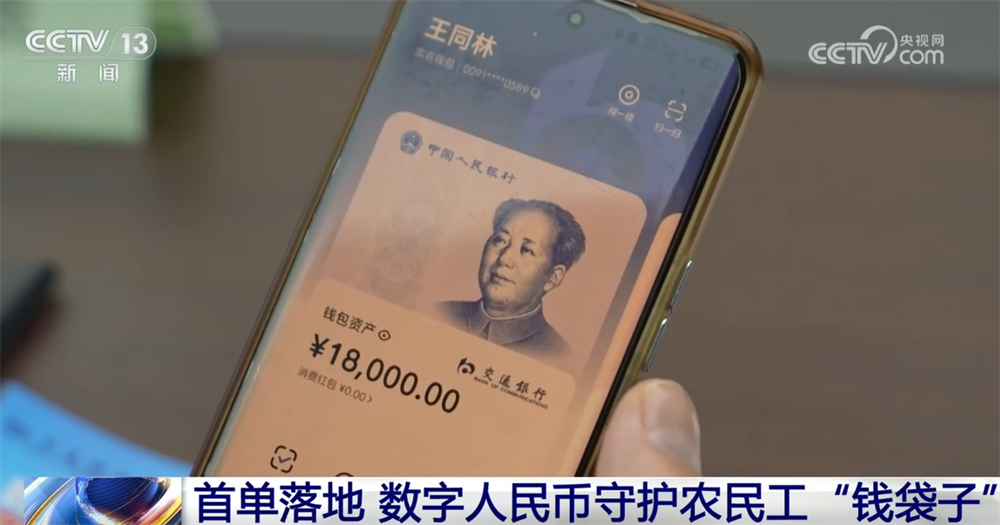
数字人民币守护农民工“钱袋子”
Xin Lang Cai Jing· 2026-02-14 14:35
Core Viewpoint - The implementation of digital RMB smart contracts in Chengdu marks a new model for ensuring wage payments for migrant workers, enhancing financial security and efficiency in the payment process [1][20]. Group 1: Digital RMB for Wage Payments - The first application of digital RMB for wage payments has been successfully executed, with a migrant worker receiving his salary through this method, highlighting convenience and immediacy [1][21]. - The digital RMB smart contract functions as an "intelligent digital contract," automating payment processes and ensuring funds are used specifically for their intended purpose, thus preventing misuse [5][20]. - The initiative aligns with national policies aimed at safeguarding migrant workers' wages, with over 1 million yuan successfully disbursed through this system [7][23]. Group 2: Applications in Prepaid Consumption - Digital RMB smart contracts also address issues in prepaid consumption, where funds are protected from being misappropriated by merchants, ensuring consumer safety [8][24]. - Funds deposited into a smart contract wallet remain under consumer control until conditions for payment are met, allowing for refunds if services are not rendered [10][26]. - This model transforms traditional prepaid systems by enabling payments to be made on a per-use basis, enhancing consumer protection and trust [12][28]. Group 3: Broader Applications and Future Prospects - The potential applications of digital RMB smart contracts extend to various sectors, including subsidy distribution and supply chain finance, enhancing operational efficiency and risk management [18][30]. - Smart contracts can facilitate targeted consumer subsidies by automatically verifying eligibility based on government data, improving the precision of financial support [14][32]. - As of January 2026, there have been 486,400 contracts signed with a total transaction amount of 316 million yuan, indicating significant adoption and potential for growth in various financial applications [18][33].

守护农民工“钱袋子”、守护预付式消费安全……数字人民币智能合约应用前景广阔
Yang Shi Wang· 2026-02-13 02:14
Core Viewpoint - The implementation of digital RMB smart contracts in Chengdu marks a new model for ensuring wage payments for migrant workers, providing a secure and efficient payment method [1][5]. Group 1: Digital RMB Smart Contracts for Wage Payments - The digital RMB smart contract acts as a "smart digital contract" that automates payment processes once predefined conditions are met, eliminating human intervention [5]. - In the wage payment scenario, banks utilize a digital RMB smart contract ecosystem to ensure funds are used specifically for their intended purpose, preventing misappropriation [6]. - The application of digital RMB smart contracts has successfully facilitated the payment of over 1 million yuan, ensuring that migrant workers receive their wages directly and securely [8]. Group 2: Broader Applications of Digital RMB Smart Contracts - Digital RMB smart contracts can also address issues in prepaid consumption, where funds are safeguarded until conditions for service delivery are met, thus preventing financial losses for consumers [9][11]. - The smart contract model allows for funds to remain under consumer control until the service is rendered, ensuring refunds are processed automatically if services are not delivered [11]. - The potential applications of digital RMB smart contracts extend to areas such as subsidy distribution and supply chain finance, enhancing the efficiency and accuracy of financial transactions [12][16]. Group 3: Market Impact and Future Prospects - The digital RMB smart contract ecosystem has signed a total of 486,400 contracts with a cumulative transaction amount of 316 million yuan by the end of January 2026, indicating significant market adoption [16]. - The use of smart contracts can customize payments and improve the efficiency of subsidy distribution, meeting complex consumer needs [14].
数字人民币智能合约推出新应用 助力农民工安“薪”过年
Xin Lang Cai Jing· 2026-02-10 12:39
Core Viewpoint - The implementation of the first digital RMB smart contract for migrant workers' wage payments in Chengdu, Sichuan, represents a new digital financial model aimed at ensuring timely and full wage payments for migrant workers, thereby enhancing their welfare and interests [1][3]. Group 1: Digital RMB Smart Contract Implementation - The digital RMB smart contract automates wage payments through a computer program that executes contract obligations based on predefined conditions, eliminating human intervention and supporting cross-institutional interoperability [1][5]. - During the wage payment process, the Bank of Communications opened a corporate wallet for the construction company and utilized a smart payment contract to distribute over 1 million yuan to 104 workers, effectively preventing fund misappropriation [1][5]. Group 2: Data Empowerment and Industry Solutions - The "Anxin Zhu" platform developed by Yizhi Technology provides clear and accurate business data, enhancing the management of funds through digital RMB smart contracts, thus addressing issues like "separation of people and cards" and ensuring workers receive their wages accurately [2][6]. - Sichuan Province, with over 150,000 construction companies and more than 4 million workers, is focusing on digital solutions to tackle wage arrears, emphasizing a comprehensive digital governance model [2][6]. Group 3: Market Demand and Future Developments - The market demand for digital RMB smart contracts is expanding, with applications in areas such as fiscal subsidies and supply chain finance, which improve payment monitoring and fund processing efficiency [3][6]. - As of January 2026, there have been 486,400 signed contracts with a total transaction amount of 316 million yuan in various pilot applications, indicating significant growth in the use of digital RMB smart contracts [3][6]. - Future plans include enhancing system services and promoting existing models while collaborating with member banks to innovate applications of digital RMB smart contracts for industry development and social governance [7].
首单落地!数字人民币智能合约拓展智能代发领域新场景
Guo Ji Jin Rong Bao· 2026-02-10 10:05
Core Insights - The People's Bank of China has facilitated the launch of the first digital RMB smart contract for wage payments to migrant workers in Chengdu, marking a new model for digital and inclusive finance [1] - The digital RMB smart contract automates wage disbursement, ensuring funds are not misappropriated and are paid in full according to wage details [1] Group 1: Digital RMB Smart Contracts - Digital RMB smart contracts enable the digitalization, automation, and enforcement of contracts, eliminating human intervention and supporting cross-institutional interoperability [1] - The smart contract ecosystem allows for automatic execution of funds based on pre-set conditions, enhancing financial security and efficiency in various applications [2] Group 2: Applications and Impact - Smart contracts have been piloted in areas such as prepaid fund management, supply chain finance, corporate finance management, and subsidy distribution, demonstrating their versatility [2] - In prepaid fund management, funds remain with consumers until conditions are met, ensuring protection against misuse [2] - By January 2026, there will be 486,400 signed contracts with a total transaction amount of 316 million yuan in various sectors [3]
数字人民币智能合约红包“点燃”春节消费新引擎
Zhong Guo Jing Ying Bao· 2026-02-05 14:51
Core Viewpoint - The "2026 'Buy New Year' Spring Festival Special Activity Plan" aims to promote the use of digital RMB smart contract consumption red envelopes, enhancing the integration of digital and physical consumption, and injecting new momentum into economic recovery [1][2]. Policy Foundation - The activity plan indicates that digital RMB has evolved from a transaction infrastructure to a precise consumption promotion policy tool, ensuring that funds are directed into physical consumption scenarios, thus improving the efficiency of fiscal resource allocation [2]. - The plan promotes the upgrade of consumption tools, transitioning from broad subsidies to precise, traceable, and closed-loop funding mechanisms, facilitating the large-scale implementation of digital RMB [2][3]. Unique Advantages - Digital RMB smart contract consumption red envelopes offer three unique advantages: precise triggering, cost reduction, and risk prevention. This includes setting conditions for fund usage, ensuring direct consumer incentives, and lowering costs for both government and merchants [3]. - The technology behind digital RMB provides traceability and security, preventing fraud and ensuring the safety of prepaid funds [3]. Nationwide Acceleration - The application of digital RMB smart contracts is accelerating nationwide, with specific events like the "Prosperous Qinhuai: Digital Currency Blossoms" campaign in Nanjing aimed at promoting its use in commerce and tourism [4]. - The first cross-institutional smart contract scenario was launched in September 2025, showcasing significant progress in breaking down institutional barriers and enhancing fund utilization efficiency [4]. Future Outlook - There is significant potential for further development of digital RMB smart contract red envelopes, with suggestions to target key sectors, activate offline scenarios, lower payment thresholds, optimize supply-side access for small merchants, and enhance inbound consumption [5].