数字关税

Search documents
数字关税战争:TikTok争端背后的全球规则博弈
虎嗅APP· 2025-10-29 00:27
Core Viewpoint - The article discusses the emergence of "digital tariffs" as a new form of economic warfare, particularly illustrated through the case of TikTok in the U.S., where compliance requirements effectively impose hidden costs on the platform and its users [2][4]. Group 1: Digital Tariffs and Economic Impact - The U.S. government has mandated TikTok to migrate user data to local servers, resulting in an investment of approximately $1.5 billion for restructuring [4]. - The annual expenditure for data storage and auditing has surged by over $200 million, translating to an "invisible tax" of about $1.2 per American user [5]. - The increased operational costs lead to higher advertising prices and commissions, impacting small businesses that rely on TikTok for customer acquisition [5]. Group 2: Algorithm Control and Intellectual Property - TikTok's recommendation algorithm, which contributes over 70% to its business value, is a focal point of U.S. regulatory demands, aiming to gain control over this core technology [6]. - A compromise allows TikTok's parent company, ByteDance, to retain intellectual property rights while a local joint venture in the U.S. operates a copy of the algorithm, effectively turning it into a "leased asset" [6]. Group 3: Advantages of Digital Barriers - Digital tariffs circumvent multilateral trade rules, as they are framed under the guise of national security and privacy protection, allowing the U.S. to impose strict requirements selectively [8]. - The flexibility and rapid adjustment of digital barriers enable regulators to redefine "sensitive data" swiftly, making them a more agile tool compared to traditional tariffs [9]. - Digital barriers are often tied to public sentiment and social issues, making them more palatable to the domestic audience and complicating retaliatory measures from other countries [9]. Group 4: Global Digital Governance Fragmentation - The article outlines three major global camps regarding data sovereignty: the U.S. with its "long-arm jurisdiction," the EU with its stringent privacy standards, and China focusing on "sovereignty first" [11][12][13]. - The fragmentation of digital governance could lead to significant economic losses, with estimates suggesting a potential global GDP decline of 4.5% if strict data localization measures are implemented [15]. - Small businesses are particularly vulnerable, as rising costs associated with compliance could force them to reduce marketing budgets or exit platforms like TikTok [15]. Group 5: Future Directions and Solutions - Companies are exploring proactive strategies, such as Huawei's establishment of local data centers in Germany to meet regulatory requirements while retaining control over technology [18]. - Regional agreements like the RCEP could pave the way for coordinated digital rules, potentially forming a "data tariff alliance" among member countries [19]. - The competition for data value chain pricing power signifies a shift from product competition to rule competition in the digital economy [21].


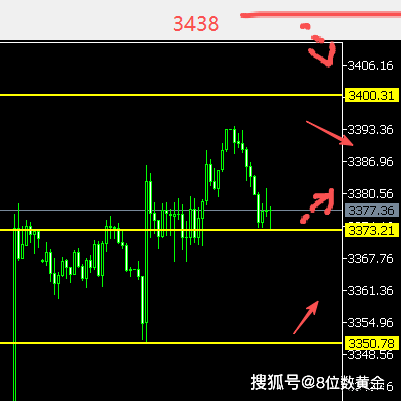
8.27黄金破高大涨45美金 决战3400
Sou Hu Cai Jing· 2025-08-27 08:06
Core Viewpoint - The gold market is experiencing a significant V-shaped reversal, with prices surging by $45 to challenge the $3400 mark after intense competition between bulls and bears [1][10]. Market Movement - After a volatile session with rapid price fluctuations, gold prices reached a high of $3395 today [3]. - Following this peak, there was a pullback, with prices dropping below the $3380 level [4]. - The next support level is seen at $3373, where a rebound opportunity may arise [5]. - The upward trend continues, with the potential to break above $3400 [6]. - The market is expected to face resistance at $3438 [7]. - However, prices are currently below $3400 and are experiencing another correction [8]. - A drop below $3373 indicates a further decline towards the $3350 support level [9]. Influencing Factors - Recent developments include pressure from former President Trump on the Federal Reserve, which has led to increased concerns about U.S. sovereign credit risk and rising U.S. Treasury yields, benefiting gold prices [10]. - Trump's renewed imposition of tariffs, including on furniture, has put additional pressure on the dollar, further supporting gold's upward movement [11]. - Upcoming speeches from Federal Reserve officials are expected to focus on interest rate cut expectations, with the potential for tariff policies to influence the Fed's decisions [12]. Broader Economic Context - Global central bank debt is reaching critical levels, with Japan's central bank setting a record for debt repayment budgets [13]. - A global trend of interest rate cuts is emerging, leading to an increasing burden of debt [14]. - The year 2025 is anticipated to be significant not only for tariffs but also for challenges facing the financial system due to rising debt levels [15].
关税博弈:21世纪全球经济的隐形战场
Sou Hu Cai Jing· 2025-08-18 11:44
Core Insights - The book "Tariff Games" reveals the ongoing transformation of the global economic order through the lens of contemporary tariff battles, highlighting the critical economic conflicts of the 21st century [1] Group 1: Historical Context of Tariffs - Tariffs have been a symbol of national sovereignty since the establishment of Spain's "Million Tax" in the 15th century, serving as a tool for major powers in economic competition [2] - The book discusses historical cases such as the Spanish Empire, the British East India Company, and the Smoot-Hawley Tariff Act in the U.S. to illustrate how tariff policies have shaped economic hegemony [2] - The analysis extends to modern events like the breakdown of WTO Doha Round negotiations, the escalation of chip tariffs in the U.S.-China trade war, and the implementation of the EU's carbon border adjustment mechanism [2] Group 2: Three-Dimensional Tariff Game Model - The book introduces a "Three-Dimensional Tariff Game Model" to analyze tariff commitments and actual actions from a macro perspective, including G20 summit outcomes and regional agreements like RCEP and CPTPP [3][4] - It examines how multinational companies, exemplified by Tesla's Shanghai Gigafactory and the rise of manufacturing in Vietnam, leverage tariff differences to reshape global supply chains [4] - The micro perspective reveals the impact of tariff changes on small trade entities, using data from Yiwu's small commodity market and German SMEs [4] Group 3: Tariff Revolution in the Digital Age - The book highlights the unprecedented challenges to traditional tariff systems posed by the rise of cross-border e-commerce, which surpassed $4 trillion in annual transactions, and advancements in 3D printing technology [5] - It introduces the concept of "digital tariffs," analyzing emerging tax types like data flow taxes and algorithm patent taxes, which could lead to a restructuring of existing rules [5] - The conflicts between the EU's Digital Services Tax (DST) and the U.S. Section 301 investigations illustrate the new dimensions of tariff battles in the digital era [5] Group 4: Solutions to Tariff Conflicts - The book proposes practical solutions to break the cycle of "tariff wars-inflation-recession," including the establishment of a "tariff elasticity mechanism" inspired by Singapore's variable tariff system to address supply chain shocks [6] - It suggests creating a "digital tariff sandbox" to explore new tax paradigms for cross-border data flow in free trade zones [6] - The promotion of "tariff capacity building" aims to enhance the participation of developing countries in rule-making processes [6] Group 5: Broader Implications - "Tariff Games" serves as a key to understanding 21st-century international relations, especially as global supply chains undergo "de-risking" and geopolitical and economic interests intertwine [10] - The ongoing evolution of tariff battles will reshape perceptions of the global economic order for policymakers, business leaders, and readers interested in world dynamics [11]