数字化降本

Search documents
海尔智家20260129
2026-01-30 03:11
Summary of Conference Call for Haier Smart Home Company Overview - **Company**: Haier Smart Home - **Industry**: Home Appliances Key Points 1. Recent Performance - Haier reported a small single-digit growth globally in December and Q4, with domestic performance being weaker and overseas performance slightly better [2][3] - The company is focusing on efficiency and user experience improvements for 2025 [2] 2. Product and Market Strategy - Emphasis on enhancing product strength, digital inventory, and marketing transformation [3] - The operational efficiency is described as stable, with a focus on brand upgrading and market strength [3] 3. Air Conditioning Segment - For 2026, the internal target for air conditioning revenue is set for double-digit growth, with a strong performance in installation services showing over 30% growth in 2025 [4][7] - The company plans to manage raw material cost increases through hedging and operational efficiencies [5][6] 4. Casarte Brand Performance - Casarte is expected to achieve double-digit growth in 2025, with high internal targets for 2026 [7][9] - The brand is focusing on product upgrades and expanding its urban experience centers to enhance channel effectiveness [8] 5. Domestic Market Dynamics - The company will not engage in price wars but will focus on enhancing its competitive strength [10][11] - The domestic market is facing pressure, with a noted decline in the industry [11] 6. North American Market Outlook - The North American market is expected to perform better than the industry average in 2026, with ongoing adjustments to supply chains to mitigate tariff impacts [11][12] - Profitability in North America is projected to improve compared to 2025 [13] 7. European Market Expectations - Positive feedback from internal assessments suggests improved efficiency and product pricing in Europe for 2026 [14][15] 8. Emerging Markets Growth - Emerging markets, particularly in Southeast Asia, are expected to maintain over 20% growth in 2025, with a target of triple-digit growth for 2026 [16][17] - The company is enhancing local management capabilities and product support in these regions [17][18] 9. Cost Reduction Initiatives - Digital transformation and supply chain cost reductions are ongoing, with expectations for continued improvements in profit margins [19][20] 10. Capital Expenditure Plans - Capital expenditure for 2026 is expected to be slightly higher than in 2025, with a focus on overseas supply chain development [22] 11. Dividend Policy - The company aims for a stable increase in dividends, targeting over 50% for the upcoming year [23] 12. 2026 Financial Guidance - Revenue growth is projected to be in the mid-single digits, with profit growth expected to be in the high single digits to low double digits [25] 13. Overall Company Outlook - Haier Smart Home is characterized as a stable and responsible leader in the home appliance sector, with a favorable valuation compared to historical levels [27] Additional Notes - The conference highlighted the company's commitment to maintaining growth and efficiency while navigating market challenges and opportunities [26][28]

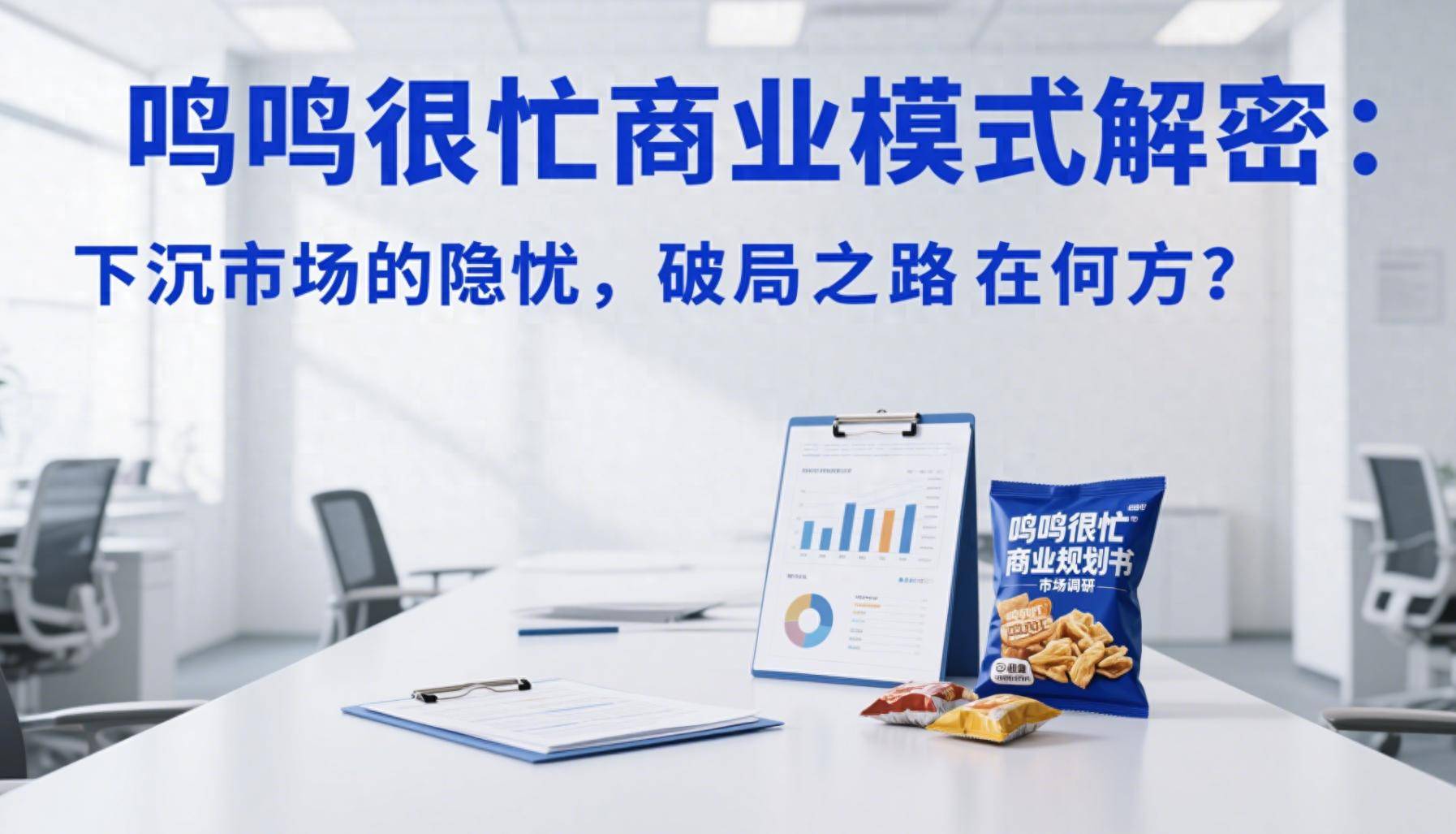
商业模式解密:鸣鸣很忙下沉市场的隐忧,破局之路在何方?
Sou Hu Cai Jing· 2025-05-12 14:29
Core Insights - "Ming Ming Hen Mang" has achieved a remarkable GMV of 55.5 billion RMB, establishing a strong presence in the lower-tier market with extensive coverage across 1,224 counties and 58% of its stores located in county and town areas [4][6] - Despite impressive growth, the company faces significant challenges, including a contradiction between growth and profit, intense competition, and limitations of its business model [2][16] - The company’s low profit margin, with an adjusted net profit margin of only 2.1%, highlights the risks associated with its low-price strategy aimed at expanding market share [7][10] Business Model and Market Position - The "rural encirclement of cities" strategy has proven successful for "Ming Ming Hen Mang," allowing it to build a solid scale barrier in the lower-tier market [4] - The company leverages centralized procurement to reduce costs, achieving a gross margin of 7.5% through high-volume purchasing, which enhances its bargaining power with suppliers [4][6] - The reliance on franchise sales for 99.5% of its revenue creates a vulnerability, as profit margins are squeezed by both upstream suppliers and downstream franchisees [7][11] Financial Performance - Revenue figures for 2022, 2023, and 2024 are projected at 4.29 billion RMB, 10.30 billion RMB, and 39.34 billion RMB respectively, with adjusted net profits of 0.81 billion RMB, 2.35 billion RMB, and 9.13 billion RMB [6] - The company’s financials indicate a significant increase in sales costs, which outpace revenue growth, leading to a challenging profit landscape [6][10] Competitive Landscape - The competition with "Hao Xiang Lai" has intensified, with both companies rapidly expanding their store counts, leading to a "store arms race" that increases operational costs and risks market saturation [7][11] - Marketing expenses have tripled over three years, contributing to a challenging environment where both companies struggle to maintain profitability [7][11] Strategic Initiatives - The potential IPO could provide "Ming Ming Hen Mang" with capital to strengthen its market position, particularly in cold chain logistics and digitalization, which are crucial for operational efficiency [5][16] - Developing private label products could enhance profit margins by allowing better control over costs and quality, drawing inspiration from successful models like Miniso [8][10] - The company is exploring a dual revenue model by adopting a membership system similar to Costco, which could diversify income sources and enhance customer loyalty [15] Challenges and Risks - The low acceptance of brand premiums among lower-tier market consumers poses a challenge for the company in balancing quality and price [10] - Significant investments in cold chain logistics for fresh produce could strain cash flow, necessitating careful financial planning to avoid operational disruptions [10][16] - The company must navigate the risks associated with its single revenue model and the potential for market saturation, which could jeopardize its business model [11][16]