数字法院

Search documents
为法治担当 助力平安上海 过去一年上海法院、检察院积极参与社会治理工作获得代表肯定
Jie Fang Ri Bao· 2026-02-07 03:24
Group 1: Court and Prosecution Reports - The reports from the Shanghai courts and prosecution highlight significant achievements, with multiple indicators ranking among the top in the nation, reflecting the dedication of law enforcement to serve the public and uphold justice [1] - In the past year, Shanghai courts concluded 45,000 intellectual property cases, applying punitive damages totaling 170 million yuan, which imposes heavy penalties on infringers [2] - The prosecution handled 2,381 intellectual property cases, focusing on strict enforcement against crimes related to key technologies in emerging industries [2] Group 2: Intellectual Property and Technology - There is a growing concern regarding intellectual property cases, particularly those involving high-tech research, which require careful handling to avoid negatively impacting startups [2] - Representatives suggest adopting best practices from abroad, such as increasing punitive damages, to enhance the protection of original technologies and prevent misuse of non-compete clauses [2] - The rapid development of artificial intelligence has introduced new legal challenges, prompting calls for the involvement of third-party experts in case handling to provide objective technical insights [2][3] Group 3: Social Governance and Community Engagement - The Shanghai courts and prosecution have actively participated in social governance, with judicial work being integrated into grassroots governance systems, which is seen as a key measure of their effectiveness [4] - The courts conducted over 1,500 mobile trials, achieving full coverage across neighborhoods, which has increased public engagement and awareness of legal processes [4] - There is a need for community workers to better understand relevant laws to facilitate daily mediation efforts, with calls for more support from the courts and prosecution [4] Group 4: Education and Digital Initiatives - Concerns about harmful online content affecting youth health have led to suggestions for integrating legal education into the school curriculum, focusing on internet safety [5] - There is a push to expand the application of "digital courts" and "digital prosecution" to enhance social governance, including making prosecutorial recommendations publicly available [6] Group 5: Case Management and Judicial Efficiency - The total number of cases received by Shanghai courts reached 1.107 million, with 1.037 million cases concluded, marking increases of 28.8% and 23.3% year-on-year, respectively [7] - The rising case volume has raised concerns about the workload of judges, prompting suggestions for increasing the mediation workforce to alleviate pressure on judicial staff [7] - The construction of "digital courts" is viewed as a crucial strategy to address the challenges posed by the growing number of cases, with calls for improved technological capabilities across different courts [7]
数字法院折射治理之变(法治头条)
Ren Min Ri Bao· 2025-12-10 22:30
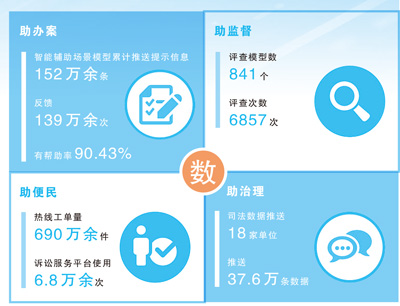
Core Viewpoint - The Shanghai courts are actively advancing the construction of digital courts, integrating big data and artificial intelligence into judicial processes to enhance efficiency and precision in governance and legal proceedings [4][10][12]. Group 1: Digital Court Construction - The Shanghai courts focus on scene construction and digital modeling to promote the digital court initiative, which includes comprehensive case management and specialized adjudication [4][6]. - The establishment of over 1,100 intelligent auxiliary scene models has improved case handling efficiency and strengthened judicial management [6][10]. - The transition from "experience-driven" to "data-driven" approaches in case handling has been emphasized, allowing judges to utilize data for better decision-making [10][12]. Group 2: Judicial Efficiency and Case Management - The integration of data resources into a single intelligent auxiliary model has significantly enhanced the efficiency of case handling, allowing for quick identification of assets for execution [9][10]. - The digital court initiative has led to the generation of over 152,000 prompt notifications, covering 92% of judges in the city, thereby improving judicial quality [12][13]. - The focus on data sharing and analysis distinguishes the digital court from previous information technology initiatives in the judiciary [10][12]. Group 3: Public Service and Accessibility - The digital court initiative has improved public access to judicial services, allowing citizens to query marriage-related documents online, which constitutes nearly 70% of civil service requests [13][14]. - The implementation of a mechanism for sharing information related to domestic violence cases has enhanced the effectiveness of protective orders [16][17]. - The digital court system enables real-time feedback on litigation risks and provides predictive analytics for case outcomes, enhancing transparency and public trust [16][17]. Group 4: Collaborative Governance - The digital court initiative facilitates collaboration between judicial and administrative departments, addressing issues such as medical insurance fund recovery through data sharing [18][19]. - The proactive identification of potential issues through data analysis has led to significant recoveries of medical funds, amounting to nearly 8.7 million yuan [20][21]. - The establishment of intelligent auxiliary models to address prepayment consumption disputes has improved consumer protection and market order [22][23].

能识别“假离婚实逃债”上海数字法院用新招破司法难题
Yang Shi Xin Wen· 2025-11-28 02:32
Core Viewpoint - Shanghai's digital court system is effectively addressing traditional judicial challenges, such as identifying fraudulent divorce cases used for debt evasion, through advanced data integration and predictive alerts [1][3]. Group 1: Digital Court Innovations - The Shanghai digital court has integrated data deeply into judicial practices, significantly improving the identification of issues like false litigation [1][3]. - Since the implementation of the 14th Five-Year Plan, the digital court has developed over 1,800 application scenarios and embedded more than 800 into case handling systems, generating over 1.5 million alerts that cover 92% of judges in the city [5]. Group 2: Case Study of Fraudulent Divorce - A divorce case in the Pudong New Area revealed potential debt evasion, where the husband had numerous ongoing litigation cases, prompting the court to investigate further [2][3]. - The court's alert system indicated that the husband might be attempting to transfer assets to the wife, which could hinder debt repayment, leading to a decision to separate the divorce proceedings from asset distribution [2][3]. Group 3: Data-Driven Dispute Resolution - The digital court utilizes big data to identify common disputes, such as noise and smoke complaints, and has initiated community巡回审判 (circuit trials) to address these issues directly [6][7]. - In a notable case involving neighbor disputes over property use, the court facilitated a resolution that led to the removal of a problematic structure, resulting in the resolution of 21 related disputes [7]. Group 4: Community Safety Initiatives - A fire incident caused by improper electric vehicle charging highlighted safety concerns, leading to a court ruling that mandated compensation and the establishment of community guidelines for electric vehicle management [8]. - The Shanghai courts have set up 340巡回审判 points across 200 neighborhoods, resolving over 4,880 disputes through community engagement and legal education [8].
浪潮科技数字法院创新成果亮相2025政法装备展
Qi Lu Wan Bao· 2025-07-24 11:23
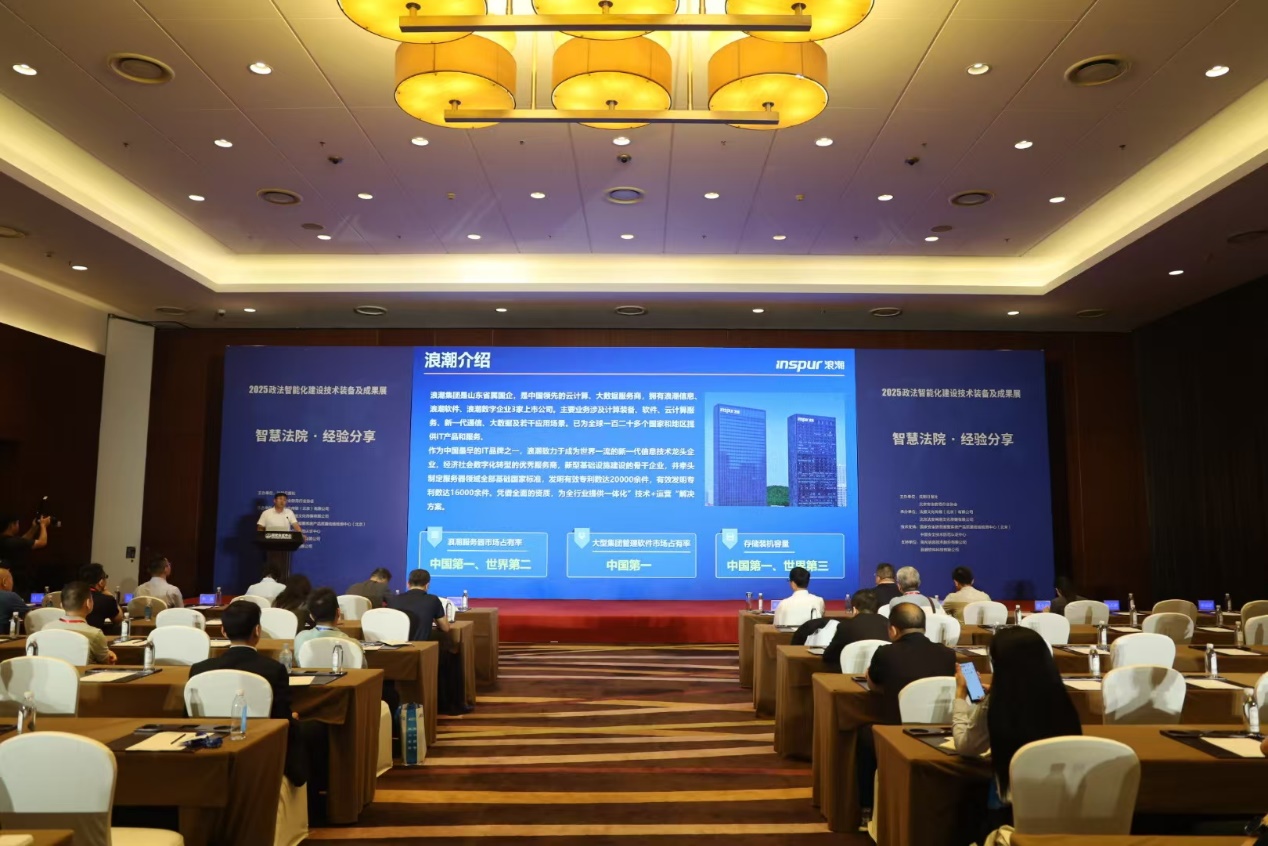
Core Insights - The event showcased the advancements in digital court solutions powered by large models, emphasizing the importance of technology in the judicial system [1][5] - The integration of AI tools and a comprehensive management system aims to enhance the efficiency and effectiveness of court operations [4][5] Group 1: Event Overview - The 2025 Legal Intelligence Construction Technology Equipment and Achievements Exhibition was held in Beijing, featuring Inspur Technology's innovative digital court solutions [1] - A keynote speech by Gong Maoqiang highlighted the role of large models in the digital transformation of courts, showcasing Inspur's contributions to building a new digital legal ecosystem [3] Group 2: Technological Innovations - Inspur focuses on three core business areas to improve the "last mile" service capabilities of courts, including the development of a digital court manager and a full lifecycle management system [4] - The company presented a leading smart court solution that has been successfully implemented in various high-profile courts across China, providing replicable models for intelligent trial processes [4] Group 3: Collaborative Governance Model - A new collaborative governance model was established, linking courts with various governmental and financial institutions to enhance the handling of complex cases, particularly in financial disputes [4] - This model significantly improves the efficiency of case resolution and supports the optimization of the regional business environment [4] Group 4: AI and Knowledge Platforms - The core engine behind these innovations is the "Yanyu" industry large model service platform, which integrates general intelligence with industry-specific applications [5] - The "Zhi·Yong" integrated knowledge service platform further supports the digital and intelligent transformation of courts, ensuring comprehensive coverage and sustainability [5] Group 5: Industry Impact - The exhibition marked a significant step towards the deep integration of new information technologies, represented by large models, into the core functions of the legal system [5] - The initiatives set a benchmark for the construction of a new digital court ecosystem under the "One Network" strategy, accelerating the comprehensive digital transformation of the judiciary [5]