
数据中心互连

Search documents
美克家居并购万德溙光电重大资产重组有序推进 进军AI算力赛道重构发展格局
Zheng Quan Shi Bao Wang· 2026-01-12 11:41
Core Viewpoint - Meike Home (600337) is undergoing a strategic restructuring by acquiring 100% equity of Wande Optical, marking its entry into the AI computing infrastructure sector, particularly in high-speed interconnect manufacturing [1] Group 1: Acquisition Details - The acquisition involves issuing shares and cash payments, along with raising supporting funds, aligning with regulatory encouragement for quality mergers and industrial upgrades [1] - The transaction has been approved by the board of directors, and the company's stock has resumed trading as the related procedures progress as planned [1] Group 2: Target Company Overview - Wande Optical is a key technology provider in the high-speed interconnect field, specializing in high-speed copper cables and LOOPBACK intelligent loopback testing modules, essential for efficient AI computing cluster operations [1] - The company has established a technological advantage in the domestic market with its self-developed 1.6T specification high-speed direct connection copper cables and active copper cable products [2] Group 3: Market Context and Future Trends - The acquisition occurs at a pivotal moment as data center interconnect technology transitions from electrical to optical solutions, with copper cables currently dominating short-distance transmission due to cost advantages [2] - The industry is expected to see a shift towards optical technology, which integrates optical engines with computing chips to significantly reduce power consumption and enhance transmission efficiency, with commercialization anticipated to begin in 2026 [2] Group 4: Strategic Implications - The acquisition allows Meike Home to capitalize on the surging demand for high-speed copper cables in the early stages of AI infrastructure development, potentially translating existing technological leadership into market advantages [3] - Successfully integrating Wande Optical could enable Meike Home to escape traditional business cycle constraints and transition into the core of the global technology industry, reshaping its business structure and growth potential [3]

CPO,最新进展
半导体行业观察· 2025-11-03 00:39
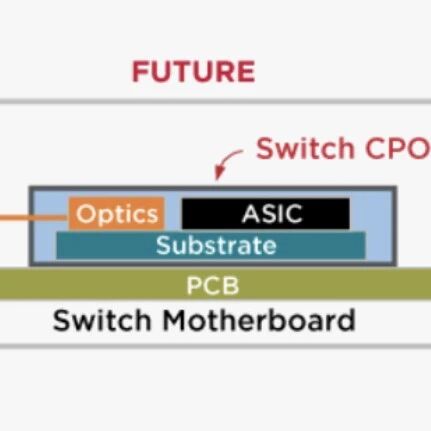
Core Insights - The article emphasizes the growing demand for interconnect bandwidth in data centers, driven by increasing internet traffic and the rapid expansion of AI large language models. However, this demand leads to higher power consumption, prompting the industry to seek improved energy efficiency in data transmission measured in picojoules per bit [2][4]. Group 1: CPO Technology Overview - Co-packaged optics (CPO) is emerging as a key solution to address the challenges of power consumption and efficiency in data center interconnects. By integrating electronic chips and silicon photonic chips in the same package, CPO significantly reduces power consumption and enhances performance [2][5]. - CPO technology offers several advantages over traditional pluggable optical modules, including reduced signal loss, lower power consumption, and increased connection density on the front panel [6][8]. Group 2: Industry Adoption and Developments - Major companies, including Broadcom and Marvell, are heavily investing in CPO technology, with Broadcom's products promising a 70% reduction in power consumption compared to pluggable transceiver solutions [8][10]. - NVIDIA is also adopting CPO technology in its upcoming network switches, claiming a 3.5 times increase in energy efficiency and 10 times network resilience compared to traditional networks [12][14]. Group 3: Market Growth and Future Predictions - The CPO market is projected to grow significantly, with revenues expected to rise from approximately $38 million in 2022 to $2.6 billion by 2033, reflecting a compound annual growth rate (CAGR) of 46% [14][16]. - Analysts predict that CPO technology will see large-scale deployment by 2027, with ongoing research and development activities at an all-time high [16][18]. Group 4: Performance and Testing - Broadcom's CPO technology has undergone extensive testing, achieving over 86,000 hours of high-temperature operating life (HTOL) testing, demonstrating stability and reliability in performance metrics [18][19]. - The performance of CPO solutions is characterized by low power consumption and high bandwidth density, with Broadcom reporting a 30% reduction in power and a 40% decrease in cost per bit for optical devices [6][19]. Group 5: Competitive Landscape - The competitive landscape for CPO technology is evolving, with companies like TSMC and NVIDIA leading advancements in device miniaturization and packaging technologies [10][12]. - The market is also seeing the emergence of startups like Celestial AI and LightMatter, which are developing next-generation CPO technologies that could surpass current offerings from established players [41][43].


中际旭创(300308) - 投资者关系活动记录表20250827
2025-08-27 12:44
Financial Performance - In the first half of 2025, the company's revenue reached 14.789 billion CNY, a year-on-year increase of approximately 37% [2] - The net profit for the same period was 4.242 billion CNY, with a net profit margin of 28.70% [3] - In Q2 2025, the company reported a revenue of 8.115 billion CNY, a quarter-on-quarter growth of about 22% [3] - The gross margin for Q2 2025 was 41.5%, an increase of nearly 5 percentage points compared to Q1 2025 [3] - The consolidated net profit for Q2 2025 was 2.552 billion CNY, with a quarter-on-quarter growth of approximately 51% [3] Business Operations - The company has seen a significant increase in demand for 800G and 400G optical modules, driven by capital expenditure from key overseas clients in AI infrastructure [4] - The company has begun gradual shipments of 1.6T products, with expectations for continued mass production in the upcoming quarters [4] - The company is actively expanding production capacity for high-end products like 1.6T and 800G to meet rising industry demand [4] Investor Q&A Highlights - The gross margin for high-end products like 1.6T is expected to be better, primarily due to the use of silicon photonics [5] - The company has strong inventory capabilities to address supply tightness in core upstream components, which is crucial given the rapid growth in demand for 800G and 1.6T [5] - The company plans to gradually increase its dividend payout ratio to share operational success with shareholders [6] - The company is observing a growing demand for optical connection solutions as the industry evolves [7] Market Outlook - The company anticipates that material costs will impact gross margins, but it remains confident in maintaining gross margin growth through product technology and bulk purchasing strategies [8] - The company has developed capabilities for 3.2T products and is in the active research phase, although market demand is currently focused on 1.6T and 800G [8] - The company is expanding both domestic and international production, with expectations for improved gross margins in the domestic market [9] Strategic Initiatives - The company is addressing foreign exchange risks by monitoring exposure and hedging against currency fluctuations [10] - There is a growing demand for data center interconnect solutions, driven by various application scenarios within data centers [11] - The company sees significant opportunities in the scale-out market due to increasing interconnect needs as clients transition from GPU to ASIC chips [12] - The company is actively developing copper connection and liquid cooling solutions, with positive progress reported [13] - The demand for ZR modules in AI data centers is expected to grow, with the company promoting its 400G ZR and 800G ZR technologies [14]
