CPO(共封装光器件)

Search documents
群雄争霸CPO
半导体行业观察· 2026-03-13 01:53
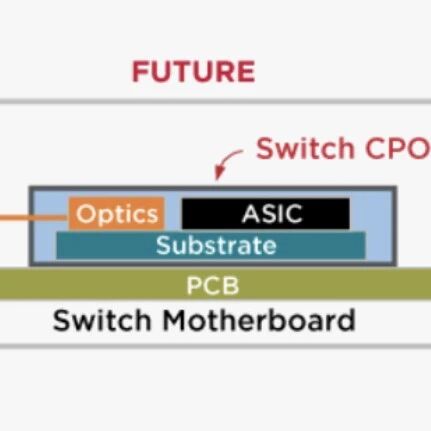
Core Insights - The article discusses the transition from copper wiring to Co-Packaged Optics (CPO) in AI data centers to reduce energy consumption per bit and improve bandwidth [2][3][4] - CPO is expected to play a crucial role in meeting the projected $5.2 trillion investment needed for global AI data centers by 2030, as it addresses power and bandwidth challenges [3][4] Group 1: CPO Advantages and Implementation - CPO allows optical connections to be placed closer to ASICs, GPUs, or CPUs, reducing the need for long and inefficient electrical wires, thus lowering energy consumption per bit [2][4] - Companies leading in CPO adoption include Broadcom, NVIDIA, Intel, Marvell, and Ayar Labs, supported by foundries like GlobalFoundries, IBM, and TSMC [3] - CPO technology is seen as a solution to the high power demands of AI data centers, with significant implications for performance and efficiency [4][6] Group 2: Technical Challenges and Solutions - The integration of optical components into high-performance ASICs, CPUs, or GPUs requires specialized design methods to manage the physical and functional fusion of light and electricity [14][25] - High power consumption is a major challenge, with some chips consuming up to 35,000 amperes and 35 kilowatts, necessitating innovative power management solutions [6][7] - CPO design significantly reduces I/O power consumption while maintaining processing power, addressing bandwidth challenges through multiple channels [12][25] Group 3: Future Directions and Industry Developments - Advanced packaging issues need to be resolved for CPO to become more widespread, including thermal management, laser reliability, and manufacturing yield [22][25] - Major EDA companies are focusing on integrating optical simulation tools into their existing platforms to support CPO development [20][21] - The article emphasizes the importance of temperature stability and stress management in optical circuits to ensure reliable performance in AI systems [25][23]



CPO,最新进展
半导体行业观察· 2025-11-03 00:39
Core Insights - The article emphasizes the growing demand for interconnect bandwidth in data centers, driven by increasing internet traffic and the rapid expansion of AI large language models. However, this demand leads to higher power consumption, prompting the industry to seek improved energy efficiency in data transmission measured in picojoules per bit [2][4]. Group 1: CPO Technology Overview - Co-packaged optics (CPO) is emerging as a key solution to address the challenges of power consumption and efficiency in data center interconnects. By integrating electronic chips and silicon photonic chips in the same package, CPO significantly reduces power consumption and enhances performance [2][5]. - CPO technology offers several advantages over traditional pluggable optical modules, including reduced signal loss, lower power consumption, and increased connection density on the front panel [6][8]. Group 2: Industry Adoption and Developments - Major companies, including Broadcom and Marvell, are heavily investing in CPO technology, with Broadcom's products promising a 70% reduction in power consumption compared to pluggable transceiver solutions [8][10]. - NVIDIA is also adopting CPO technology in its upcoming network switches, claiming a 3.5 times increase in energy efficiency and 10 times network resilience compared to traditional networks [12][14]. Group 3: Market Growth and Future Predictions - The CPO market is projected to grow significantly, with revenues expected to rise from approximately $38 million in 2022 to $2.6 billion by 2033, reflecting a compound annual growth rate (CAGR) of 46% [14][16]. - Analysts predict that CPO technology will see large-scale deployment by 2027, with ongoing research and development activities at an all-time high [16][18]. Group 4: Performance and Testing - Broadcom's CPO technology has undergone extensive testing, achieving over 86,000 hours of high-temperature operating life (HTOL) testing, demonstrating stability and reliability in performance metrics [18][19]. - The performance of CPO solutions is characterized by low power consumption and high bandwidth density, with Broadcom reporting a 30% reduction in power and a 40% decrease in cost per bit for optical devices [6][19]. Group 5: Competitive Landscape - The competitive landscape for CPO technology is evolving, with companies like TSMC and NVIDIA leading advancements in device miniaturization and packaging technologies [10][12]. - The market is also seeing the emergence of startups like Celestial AI and LightMatter, which are developing next-generation CPO technologies that could surpass current offerings from established players [41][43].