数据基座

Search documents
实探湖北人形机器人公共训练平台: 百台机器人“打工” 规模化采集打造数据基座
Zheng Quan Shi Bao· 2026-01-14 18:09
Core Insights - The lack of high-quality training data is a significant barrier to the application of humanoid robots, prompting the establishment of the Hubei Humanoid Robot Innovation Center as a public training platform [1][3] - The center aims to systematically collect foundational action data to train a universal "base model" for humanoid robots, enhancing their generalization capabilities [2][3] - The center's unique advantage lies in its platform-oriented approach, focusing on public service and connecting various stakeholders in the industry [4] Group 1: Data Collection and Training - The Hubei Humanoid Robot Innovation Center features various zones for robot demonstrations, action training, data collection, and practical applications, enabling a complete learning process [2] - The center can produce 24,000 effective data entries daily, with an annual collection target of nearly 10 million entries, aimed at training more robust base models [3] - To enhance data generalization, the center has established strict rules for data collection, ensuring that robots learn to perform complex tasks autonomously rather than memorizing fixed paths [2][3] Group 2: Industry Development and Infrastructure - A nationwide competition for humanoid robot training facilities is set to begin in the second half of 2024, with cities like Beijing and Shanghai accelerating their training center constructions [4] - The center aims to create a "trusted data space" to facilitate data circulation and transactions across the industry, addressing the limitations of data collection by individual companies [5] - The center is also focused on building a localized supply chain platform to optimize the industrial ecosystem, leveraging Hubei's industrial foundation [5] Group 3: Talent Development and Ecosystem - The humanoid robot sector faces a talent gap, with mechanical automation professionals lacking AI knowledge and vice versa, prompting the center to prioritize talent cultivation [6] - The establishment of the Hubei Humanoid Robot Innovation Center is part of a broader initiative to develop a robust humanoid robot industry in Hubei, with a clear goal of creating a billion-dollar industry cluster by 2028 [7] - The center has already attracted 15 companies to its vicinity, forming a "15-minute innovation circle" that encompasses complete processes from research to production [7] Group 4: Market Application and Business Model - The opening of the "7S store" in Wuhan East Lake High-tech Zone aims to create a comprehensive service ecosystem for humanoid robots, integrating sales, service, and personalized solutions [8] - The short-term goal of the 7S store is to drive traffic and educate the market, while the long-term objective is to develop a self-sustaining business model [8] - The humanoid robot sector is viewed as full of opportunities, with the potential to convert technological advancements into tangible industrial outcomes [8]


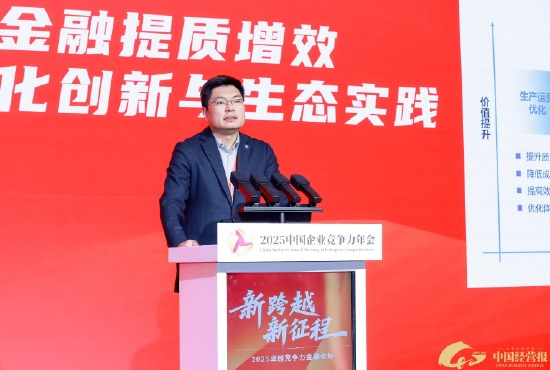
宇信科技韩冬:AI技术发展的突然加速,DeepSeek的发布让他“没过好年”
Xin Lang Cai Jing· 2025-12-09 08:19
Core Insights - The "2025 China Enterprise Competitiveness Conference" was held in Beijing on December 9-10, where Han Dong, Vice President of Yuxin Technology, discussed the rapid acceleration of AI technology in 2024 and 2025, particularly highlighting the release of DeepSeek during the 2025 Spring Festival, which impacted his year-end planning as a digital transformation leader in a listed company [5]. Group 1 - AI technology is currently experiencing a trough phase in its lifecycle, particularly for generative AI and foundational models, which presents strategic opportunities for companies to position themselves effectively [5]. - The market sentiment has shifted from previous enthusiasm for models to a more pragmatic approach focused on practical implementation, with financial institutions, including large banks, reassessing the value of AI technology [5]. - The readiness of data infrastructure and AI data capabilities has rapidly advanced, moving from the nascent stage to near the expected peak, becoming a critical foundation for the successful deployment of AI technology [5].