
数据融合

Search documents
“十五五”文旅融合怎么干?
Xin Lang Cai Jing· 2026-01-28 13:38
Core Viewpoint - The essence of integrated development is to achieve synergy and multiplier effects through multi-party interaction, complementarity, and collaborative development, which is essential for promoting innovative growth and has evolved into a systematic methodology [1] Group 1: Cultural and Tourism Integration - The proposal emphasizes the deep integration of culture and tourism, aiming to empower economic and social development through culture [2] - Current achievements in cultural tourism integration include institutional design and cultural resource activation, but there is a need for continuous improvement in the depth and quality of integration [2] - A comprehensive evaluation system for the quality and effectiveness of cultural tourism integration should be established to guide and adjust integration efforts [2] Group 2: Cultural and Technological Integration - The proposal calls for the integration of culture and technology, promoting digital empowerment and the transformation of cultural construction [3] - Emphasis is placed on exploring personalized development paths based on local resources and characteristics while strengthening the supporting system for cultural and technological integration [3] - Effectiveness assessments should focus on the accessibility of quality cultural resources and public cultural services for grassroots communities [3] Group 3: Multi-Industry Integration in Cultural Tourism - The proposal highlights the importance of multi-industry integration in cultural tourism, which has transitioned from policy guidance to practical implementation [4] - Various integration models such as cultural and sports tourism, agricultural and cultural tourism, and commercial tourism are playing significant roles in promoting high-quality economic development [4] - Specific policies and initiatives are being developed to enhance the integration of cultural tourism with other industries [4] Group 4: Data Integration - The proposal stresses the need for high-level technological self-reliance and the deep integration of technological and industrial innovation [5] - Data integration is identified as a new dimension and engine for cultural tourism integration, requiring breakthroughs in the open sharing of data resources [5] - The focus is on enhancing the digitalization of the cultural tourism industry and exploring typical scenarios for data value release [5] Group 5: Market Regulation Integration - The proposal advocates for the construction of a strong domestic market and the expansion of service consumption through relaxed access and industry integration [7] - Effective regulation of new business models is necessary to balance flexibility and control, requiring the integration of regulatory rules across multiple industries [7] - Enhancing comprehensive regulatory effectiveness and improving consumer satisfaction through quality regulation are key objectives [7] Group 6: Overall Integration Strategy - Integrated development is seen as a crucial approach to breaking industry boundaries and stimulating consumption potential, serving as an important engine for optimizing economic structure [8] - The methodology of integrated development should be applied with a macro perspective, identifying connections with cultural tourism in various integration processes [8] - Local advantages should be leveraged to break down administrative, industry, and regional barriers, optimizing resource allocation and improving efficiency [8]
智慧渔业要闯三道“关”(新媒视点)
Ren Min Ri Bao· 2025-12-21 23:46
Core Viewpoint - The traditional fishing industry in China faces multiple challenges, including resource constraints, rising production costs, and environmental pressures, leading to the emergence of smart fisheries as a solution for modernization and sustainable development [1] Group 1: Current Challenges - The fishing industry is experiencing tightening resource constraints, increasing production costs, diversified market demands, and heightened ecological pressures [1] - Smart fisheries are being hindered by high costs and complexity of smart equipment, leading to reluctance among fishermen to adopt these technologies [2] - There is a lack of digital infrastructure in remote fishing areas, which limits the application of real-time monitoring and remote control technologies [2] - The aging workforce in the fishing industry has low digital literacy, resulting in underutilization of advanced systems [2] - Many smart fisheries projects focus on construction rather than sustainable operation, leading to a lack of long-term viability [2] - Data related to production, weather, market, and logistics is fragmented across various departments, creating "data silos" that hinder industry-wide collaboration [2] Group 2: Pathways for Development - To advance smart fisheries, it is essential to adapt technology to meet the real needs of the fishing industry, ensuring practicality and usability for fishermen [3] - A comprehensive big data platform covering the entire fishing industry chain is necessary to facilitate data sharing and integration across various sectors [3] - Establishing clear responsibilities and secure data sharing mechanisms will allow fishermen and enterprises to benefit from data-driven insights [3] - Training tools and applications should be developed to assist traditional fishermen and older aquaculture operators, ensuring they can keep pace with technological advancements [4] - Investment in new infrastructure, including stable communication networks and power supply in various fishing areas, is crucial for widespread adoption of smart technologies [4] - The development of smart fisheries should follow a principle of gradual implementation, balancing top-down planning with grassroots exploration [4] Group 3: Future Outlook - Smart fisheries are positioned to become a core driving force for the transformation and upgrading of the fishing industry, contributing to the revitalization of fishing areas and high-quality development [5] - The integration of smart fisheries into the broader context of digital China and agricultural modernization is expected to propel the industry forward [5]
神思电子:拟合资设立数据科技公司 推动数据深度融合
Sou Hu Cai Jing· 2025-10-11 08:29
Core Viewpoint - The company, Shen Si Electronics, announced plans to establish a joint venture with Daily Interaction Co., Ltd. and Jinan Big Data Group Co., Ltd. to enhance data integration and provide secure data solutions [1] Group 1: Joint Venture and Investment - Shen Si Electronics will invest 9 million yuan, holding a 45% stake in the new joint venture, Shandong Daily Si Data Technology Co., Ltd., which has a registered capital of 20 million yuan [1] - The investment aims to deepen the integration of industrial and public data, enhancing the company's core competitiveness and profitability without significantly impacting its financial status [1] Group 2: Intellectual Property Developments - The company has recently received ten invention patent certificates from the National Intellectual Property Administration, including patents related to dialogue keyword extraction methods and devices [1] - These patents are primarily applicable to the company's artificial intelligence business, helping to protect intellectual property and maintain a technological edge [1] Group 3: Business Focus and Financial Performance - Shen Si Electronics focuses on smart city, smart energy, smart healthcare, and identity verification sectors, serving clients in energy, government, and healthcare industries [1] - In the first half of 2025, the company achieved a total operating revenue of 192 million yuan, representing a year-on-year growth of 176.30% [1]

2025年鸿蒙生态全场景流量分析报告
艾瑞咨询· 2025-06-15 03:51
Core Insights - The article discusses the evolution of the internet traffic ecosystem and the development trends of the HarmonyOS ecosystem, highlighting the challenges faced by the mobile internet and the transformative potential of HarmonyOS as a key player in the next-generation traffic ecosystem [5][7][19]. Internet Traffic Ecosystem - The mobile internet is experiencing a growth bottleneck, with a compound annual growth rate of only 0.08% in the number of independent devices over the past five years, indicating a saturation of the market and a decline in user dividends [7]. - The current traffic distribution model is limited by ecological fragmentation and technological bottlenecks, necessitating a shift towards a more integrated and efficient traffic ecosystem [10][11]. HarmonyOS Development Trends - HarmonyOS is positioned as a major builder of the next-generation traffic ecosystem, leveraging its distributed architecture to connect multiple devices and provide seamless user experiences across various scenarios [19][22]. - The ecosystem's core capabilities include full-scene coverage across multiple devices and AI-driven efficiency improvements, which enhance user experience and operational efficiency [25][30]. Advantages of HarmonyOS Ecosystem - HarmonyOS has become the third-largest mobile operating system globally, creating a competitive landscape alongside Android and iOS [28]. - The ecosystem serves as a core entry point for the Internet of Things (IoT), facilitating commercial monetization and forming a complete business loop [30]. - The system's lightweight application model and high-level security certifications enhance user trust and experience [34][37]. User Insights - The typical Huawei user is predominantly male, aged 25-45, with a high income and education level, primarily located in tier-one and new tier-one cities [60][62]. - Users exhibit a strong preference for Huawei's own applications, showing higher acceptance of online advertisements and a significant potential for consumption in categories such as automobiles, luxury goods, and 3C products [75][81][87]. Marketing Solutions - The "Whale Harmony Dynamics" platform integrates HarmonyOS resources to enhance marketing effectiveness across various industries, including automotive, luxury goods, and health [96][99][103]. - The platform utilizes AI and big data to create personalized marketing strategies, ensuring efficient customer engagement and conversion [103][105].


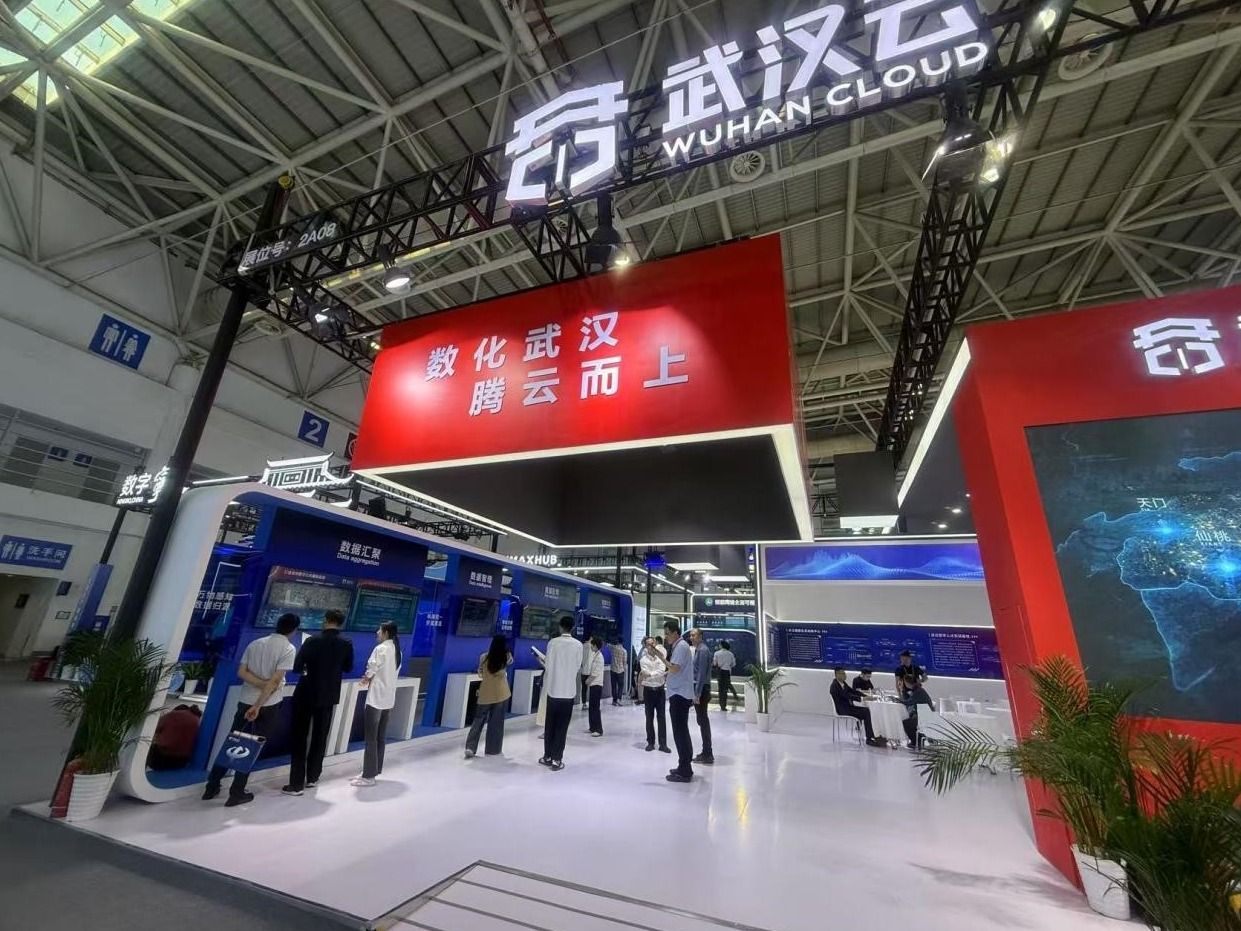
武汉智慧城市建设成果亮相“数字中国”
Chang Jiang Ri Bao· 2025-05-07 06:36
Core Insights - The eighth Digital China Construction Summit was held in Fuzhou, showcasing Wuhan's smart city platform "Wuhan Cloud" with the theme "Data Empowerment, Smart Connection" [1][3] - Key highlights included the "Wuhan Urban Safety Risk Monitoring and Early Warning Platform" and the "Integrated Urban Management Platform" [1][2] Group 1: Innovations in Data Management - The Wuhan Urban Safety Risk Monitoring and Early Warning Platform integrates multi-dimensional data from critical infrastructure such as bridges and gas facilities, transitioning from "passive emergency" to "proactive warning" [2] - The "Integrated Urban Management" platform aims to break down information silos between departments, enhancing collaborative efficiency and precision in urban governance [2] Group 2: Comprehensive Smart City Solutions - Wuhan Cloud presented a full lifecycle smart city solution encompassing data collection, governance, application, and security [6] - The platform utilizes a City Information Model (CIM) to establish a data-driven digital public infrastructure, featuring a pioneering "Universal Identification System" that assigns unique digital IDs to physical entities [6] Group 3: Security and Resource Management - A seven-layer cloud-native defense system has been established to ensure the security of the city's digital development [6] - An integrated digital resource management platform has aggregated data from 240 application systems across the city, supporting efficient urban governance and public services [6] Group 4: Economic and Talent Development - Wuhan Cloud has initiated platforms such as the Wuhan SME Digital Transformation Service Innovation Center and the Wuhan Digital Talent Training Base to support the real economy and promote the growth of Wuhan's digital economy [6] - The company aims to replicate its smart city solutions in other cities, indicating a commitment to expanding collaboration and advancing digital development in Wuhan [6]
2024年鸿蒙生态全场景流量分析报告
艾瑞股份· 2025-02-28 02:25
Investment Rating - The report does not explicitly state an investment rating for the industry Core Insights - The mobile internet is facing a growth bottleneck and user dividend decline, with the need for technological innovation and ecological restructuring to unlock flow value [5][14] - The HarmonyOS ecosystem is positioned as a key builder of the next-generation flow ecology, leveraging full-scene intelligent collaboration and data integration to drive value leaps [5][24] - The report highlights the six advantages of the Harmony ecosystem, including being the third-largest mobile operating system globally and forming a commercial monetization closed loop [34][51] Summary by Sections Internet Traffic Ecology and Harmony Ecosystem Development Trends - The mobile internet is experiencing a slowdown in growth, with the total effective usage time averaging around 161.28 billion hours per month, and the number of independent devices showing a compound growth rate of only 0.08% [16][18] - The fragmentation of traffic entry points and technological bottlenecks are hindering the release of flow value, necessitating a full-scene integration approach to overcome these challenges [20][22] - The Harmony ecosystem is continuously innovating, with its core capabilities being full-scene multi-terminal coverage and AI-enhanced service efficiency [34][39] Whale Hong Momentum Value Insights: Flow - Whale Hong Momentum's self-owned media matrix achieved a peak MAU of 373 million in 2024, with a flow growth rate of 5.9%, indicating strong user engagement and retention [80][81] - The user demographic is primarily high-net-worth individuals aged 25-45, with a significant portion residing in first- and new-first-tier cities [8][80] - The advertising acceptance rate among users is 71.8%, with a strong conversion intention post-advertisement, providing brands with a comprehensive marketing capability [8][80] Whale Hong Momentum Value Insights: User - The user base shows a significant preference for using proprietary apps, with a high acceptance of online advertisements, particularly in categories like luxury goods and automobiles [5][8] - The report emphasizes the need to fully explore the marketing value of time-segmented scenarios, as user activity peaks at different times throughout the day [89][90] Whale Hong Momentum Industry Solutions - The Whale Hong Momentum integrates various media resources to create a unified traffic entry point, addressing the inefficiencies of fragmented mobile internet traffic [76][77] - The report outlines the importance of breaking down ecological barriers and enhancing cross-platform user behavior tracking to improve flow utilization [77][80] - The AI-driven intent framework enables efficient integration and precise distribution of traffic across devices, enhancing the overall user experience [76][77]