文化与旅游融合

Search documents
瑞马呈祥传京韵 欢乐春节暖全球
Zhong Guo Jing Ji Wang· 2026-02-26 23:53
Core Viewpoint - The "Happy Spring Festival" cultural exchange activities, organized by Beijing's cultural and tourism bureau, are being held globally, showcasing Chinese culture and attracting significant participation from overseas audiences, thereby promoting the Chinese New Year as a shared global celebration [1][6]. Group 1: Event Highlights - The "Rui Ma Cheng Xiang" cultural exchange activities took place from February 9 to 18 in eight countries, including the USA, Belarus, Malaysia, and Australia, attracting approximately 478,100 participants [1]. - The global "Joyful Zodiac Design Exhibition" was held at the United Nations Headquarters in New York, featuring over 100 creative works from designers across multiple countries, highlighting the integration of traditional zodiac culture with contemporary design [1]. - The Chinese New Year celebration at the Empire State Building included a window display that has been ongoing for 18 years, expected to attract over 1 million visitors [2]. Group 2: Cultural Integration - In Minsk, Belarus, a series of "Happy Spring Festival" events celebrated the 10th anniversary of the friendship between Beijing and Minsk, featuring a New Year concert attended by over 600 guests and showcasing various cultural performances [3]. - The "Happy Spring Festival: Hello Beijing" garden party in Sydney combined Chinese garden aesthetics with Beijing's intangible cultural heritage, offering immersive experiences and attracting significant local interest [5]. - The joint cultural performance in Kuala Lumpur attracted over 15,000 attendees, featuring traditional Chinese arts and crafts, and promoting cultural exchange between China and Malaysia [6]. Group 3: Tourism Promotion - The cultural activities are designed to enhance tourism, with projections indicating that Beijing will receive approximately 168,132 visitors from Australia by 2025, a 62% increase [5]. - The mutual visa exemption between China and Malaysia is expected to boost tourist numbers, with nearly 300,000 Malaysian visitors projected to visit Beijing by 2025, reflecting a 43.2% growth [6]. - The ongoing "Rui Ma Cheng Xiang" activities aim to continue promoting Beijing's cultural heritage globally, fostering cultural exchange and tourism [6].
衡阳市委副书记、市长刘中杰调研衡阳县
Xin Lang Cai Jing· 2026-01-07 13:07
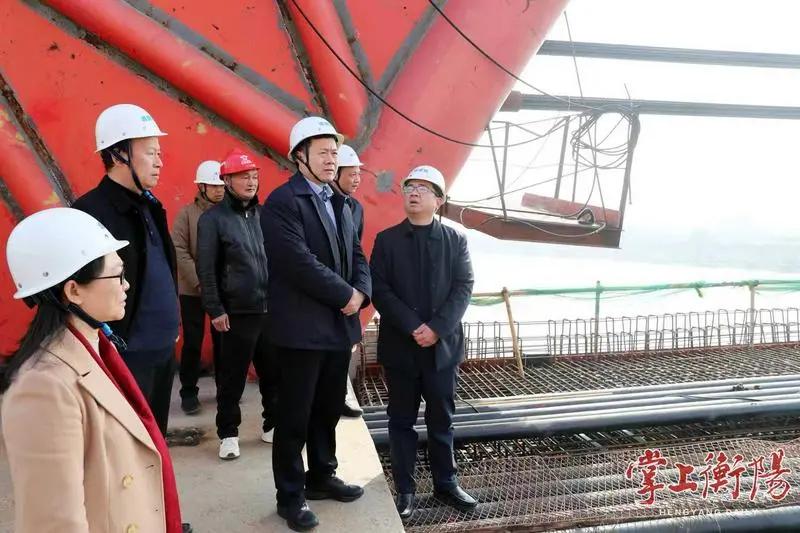
Core Viewpoint - The article emphasizes the importance of promoting high-quality development in Hengyang County by strengthening local industries, enhancing cultural heritage, and improving investment and consumption strategies [1][5]. Group 1: Economic Development - The local government aims to strengthen county-level characteristic industries and implement a "combination punch" of consumption and investment to support economic growth [1]. - Liu Zhongjie highlighted the need to expand the real economy and become a leader in building a modern industrial system [5]. - The focus will be on attracting investment and becoming a pioneer in undertaking industrial transfers [5]. Group 2: Cultural Integration - There is a strong emphasis on leveraging red culture and Shanshan culture to create influential cultural brands that can support development [7]. - The integration of culture with technology and tourism is seen as a way to enhance cultural soft power into a hard support for development [7]. Group 3: Industry Focus - The strategy includes expanding the ceramics and watch industries, encouraging technological innovation, and developing environmentally friendly products [7]. - The goal is to achieve large-scale and clustered development in the watch industry while enhancing the influence of the "Hengyang manufacturing" brand [7]. Group 4: Policy and Investment - The government plans to study national and provincial policy directions to package major projects effectively, aiming to expand effective investment and stimulate new consumption [7]. - There is a commitment to solidifying grassroots foundations and maintaining social stability through various innovative working methods [7].

彝族古村“上新”记
Xin Lang Cai Jing· 2026-01-06 19:29
Core Insights - The article highlights the transformation of Waipula Village in Yunnan, showcasing a blend of modernization and cultural heritage through various renovation projects aimed at rural revitalization [1][5]. Group 1: Village Transformation - Waipula Village, home to 710 residents from three ethnic groups, is undergoing a significant upgrade, incorporating modern elements while preserving its traditional charm [1]. - The renovation includes repurposing old structures, such as converting a pigsty into a "Rice Field Coffee" house, aimed at providing a nostalgic resting point for tourists [2]. - Other structures like tobacco barns and old warehouses are also being revitalized, with a focus on cultural heritage and local craftsmanship [2]. Group 2: Community Involvement - The renovation process faces challenges, particularly in transporting materials due to the village's narrow and steep roads, which increases costs [3]. - Local residents are encouraged to participate in the renovation, with some converting their homes into guesthouses, although many remain cautious about the investment [3]. - The village is implementing skill training programs and prioritizing local craftsmen to ensure community members see tangible benefits from the renovations [3]. Group 3: Cultural and Economic Integration - The core of the village's upgrade is the deep integration of culture and tourism, with plans for a specialty restaurant featuring local ingredients and a cactus garden managed by local women becoming a popular attraction [4]. - Completed infrastructure projects, such as sewage systems, have facilitated the village's development, contributing to a cleaner environment and increased confidence among residents [4]. - The upgrades align with national policies aimed at promoting rural revitalization and enhancing the quality of life for residents [5].
文化之光 不断激发文化创新创造活力
Si Chuan Ri Bao· 2026-01-04 22:39
Group 1 - The core theme of the article highlights the significant cultural developments in Sichuan, showcasing the integration of culture and tourism, and the achievements in various cultural sectors [1][10][11] - The "Jin Xiu Tian Fu · An Yi Si Chuan" brand has gained widespread recognition, generating over 5 billion clicks online and is expected to attract over 1 billion tourists, driving consumption exceeding 1.5 trillion yuan [11][12] - The animated film "Ne Zha: The Devil Child Comes to the World" has set a global box office record of over 15.9 billion yuan, ranking fifth in global film history, marking a milestone for Chinese cinema [4][14] Group 2 - The Sichuan Provincial Regulations on the Protection and Utilization of Ancient Books were passed, marking a significant step in the legal protection of ancient texts, with approximately 230,000 Han Chinese ancient books and 500,000 ethnic ancient books identified [3][29] - The archaeological discovery of the Mengxi River site has filled a critical gap in the study of modern human evolution in East Asia, providing essential evidence for the cultural development of early humans in southern China [2][24] - The second Golden Panda Award attracted entries from 126 countries, with over 70% of submissions from foreign works, emphasizing international cultural exchange and collaboration [7][18] Group 3 - The Sichuan City Football League ("Chuan Chao") has engaged 21 teams across four regions, with 90 matches igniting public enthusiasm and generating over 5.6 billion yuan in consumption [5][19] - Sichuan has seen a historic increase in the number of national civilized cities, with 13 new additions, bringing the total to 26, and leading the nation in the number of civilized units and families [6][20] - The 14th China Arts Festival in Sichuan featured over 50,000 cultural performances, showcasing the province's vibrant cultural scene and its ability to produce significant artistic works [21][23]
数字赋能,古蜀文明“活”起来、“火”下去——四川创新推动古蜀文明走向世界
Xin Lang Cai Jing· 2025-12-27 12:30
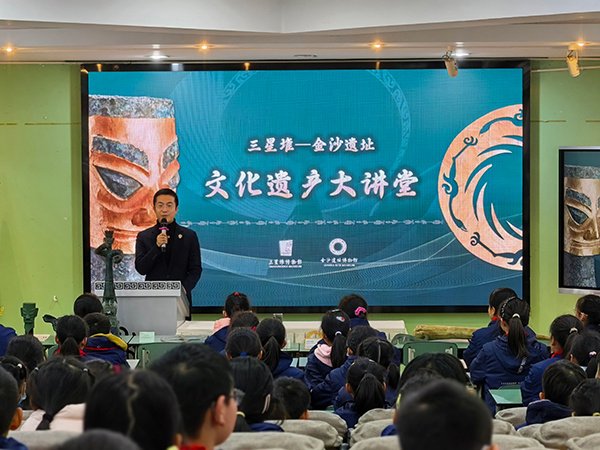
Core Viewpoint - Sichuan is leveraging digital technology to activate and promote the ancient Shu civilization, transforming static historical relics into dynamic cultural resources that can be experienced and shared globally [3][4][12] Group 1: Digital Technology in Cultural Heritage - Sichuan is utilizing digital technologies such as 3D scanning and digital modeling to create accurate replicas of ancient artifacts, allowing for interactive learning experiences [1][3] - A systematic digital archive has been established for 4,113 cultural relics at the Sanxingdui and Jinsha museums, facilitating efficient management and preservation [6] - Advanced technologies like remote sensing and AI are being employed for archaeological documentation and virtual restoration of artifacts, enhancing the preservation efforts [6][7] Group 2: Immersive Cultural Experiences - Sichuan has developed immersive digital cultural products, such as 3D videos and global exhibitions, that transform static artifacts into engaging experiences for the public [7] - The integration of cultural heritage with tourism is being promoted, with initiatives like mobile cultural classrooms and collaborative development of cultural tourism zones [7] Group 3: International Promotion and Engagement - An international communication system is being constructed to elevate ancient Shu civilization as a shared human heritage, with significant online engagement through social media platforms [8][9] - Diverse promotional strategies are being implemented in various countries to resonate with local audiences, enhancing global awareness and appreciation of ancient Shu culture [11] Group 4: Cultural Industry Development - The development of cultural IPs and creative products is being prioritized, with significant revenue generated from cultural merchandise, indicating a thriving cultural economy [11][12] - Collaborations with popular entertainment IPs and innovative projects are helping to modernize and popularize ancient Shu civilization among younger generations [11][12] Group 5: Collaborative Efforts for Cultural Exchange - Sichuan is fostering collaboration among cultural institutions and research organizations to promote the protection and transmission of ancient Shu civilization [12] - Partnerships with international museums are being established to facilitate joint exhibitions and research, enhancing global cultural exchange [12]
拉萨贡嘎国际机场非遗展演惊艳亮相 航站楼化身雪域“文化会客厅”
Zhong Guo Min Hang Wang· 2025-08-11 05:08
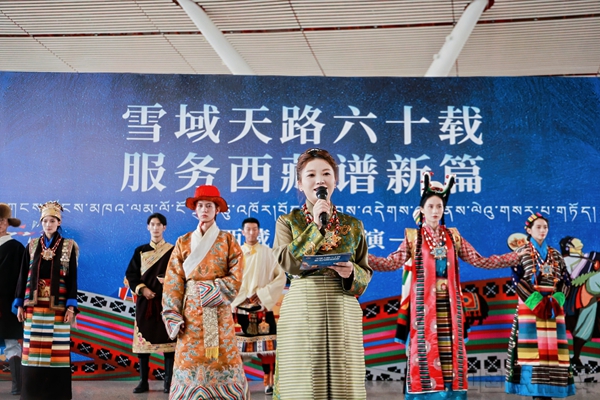
Group 1 - The event titled "Snowy Road for Sixty Years, Serving Tibet to Write a New Chapter" was held at Lhasa Gonggar International Airport to celebrate the 60th anniversary of the Tibet Autonomous Region and the 60th anniversary of civil aviation in Tibet [1][3] - The event showcased traditional Tibetan culture through performances such as Snow Ba Tibetan Opera, Yak Dance, and folk fashion shows, creating an immersive cultural experience for travelers [1][3] - The integration of intangible cultural heritage exhibitions into the airport terminal transformed it into a "cultural reception hall," enhancing the cultural experience for passengers arriving or departing from Tibet [3][10] Group 2 - The event exemplified the deep integration of culture and tourism, inviting both domestic and international travelers to explore Tibet [1][3] - It highlighted the civil aviation industry's proactive role in supporting local development and promoting ethnic unity, aligning with the principle of "People's Aviation for the People" [3][10] - The interactive activities, such as making Tibetan incense and appreciating Tibetan calligraphy, allowed travelers to engage with traditional crafts, turning heritage into a living experience [10]