文旅+商业融合

Search documents
办新春市集、引入免税店 北京空港商业提质升级
Bei Jing Shang Bao· 2026-02-10 14:08
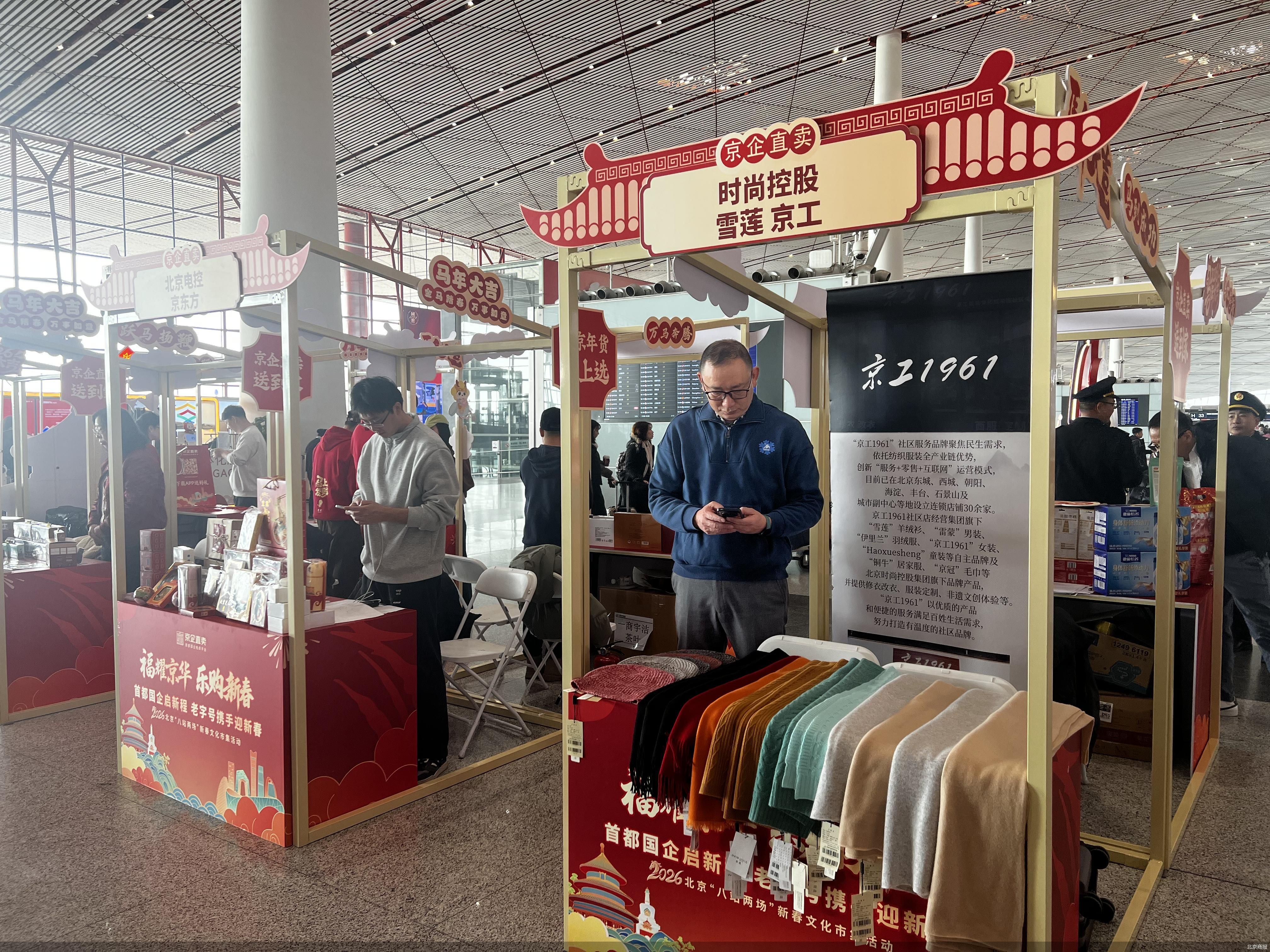
Group 1 - The core idea of the news is the collaboration between Beijing Capital Airport and Daxing Airport to host a New Year cultural market, enhancing the consumer experience and promoting Beijing as an international consumption center [1][2] - The cultural market, named "Fuyou Jinghua Legou New Spring," runs from February 10 to 16, featuring 14 well-known brands, including Yili and Beibingyang, offering a variety of products such as food, cultural creations, and clothing [2] - The duty-free business at Capital Airport is undergoing a significant upgrade, with the operational rights of the T2 terminal's duty-free store transferring to China Duty Free Group and Wangfujing Group starting February 11 [2][4] Group 2 - In January 2026, the customs at Capital Airport processed 7,966 tax refund applications, totaling approximately 125 million yuan, marking a year-on-year increase of 469.81% and 43.68% respectively [3] - The customs authority has implemented a green channel for merchants to streamline the approval process, significantly reducing the time required for necessary permits [4] - The customs has also introduced a "health permit special service mechanism" to assist new stores in obtaining the required health licenses, ensuring compliance with health and safety standards [7] Group 3 - The customs authority is enhancing its regulatory and service capabilities by combining on-site supervision with remote video monitoring to ensure a seamless flow of goods and services [7] - Recent measures have been introduced to optimize the tax refund process, including improved procedures and guidance to stimulate market activity [7] - The overall strategy aims to accelerate the formation of a unique commercial ecosystem at the airport, contributing to the development of Beijing as an international consumption center [8]


京潮年货地图 | 办新春市集、引入免税店 北京空港商业提质升级
Bei Jing Shang Bao· 2026-02-10 14:05
Core Viewpoint - The Beijing Capital Airport and Daxing Airport are collaborating for the first time to host a Spring Festival cultural market, enhancing the consumer experience and promoting Beijing as an international consumption center [1][4]. Group 1: Spring Festival Cultural Market - The cultural market, named "Fuyou Jinghua Shopping Spring," runs from February 10 to 16, featuring 14 well-known Beijing brands such as Yili and Beibingyang, offering a variety of products including food, cultural creations, and clothing [4]. - The market aims to provide travelers with a one-stop experience that combines Beijing's festive atmosphere with high-quality service, creating immersive cultural and consumption scenarios [4]. Group 2: Duty-Free Business Upgrade - Starting February 11, the duty-free store operations at Terminal 2 of the Capital Airport will transition to China Duty Free Group and Wangfujing Group, marking Wangfujing's first entry into the Beijing-Tianjin-Hebei international aviation hub [4][6]. - The new operators plan to introduce more international perfumes, cosmetics, wines, and local specialty products, enhancing the shopping experience through digital systems [4][6]. Group 3: Increased Inbound Consumption - In January 2026, the Capital Airport Customs processed 7,966 tax refund applications for departing travelers, totaling approximately 125 million yuan, reflecting year-on-year increases of 469.81% and 43.68% respectively [4]. - The customs has optimized processes and improved signage within the terminal to enhance the "China Purchase" experience for international travelers [4]. Group 4: Spring Festival Travel Forecast - The Capital Airport Customs anticipates an increase in passenger flow during the Spring Festival, with average daily monitored inbound and outbound travelers rising from 40,000 to 55,600 in recent days [5]. Group 5: Streamlined Entry Process - To facilitate the cultural market, the Capital Airport Customs established a green channel for merchants unfamiliar with strict approval processes, significantly reducing processing times [6]. - The customs conducted thorough inspections and verifications of over 1.29 million square meters of operational space and inventory to ensure a smooth transition of duty-free operations [6]. Group 6: Enhanced Regulatory Measures - The Capital Airport Customs is implementing a combination of on-site supervision and remote video monitoring to ensure continuous oversight of new store operations, achieving full visibility and traceability of goods [8]. - A specialized service mechanism for health permits has been initiated to assist businesses in optimizing their application processes [8]. Group 7: Commitment to Service Innovation - The Capital Airport Customs aims to continuously enhance service quality and regulatory measures to support the establishment of diverse consumer formats and contribute to the development of a vibrant international aviation hub [9].

2026大兴区新年音乐嘉年华奏响新年序章
Xin Lang Cai Jing· 2026-01-02 06:06
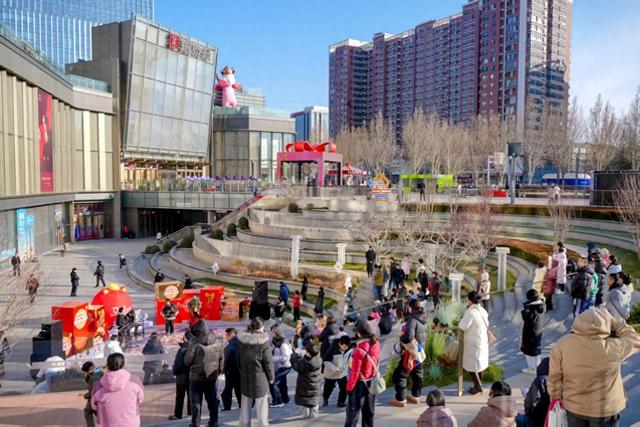
Core Viewpoint - The "New Year Music Carnival" in Daxing District, Beijing, is a significant cultural event aimed at enhancing community engagement and boosting local commercial activity during the New Year holiday season [5][10]. Group 1: Event Overview - The event features a full day of music performances and interactive activities, transforming the shopping center into a vibrant musical space [1][5]. - The "New Year Vitality Night" serves as the core segment of the carnival, creating an energetic atmosphere with music and lights, encouraging community participation [3][9]. Group 2: Cultural and Commercial Integration - Organized by the Daxing District Cultural and Tourism Bureau, the carnival breaks traditional performance formats by integrating music into public spaces throughout the shopping center [5][10]. - The event includes various interactive elements such as "Treasure Hunt" and New Year wish-making, enhancing visitor engagement and creating memorable experiences [9][10]. Group 3: Economic Impact - The carnival promotes a "cultural tourism and commercial consumption" model, enriching cultural consumption options for residents and stimulating local economic activity [10]. - Special promotional activities, such as exclusive consumption vouchers, are designed to attract visitors and enhance the festive atmosphere [9][10].
“红绿cp”火出圈的背后,新茶饮品牌正重塑城市文化消费场景
Sou Hu Cai Jing· 2025-10-28 10:46
Core Viewpoint - The opening of the Bawang Chaji store next to Starbucks at the Oriental Pearl Tower signifies a shift in the new tea beverage industry from "expanding stores" to "operating quality stores," reflecting a deeper transformation in consumer behavior and market dynamics [2][3][4]. Industry Trends - The new tea beverage industry is transitioning from a "scale-driven" model to an "efficiency-driven" model, marking a new development phase [3]. - The domestic tourism market has seen explosive growth, with 4.998 billion trips taken by residents in the first three quarters of 2025, an increase of 760 million trips or 18% year-on-year [3]. - The cultural industry is projected to achieve a revenue of 19.14 trillion yuan in 2024, a 37.7% increase compared to 2020 [3]. Consumer Behavior - Consumers are increasingly favoring "cultural tourism + commercial" integrated experiences over traditional natural attractions, with flagship stores becoming key venues for tea brands to capture this trend [4][5]. - The demand for experiential consumption has shifted from merely "seeing" to "experiencing," driving upgrades in consumer behavior and preferences [5][7]. Brand Performance - Bawang Chaji's stores in Shanghai, Sichuan, and Guangzhou are achieving daily sales of over 2,500 cups, with the Oriental Pearl store becoming a popular tourist spot [4]. - During the recent holiday season, several new tea brands saw sales growth in tourist areas, with some stores experiencing sales increases of over 300% compared to the pre-holiday period [4]. Strategic Positioning - Bawang Chaji's success in tourist areas is attributed to its strategic differentiation in a highly competitive market, focusing on spatial and experiential reconfiguration rather than solely on product innovation [5][7]. - The presence of Bawang Chaji alongside Starbucks in prime locations indicates a shift in the narrative of commercial value at landmark sites, reflecting evolving consumer expectations and brand dynamics [7][12]. International Expansion - Bawang Chaji is employing cultural integration strategies in international markets, such as opening a flagship store in Singapore that incorporates local cultural elements [8][10]. - The brand's entry into the North American market includes collaborations with cultural institutions, enhancing its appeal through localized product offerings [12][15]. Cultural Significance - Bawang Chaji positions itself as a promoter of Eastern tea culture while adapting to local consumer preferences, thereby redefining the role of tea beverages in urban cultural contexts [15][18]. - The brand's product design and marketing strategies emphasize cultural storytelling, transforming tea consumption into a meaningful experience for consumers [18].