文明型国家

Search documents
英国知名学者马丁·雅克:从“文明型国家”视角理解全球治理倡议
Xin Lang Cai Jing· 2026-01-19 01:53
Group 1 - The core idea of the article revolves around China's global governance initiative, which emphasizes five key principles: adherence to sovereign equality, compliance with international law, promotion of multilateralism, a people-centered approach, and action-oriented focus [1][9] - The initiative is seen as a means to repair and improve the existing international system rather than creating a new one, aiming to restore a rules-based order [2][10] - The concept of China as a "civilizational state" is highlighted as a perspective that can help understand its unique logic in global governance practices [1][10] Group 2 - The article discusses the challenges posed by the current "disorder" in the international system, particularly due to the United States' unilateral actions that undermine international law and multilateralism [4][12] - The need for a new international system that accurately reflects the realities of today's world, particularly the concerns of developing countries, is emphasized [7][13] - The proposed reforms aim to create a more just and inclusive international system that can adapt to the changing global development landscape [7][13]
英国知名学者马丁·雅克在《环球时报》专访中讲述:从“文明型国家”视角理解全球治理倡议
Huan Qiu Shi Bao· 2026-01-14 22:51
Core Viewpoint - The article discusses China's global governance initiative, emphasizing its aim to repair and improve the existing international system rather than creating a new one [2][5]. Group 1: Global Governance Initiative - The initiative includes five core principles: equality of sovereignty, adherence to international law, multilateralism, a people-centered approach, and action-oriented focus [1][2]. - The concept of "civilizational state" is highlighted as a lens to understand China's unique logic in global governance practices [1][3]. Group 2: Challenges in the International System - The current international system faces significant challenges due to the "disorder" caused by the United States, which has deviated from established rules to reshape the system according to its interests [3][4]. - The article raises concerns about the extent to which the U.S. is willing to accept a direction towards "de-hegemonization" and make corresponding adjustments [4]. Group 3: Need for Systemic Reform - The existing international system does not adequately reflect the positions and concerns of developing countries, necessitating a reform that is systematic and holistic [6]. - The article suggests that any effort to encompass the interests of the Global South will lead to a more just, inclusive, and effective international system [6].
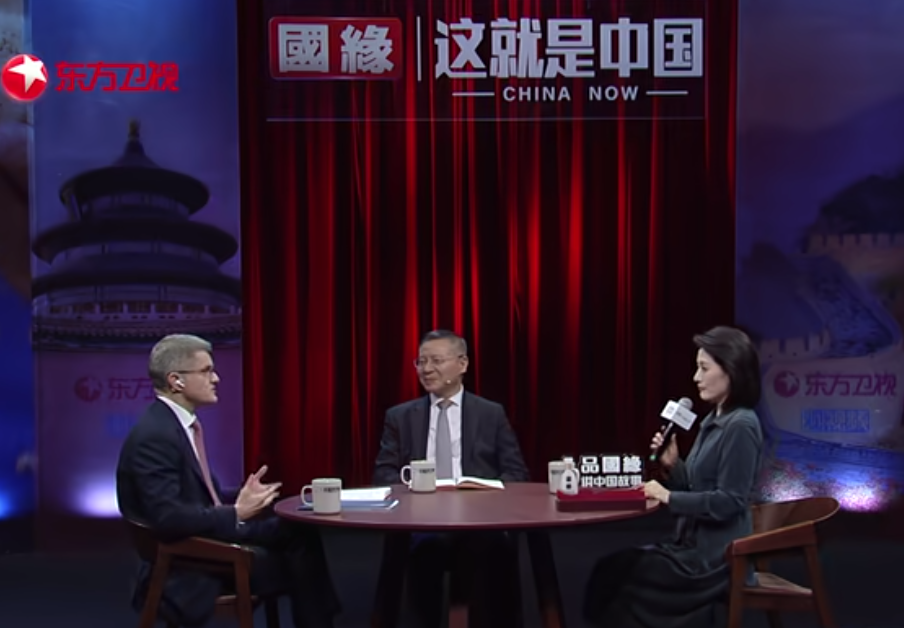
张维为《这就是中国》第307期:欧洲的未来
Guan Cha Zhe Wang· 2025-11-09 00:45
Core Views - The future of the European Union (EU) is uncertain, facing multiple crises and challenges that threaten its unity and effectiveness [3][11][18]. Group 1: Historical Context and Current Challenges - The EU was established to promote peace and cooperation among European nations after World War II, particularly between France and Germany [2][3]. - The end of the Cold War initially led to optimism within the EU, but subsequent crises, including the global financial crisis, the refugee crisis, Brexit, and deteriorating relations with Russia, have exposed significant weaknesses [3][11]. - Europe is currently grappling with demographic issues, economic stagnation, and a lack of technological competitiveness, leading to social divisions and strained relations with major geopolitical players, including the US and Russia [3][11][18]. Group 2: Serbia's EU Membership Prospects - Serbia's EU accession process has stalled, primarily due to demands from EU member states regarding territorial integrity, particularly concerning Kosovo [6][7][22]. - Despite being surrounded by EU countries, Serbia's path to membership remains uncertain, and the EU is not prepared to expand its membership in the near future due to internal challenges [6][22]. Group 3: Economic and Technological Challenges - Europe has missed opportunities in the Fourth Industrial Revolution, with no major internet companies emerging from the region, leading to a reliance on US technology [12][13]. - The energy crisis, exacerbated by political decisions such as Germany's nuclear phase-out and reliance on Russian energy, has significantly increased production costs in Europe [13][14]. - Regulatory burdens and high taxation have driven innovation and talent away from Europe, further hindering its economic growth [13][14]. Group 4: Geopolitical Dynamics and Future Cooperation - The ongoing Ukraine conflict has intensified perceptions of a security threat from Russia, compelling Europe to seek protection from the US, which complicates its relations with China [18][19]. - There is a recognition of the need for Europe to engage with China for mutual benefits, particularly in technology and sustainable development, despite political hesitations [24][25][29]. - The internal political landscape in Europe complicates the establishment of a unified stance towards global challenges, including cooperation with China [25][29].