文脉传承

Search documents
三千年前的“中国制造”什么样
Ren Min Ri Bao Hai Wai Ban· 2025-09-29 22:57
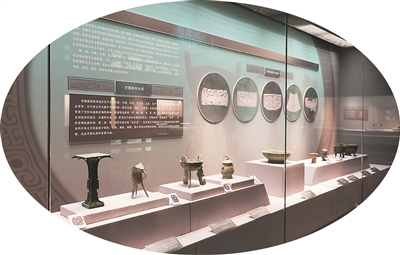
Core Viewpoint - The exhibition "Shang Yi Hundred Crafts - Chinese Manufacturing 3,000 Years Ago" at the Tianjin Museum showcases the remarkable achievements of Shang Dynasty craftsmanship, highlighting a highly specialized state-run handicraft system that laid the foundation for future industrial development in China [4][12]. Summary by Sections Exhibition Overview - The exhibition is the first of its kind in China focusing on the late Shang Dynasty's handicraft achievements, featuring over 180 artifacts including finished products, semi-finished products, raw materials, and production tools [4][12]. - It consists of five main sections: "Overview of Crafts," "Building Shang City," "All Tools are Crafts," "Rituals and Music," and "Transportation," along with a special section on "Great Shang Manufacturing: Cattle" [4][12]. Artifacts and Their Significance - Notable artifacts include the "Yazhang Niu Zun," a bronze vessel for wine, and a jade ornament shaped like a cow, displayed face-to-face to illustrate the connection between ancient and modern craftsmanship [5]. - The exhibition features a comparison between the smallest Shang bronze ding, comparable in size to an egg, and the largest, the Houtu Muwu Ding, which is 26 times taller and nearly 17,000 times heavier, showcasing the range of craftsmanship [5]. Cultural and Historical Context - The exhibition emphasizes the continuity of cultural practices, with artifacts like a 3,000-year-old "bathing tool" and a jade tool for untying knots, reflecting the practical and aesthetic values of ancient Chinese society [7]. - The "Rituals and Music" section highlights the significance of ritual practices in the Shang Dynasty, with artifacts that illustrate the deep integration of craftsmanship and ceremonial standards [10]. Interconnections Between Artifacts - The exhibition employs a method of "mutual verification" between excavated and inherited artifacts to reconstruct historical contexts, enhancing the understanding of their cultural significance [9]. - For instance, a jade ornament's classification as a high-status item is confirmed through comparisons with similar artifacts found in the Yinxu site [9]. Educational Activities - The Tianjin Museum has organized a series of expert-led activities to deepen audience understanding of the artifacts, emphasizing the craftsmanship and philosophical beliefs of the Shang Dynasty [10].

聚焦产业发展 共话文脉传承 在镇省人大代表开展年中专题调研
Zhen Jiang Ri Bao· 2025-08-05 00:15
Core Insights - The article discusses a mid-year special research activity organized by the Municipal People's Congress in Zhenjiang, focusing on industrial development and cultural heritage transmission [1] Group 1: Industrial Development - Representatives visited the Zhenjiang Economic Development Zone's aerospace industrial park, inspecting companies such as Aviation Materials (Zhenjiang) High-Temperature Alloy Co., Ltd. and Jiangsu Borderless Aviation Development Co., Ltd. [1] - The visit highlighted the growth of the aerospace industry, referred to as the "economy on wings" [1] Group 2: Community Engagement - The representatives also visited Huashan Village, known as the first ancient village in Jiangnan, to gather insights from local enterprises and residents [1] - The aim was to propose strategies for local socio-economic development by understanding the needs and suggestions of the community [1] Group 3: Legislative Role - Li Jian, the Secretary of the Standing Committee of the Municipal People's Congress, emphasized the importance of research and investigation as a valuable tradition [1] - He called for the effective use of the representatives' role as a bridge to connect with the community, addressing challenges in industrial development and cultural heritage transmission [1]
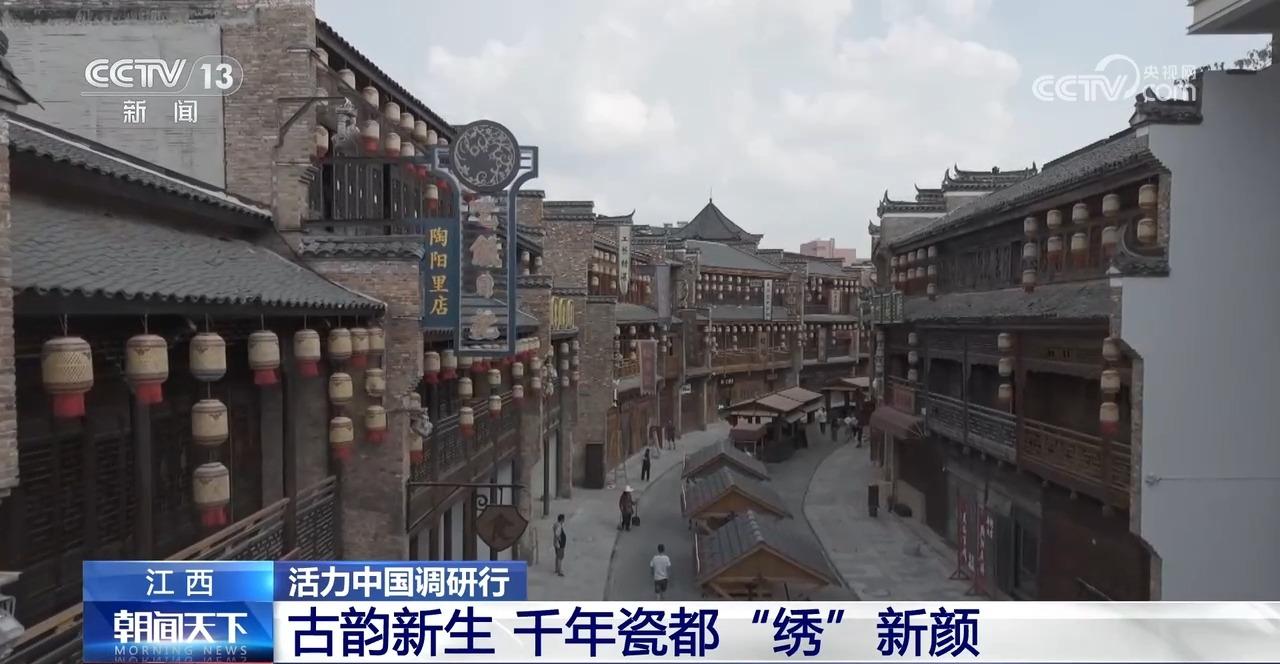
活力中国调研行|千年瓷都“绣”新颜
Yang Shi Wang· 2025-07-16 00:03
Core Viewpoint - The city of Jingdezhen, known as the "World Porcelain Capital," is undergoing a unique urban renewal process that emphasizes preservation and revitalization of its historical and cultural heritage while enhancing its vibrancy and appeal to residents and tourists alike [1][3]. Group 1: Urban Renewal and Cultural Preservation - Jingdezhen's urban renewal focuses on "micro-renewal" rather than new construction, prioritizing the preservation of the original landscape and cultural elements [3]. - The renovation of the Taoyangli historical cultural district involves meticulous restoration efforts, taking 3 to 4 months for detailed repairs compared to just 1 month for new construction [3][6]. - The area features 108 ancient alleys and over 400 years of Ming and Qing dynasty kiln heritage, which are integral to Jingdezhen's historical identity [3][6]. Group 2: Economic and Social Impact - The Taoyangli area hosted over 300 themed events in the first half of the year, attracting 2.0715 million visitors and generating ticket revenues of 72.5 million yuan [6]. - The urban renewal has led to the return of local residents, including former porcelain factory workers and ceramic artists, who now contribute to the cultural tourism sector [6][19]. - The transformation of the Taoxi River area has attracted global artists and tourists, showcasing a blend of old industrial sites with new cultural and creative industries [8][10]. Group 3: Broader Implications for Surrounding Areas - The urban renewal initiatives have positively impacted surrounding "urban villages," leading to infrastructure improvements and increased economic opportunities for local residents [14][16]. - The Jingdezhen government has initiated six urban village renovation projects, benefiting 776 households and enhancing the overall quality of life in these areas [20]. - The success of Jingdezhen's urban renewal serves as a model for preserving ancient villages in Jiangxi province, demonstrating how historical and cultural elements can be integrated into modern urban development [21][24].