新一轮国资国企改革

Search documents
实现2026年经济目标,深层次改革不可或缺
Di Yi Cai Jing· 2026-01-13 07:18
Group 1 - The core viewpoint emphasizes the importance of policy support and reform innovation in achieving economic stability and growth in 2025, with a GDP growth of 5.2% in the first three quarters and an expected annual growth rate of around 5% [1][2] - The economic structure is continuously optimizing, with emerging industries like artificial intelligence and biomedicine thriving, and significant sales driven by the "two new" policies, including over 2.5 trillion yuan in sales from consumer goods replacement [1][3] - Industrial enterprises have seen a profit increase of 1.9% from January to October 2025, indicating improved corporate performance despite ongoing challenges [1][3] Group 2 - Current economic challenges include insufficient effective demand, with investment showing negative growth and overall consumption remaining weak [2][3] - Price levels are low, with the Consumer Price Index (CPI) fluctuating around zero for two consecutive years and the Producer Price Index (PPI) experiencing negative growth for three years [3][4] - Employment and resident income growth face significant pressure, as highlighted in the "15th Five-Year Plan," indicating a need for focused policy measures [3][4] Group 3 - The central economic work conference has called for more proactive macroeconomic policies to address the ongoing economic downward pressure, including maintaining necessary fiscal deficits and increasing central budget investments [5][6] - A moderately loose monetary policy is to be implemented, focusing on stabilizing economic growth and ensuring reasonable price recovery, with tools like reserve requirement ratio cuts and interest rate reductions [6][7] - The conference outlined "eight persistences" for economic work, emphasizing the need for deep reforms alongside policy support to enhance domestic demand and improve income distribution [7][8]
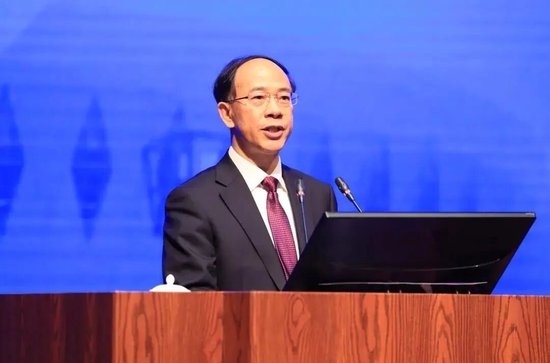
尹艳林:当前的经济形势与深层次改革
Xin Lang Cai Jing· 2026-01-12 12:33
Core Viewpoint - The current macroeconomic situation in China is characterized by both achievements and challenges, necessitating deep reforms alongside supportive policies to ensure stable growth and address existing issues [4][5][6]. Economic Performance - In 2025, China's GDP growth reached 5.2% in the first three quarters, an increase of 0.4 percentage points compared to the previous year, with an expected annual growth rate of around 5% and a total economic output projected to reach 140 trillion yuan [4][14]. - The consumer goods market saw significant activity, with sales from the "old-for-new" policy exceeding 2.5 trillion yuan, including over 11.2 million vehicle upgrades and more than 120 million home appliance upgrades [4][14]. - Industrial profits for large-scale enterprises increased by 1.9% from January to October, indicating improved corporate performance [5][14]. Challenges in the Economy - There are notable issues such as insufficient effective demand, with recent months witnessing negative growth in investment and overall weak consumption [6][15]. - Price levels remain low, with the Consumer Price Index (CPI) fluctuating around zero for two consecutive years and the Producer Price Index (PPI) experiencing three years of negative growth [6][15]. - Employment and income growth pressures are significant, as highlighted in the "15th Five-Year Plan," indicating a need for focused strategies to enhance job creation and income distribution [6][15]. Policy Recommendations - The Central Economic Work Conference emphasized the need for more proactive macroeconomic policies, including maintaining necessary fiscal deficits and increasing central budget investments to support key projects [7][17]. - A flexible monetary policy is recommended to promote stable economic growth and reasonable price recovery, utilizing tools like reserve requirement ratio cuts and interest rate reductions [8][17]. - The government is urged to implement reforms in income distribution, enhance support for low-income groups, and improve the overall income structure to stimulate domestic demand [9][18]. Reform Initiatives - The focus on deep reforms includes addressing barriers in talent mobility between public institutions and enterprises, enhancing the role of innovation in driving economic growth, and improving the financial system to better support technological advancements [10][19]. - The government aims to enhance the synergy between policy support and reform innovation to foster a favorable economic environment and improve market expectations [10][19].