新业务模式试水

Search documents
上次开面馆就失败了,“挂面大王”陈克明为何又想来一遍?
Guan Cha Zhe Wang· 2025-12-12 06:25
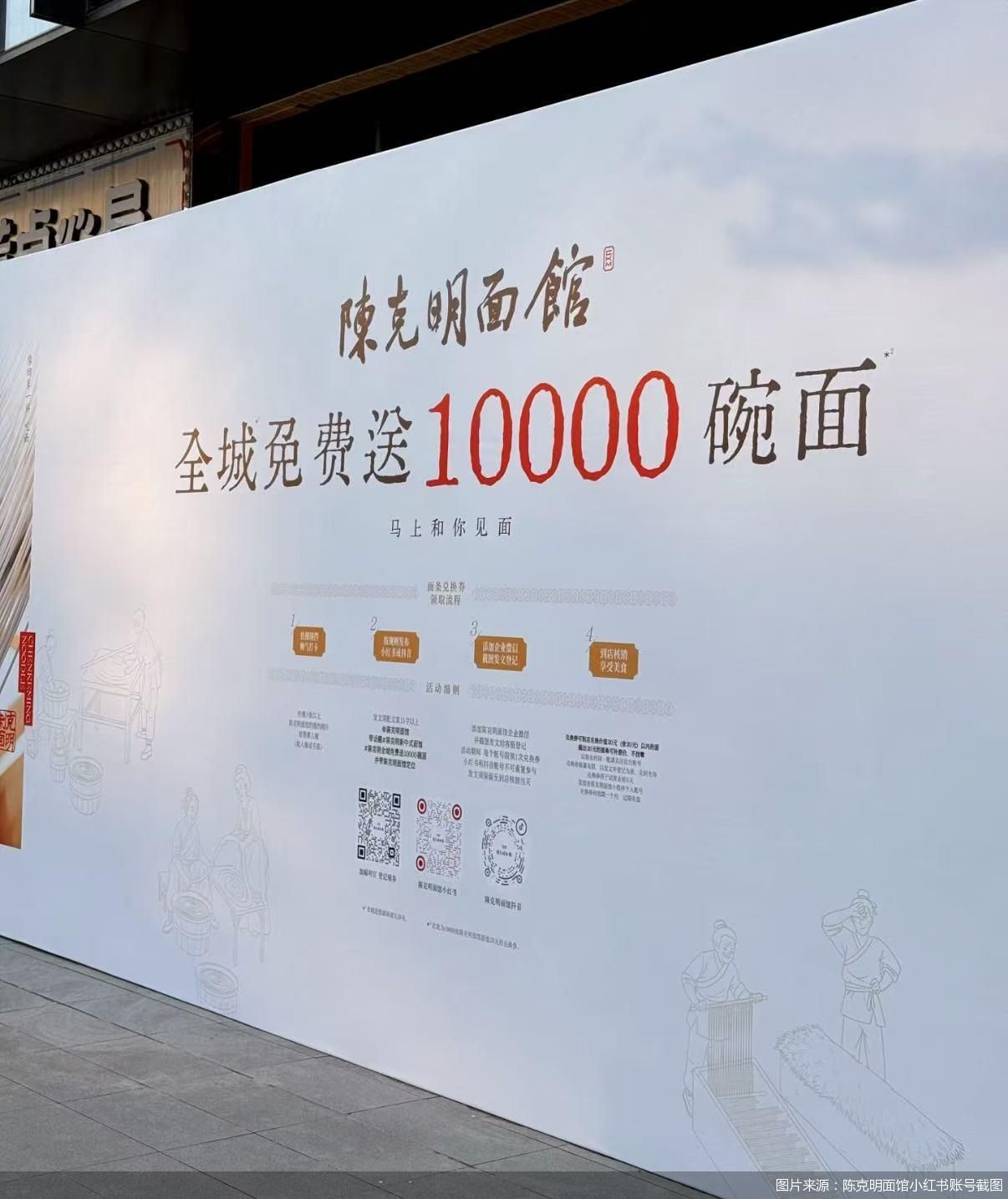
Core Viewpoint - The company, Kemin Foods, is reopening its noodle restaurant brand "Chen Kemin Noodle House" in Changsha, which is seen as a strategy for brand promotion and testing new business models rather than immediate profit generation [1][4][14]. Company Performance - Kemin Foods has faced significant financial challenges, with a reported revenue of 3.195 billion yuan for the first three quarters of 2025, a decrease of 8.07% year-on-year, and a net profit of 124 million yuan, down 20.17% [5][6]. - The company has experienced ten consecutive quarters of revenue decline since reaching a peak of 6.058 billion yuan in 2022 [7]. - The sales volume of its core noodle business has consistently declined, with year-on-year decreases of 12.70%, 6.37%, and 12.44% for 2023, 2024, and the first half of 2025, respectively [9][11]. Industry Context - The Chinese noodle industry has shifted from explosive growth during the early pandemic to a phase of intense competition, with supply exceeding demand [11]. - The overall market for noodle restaurants is projected to reach 160 billion yuan by 2025, with a low concentration of market share among leading brands [16]. - The industry is characterized by high registration and cancellation rates of noodle restaurants, indicating a challenging business environment [16]. Strategic Moves - Kemin Foods acquired a 53% stake in Xingjiang Muge for approximately 624 million yuan to diversify into pig farming, but this venture has also resulted in losses, with the subsidiary reporting a loss of 278 million yuan in 2023 [12][13]. - The opening of the Chen Kemin Noodle House is intended to explore B2B opportunities in the noodle supply chain, potentially allowing the company to leverage its brand for broader distribution [14][15]. Market Challenges - The competitive landscape for noodle restaurants is described as a "life-and-death battlefield," with many brands struggling to maintain profitability despite rapid expansion [16][18]. - The recent experience of the popular noodle brand "Yujian Xiaomian," which faced a significant drop in stock price upon its IPO, highlights the volatility and challenges within the industry [18].



重启面馆生意,克明食品胜算几何
Bei Jing Shang Bao· 2025-12-09 13:52
Core Viewpoint - Kemin Food, known as the "first stock of hanging noodles," is re-entering the restaurant industry with the upcoming opening of "Chen Kemin Noodle Restaurant" in Changsha, Hunan, in December 2023, after a 13-year hiatus from the restaurant business. The company aims to explore new growth opportunities amid declining sales and fluctuating overall performance, focusing on brand promotion rather than rapid profitability or large-scale expansion [3][5][6]. Group 1: Business Strategy - The new restaurant will operate under a direct management model, utilizing handmade noodles and Kemin Food's self-developed intangible cultural heritage hand-pulled noodles, indicating a focus on quality and brand identity [4][5]. - Kemin Food's previous attempt to enter the restaurant business in 2012 ended in losses, with the first restaurant closing due to poor performance. This history suggests a cautious approach to the new venture [4][6]. - The company emphasizes that the restaurant's primary goal is to explore new business models and enhance brand recognition, rather than immediate financial returns [5][7]. Group 2: Market Context - The overall performance of Kemin Food has been affected by a decline in noodle sales, with reported year-on-year decreases of 15.72%, 6.73%, and 11.02% for 2023, 2024, and the first half of 2025, respectively [6][7]. - The restaurant market is projected to grow, with estimates suggesting a market size of 1.5 trillion yuan in 2024, increasing to over 1.6 trillion yuan in 2025, but the competitive landscape is complex, with low market concentration [8][9]. - Industry analysts suggest that Kemin Food must differentiate its offerings to establish a profitable business model, focusing on unique aspects such as its "intangible cultural heritage hand-pulled noodles" to stand out in a crowded market [9].