
新寿险模式

Search documents
泰康人寿2025年累计赔付96亿元 构筑全生命周期守护网
Sou Hu Cai Jing· 2026-01-06 08:29
Core Insights - The core message of the news is that Taikang Life's 2025 claims report highlights the increasing importance of health insurance in the context of an aging population, with health insurance claims accounting for 80% of total payouts, indicating a strong demand for health protection in the longevity era [1][3][12] Group 1: Claims and Financial Data - In 2025, Taikang Life reported total claims amounting to 9.6 billion yuan, serving 610,000 clients and processing 1.29 million cases, with health insurance making up 80% of the total claims [1][3] - Nearly 7.7 billion yuan of the claims were allocated for medical and disease protection, underscoring health insurance as a critical financial safety net for families [3][4] Group 2: Health Insurance Demand and Challenges - The report reveals a trend of increasing health risks, particularly with major diseases like cancer, which require long-term treatment and medication, with drug costs accounting for approximately 44% of major disease expenses [3][4] - The report identifies three main pain points: the pressure of medical expenses, the imbalance of quality medical resources, and the lack of post-treatment rehabilitation support [6][7][8] Group 3: Solutions and Innovations - Taikang Life has integrated payment capabilities, medical resources, and health management to create a health ecosystem that addresses client needs through innovative products and services [4][6] - The company offers a range of medical expense protection plans and has established a network of over 1,000,000 medical institutions globally, ensuring comprehensive payment guarantees for clients [4][7] Group 4: Service Efficiency and Client Experience - The health ecosystem enhances service efficiency through digital transformation, allowing clients to file claims online and track their progress in real-time, thus improving the overall claims experience [9][11] - Taikang Life's commitment to a holistic health management approach ensures continuous support for clients, from daily health consultations to post-treatment rehabilitation, fostering long-term client trust and satisfaction [11][12]


我国寿险业高质量发展的思考与建议丨银行与保险
清华金融评论· 2025-11-10 10:06
Core Viewpoint - The Chinese life insurance industry is undergoing a profound transformation due to slowing economic growth, increasing aging population, and declining interest rates. The industry must seek new growth engines and value positioning to build a new business model in response to the challenges posed by the failure of traditional agent models, reduced product attractiveness from lower preset interest rates, and increasingly diverse customer demands [2][4]. Group 1: Industry Transformation - The life insurance industry needs to adjust its "liability side" structure, upgrade "sales capabilities," reduce costs and increase efficiency on the "management side," and enhance returns on the "investment side" to implement a comprehensive and profound strategic transformation with Chinese characteristics [5]. - The industry is shifting from a "scale-oriented" approach to a "value-oriented" approach, actively promoting professionalization, digitalization, industrialization, and ecological construction [5][10]. - The new "insurance+" model emphasizes creating an ecological layout that generates value for customers while ensuring value return, thus forming a closed-loop business model of value creation and capture [5][10]. Group 2: Value Creation and Capture - There exists a "gap" between value creation and value capture in traditional life insurance, and the ability to construct a closed-loop business model to "cross the gap" is crucial for the success of life insurance companies [7]. - Value creation focuses on meeting personalized and diversified user needs, while value capture emphasizes accurate industry positioning and heterogeneous resource endowments [7][8]. - The "insurance+" model addresses the disconnect between customer needs and life insurance supply, establishing a closed-loop business model that enhances the causal logic and matching relationship between value creation and capture [8][10]. Group 3: Case Study of Taikang Insurance Group - Taikang Insurance Group's "new life insurance" model, characterized by a "payment + service + investment" virtuous cycle, serves as a path for constructing a closed-loop business model [11]. - This model enhances three advantages of life insurance products: financial, service, and technological advantages, thereby creating a value conversion mechanism that allows life insurance companies to capture value while creating it [11][13]. - The integration of payment and service enhances consumer service value and facilitates the return of investment value to the life insurance company, forming a sustainable business model [17][18]. Group 4: Future Directions - The life insurance industry must understand and master the "new life insurance" model, design and implement pilot projects, and create comprehensive strategic plans to ensure the scientific and feasible implementation of this model [15][16]. - The unique nature of life insurance operations necessitates strong capital management and risk control capabilities to address the dual challenges of the liability and investment sides [16][20]. - The insurance industry plays a crucial role in promoting economic growth and optimizing resource allocation, and enhancing insurance adaptability is key to achieving sustainable development [20][21].

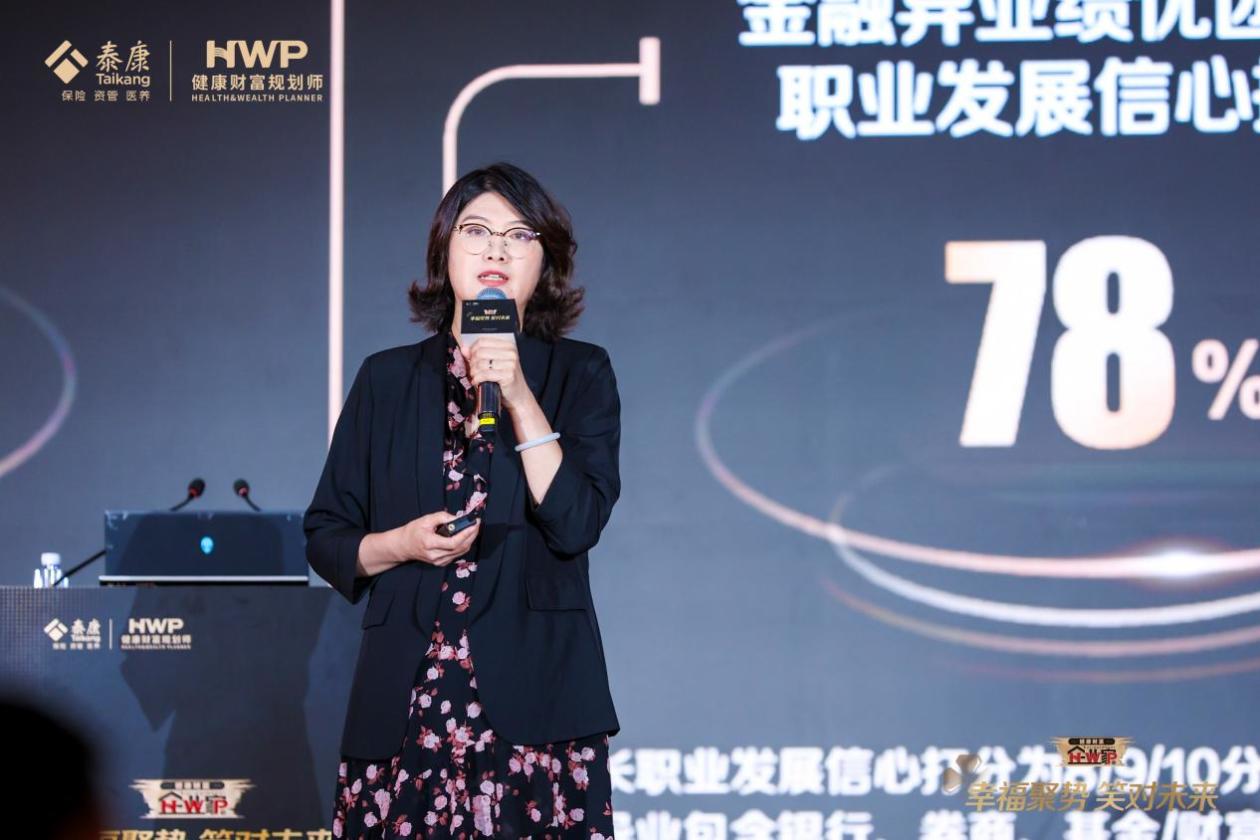
泰康第四届HWP品牌盛典:将行业痛点变长寿时代增长新动能
Huan Qiu Wang· 2025-08-21 06:59
Core Viewpoint - The article discusses the transformation of the insurance industry in response to the "longevity era," highlighting the innovative approach of Taikang's HWP (Health Wealth Planner) model, which integrates service, investment, and payment to meet evolving customer needs [2][12]. Group 1: Industry Context - The insurance industry is undergoing a transformation due to low interest rates and an aging population, shifting customer focus from merely purchasing policies to seeking comprehensive services related to health, retirement, and wealth transfer [2][4]. - The traditional agent model is becoming less effective, with high attrition rates among agents, necessitating a rethinking of the industry's foundational logic [2][4]. Group 2: Taikang's HWP Model - Taikang has introduced a new insurance model that combines "payment + service + investment," aiming to create a high-quality service system that integrates medical, health, and financial services [2][12]. - The HWP initiative has seen significant growth, expanding from 446 individuals in 2018 to 33,000 in 2023, with a high percentage of young, educated professionals [7][10]. Group 3: HWP's Role and Development - HWP is positioned as a key player in Taikang's strategy, merging the roles of insurance, financial, and health advisors to provide comprehensive support throughout the customer lifecycle [12][13]. - The initiative has been recognized with awards and has implemented various incentive programs to enhance the professional development of its members [8][10]. Group 4: Future Outlook - Taikang aims to leverage the longevity era's opportunities by continuously upgrading its recruitment, training, and incentive systems to support HWP's growth and effectiveness [10][14]. - The company envisions HWP professionals as respected health wealth entrepreneurs who can meet the increasing demands for health and retirement services in a rapidly changing world [12][14].
泰康养老2025年半年报:净利润4.22亿元,环比增长21.7%
Zhong Guo Jing Ji Wang· 2025-08-06 03:40
Group 1 - The core viewpoint of the article highlights the steady growth and positive performance of Taikang Pension, as evidenced by a net profit of 422 million yuan in Q2 2025, reflecting a quarter-on-quarter increase of 21.7% [1] - Taikang Pension's total assets surpassed 100 billion yuan by the end of 2023, becoming the first pension insurance company in China to achieve this milestone, and reached a new high of over 140 billion yuan in Q2 2025, representing a year-on-year growth of 23% [1] - The company has a significant market presence in the second pillar pension management, with entrusted asset management exceeding 600 billion yuan and a growing market share, while the third pillar long-term medical and nursing insurance business is experiencing rapid growth [1] Group 2 - Taikang Pension's innovative "payment + service + investment" collaborative business model is a key support for its high-quality development, providing comprehensive pension solutions and a competitive differentiation advantage [2] - The company is actively investing in digital transformation, utilizing advanced technologies such as artificial intelligence and big data to enhance service efficiency and quality in underwriting, claims, and customer service [2] - Taikang Pension aims to continue providing professional and high-quality pension protection services to the workforce and contribute to the development of pension finance [2]
泰康人寿2025“爱家季”推出无创基因检测服务
Sou Hu Cai Jing· 2025-05-22 04:19
Group 1 - The core viewpoint of the articles highlights the launch of non-invasive genetic testing services by Taikang Life in collaboration with Sichuan Taikang Hospital, aimed at assessing genetic risks for Alzheimer's disease and folate metabolism deficiency [1] - The services leverage advanced genetic testing technologies to create precise screening solutions, enabling early disease prevention and safeguarding family health [1] - The increasing prevalence of chronic diseases such as Alzheimer's, cardiovascular diseases, and cancer poses significant threats to health and family well-being, necessitating proactive health management [1] Group 2 - Taikang Life is committed to enhancing customer health by creating a "health insurance + health management + health services" closed-loop system, introducing innovative medical insurance products to meet diverse health needs [2] - The company has developed a comprehensive health management solution, including the "New Life Insurance" model that integrates payment, services, and investment, addressing long-term health and retirement needs [2] - Since 2002, Taikang Life has recognized the growing demand for family protection among middle-class households, launching various insurance products to support long-term health and wealth planning [2]
医养无缝衔接 让老人更有“医靠” 泰康之家·苏园及泰康仙林鼓楼医院探访纪实
Jin Rong Shi Bao· 2025-04-30 03:33
Core Viewpoint - The article discusses the evolution of elderly care from basic support to a more integrated approach that combines medical care and elderly services, addressing the pressing healthcare needs of the aging population [1]. Group 1: Medical and Elderly Care Integration - The establishment of "medical and elderly care integration" is exemplified by the proximity of TaiKang ZhiJia SuYuan and TaiKang XianLin GuLou Hospital, allowing elderly residents to access medical services without leaving the community [2]. - The community offers 24/7 medical services, with 70% to 80% of chronic disease consultations and initial pain treatments provided on-site, minimizing the need for external medical visits [2]. - A case study highlights the effectiveness of this integration, where a rapid response to a medical emergency resulted in a successful treatment within 20 minutes, showcasing the advantages of "zero-distance" collaboration between the community and hospital [3]. Group 2: Health Wealth Planners (HWP) - The emergence of Health Wealth Planners (HWP) represents a new elite workforce aimed at enhancing health management services, with over 22,000 professionals trained under this initiative by the end of 2024 [4]. - The HWP program integrates health management with financial planning, providing comprehensive solutions that address the diverse needs of the aging population [4]. - The training includes specialized education in medical knowledge and real-world healthcare processes, enabling HWPs to assist clients effectively in navigating healthcare services [6]. Group 3: Comprehensive Healthcare Ecosystem - TaiKang's strategy includes the establishment of a multi-layered healthcare ecosystem that integrates community and hospital services, aiming for seamless healthcare delivery [7]. - The company has invested 50 billion yuan in healthcare infrastructure, establishing a network of 280 facilities across 56 cities, which includes the first "medical education research and elderly care" integrated complex in Nanjing [8]. - The focus on elderly medicine as a strategic priority reflects the growing importance of healthcare resources in enhancing the quality of elderly care services [7].
