新政

Search documents
中国黄金:预计2025年年度净利润约2.86亿元到约3.68亿元
Mei Ri Jing Ji Xin Wen· 2026-01-13 14:38
Group 1 - The company, China Gold, forecasts a net profit attributable to shareholders of approximately 286 million to 368 million yuan for the year 2025, representing a decrease of about 450 million to 532 million yuan compared to the previous year, which is a year-on-year decline of 55% to 65% [1] - The primary reasons for the decline in net profit include impacts from the gold market and new policies, which have affected sales of both investment and consumer gold products, leading to reduced foot traffic in retail stores and temporary sales pressure [1] - Additionally, the company's gold leasing business is impacted by different accounting standards and measurement methods applied to assets and liabilities, with the speed of gold price increases outpacing inventory turnover, resulting in a temporary negative impact on profit from fair value changes [1] Group 2 - The industry is experiencing challenges, with some companies in the solar energy sector rushing to export, while others face difficulties due to surging raw material costs, such as silver, leading to complicated decision-making processes [1]

上世纪的美国大萧条有多惨?不是没钱了,而是钱突然没意义了
Sou Hu Cai Jing· 2026-01-11 13:22
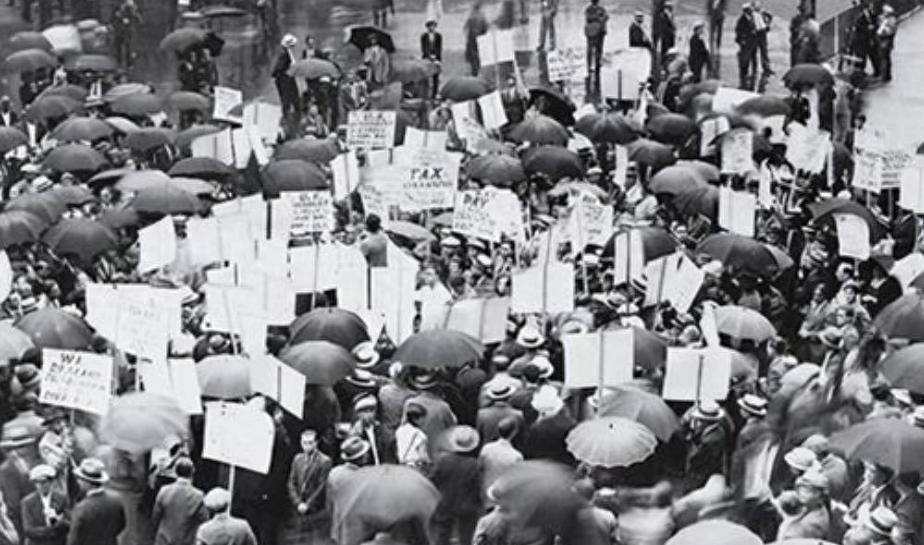
Core Viewpoint - The Great Depression was not just an economic downturn but a significant global crisis that originated in the United States and affected the entire capitalist world, prompting ongoing research by economists to prevent future occurrences [1] Group 1: Causes of the Great Depression - The stock market crash on October 29, 1929, was a critical event, with $14 billion evaporating in one day, equivalent to 29% of the U.S. GDP at that time [3] - Deeper issues such as insufficient total demand and extreme wealth inequality were already present, exacerbated by the rigid adherence to the gold standard, which limited countries' ability to respond flexibly to crises [5] - The implementation of the Smoot-Hawley Tariff Act in 1930 led to a significant increase in tariffs on over 20,000 imported goods, resulting in a global trade contraction of more than 25% [7] Group 2: Impact on Society - The Great Depression caused severe societal damage, with unemployment rates reaching 25%, meaning one in four workers was without food, and 15 million people lost their jobs [9] - The crisis created a sense of despair among the populace, particularly affecting marginalized groups, leading to a pervasive feeling of abandonment and hopelessness [9] Group 3: Government Response - Traditional market self-correction theories failed during the crisis, leading to worsening conditions until President Roosevelt's New Deal, which involved government intervention as a major consumer and employer [11] - Countries that abandoned the gold standard earlier, such as the UK and Japan, experienced quicker economic recovery compared to those that delayed, highlighting the importance of policy flexibility during crises [13] Group 4: Lessons Learned - The core lesson from the Great Depression emphasizes the need for governments to adopt expansionary macroeconomic policies during systemic crises and the importance of international cooperation over isolationism [14] - Roosevelt's assertion that the government would take responsibility for increasing spending if others would not encapsulates the critical learning from this global nightmare [14]

雷颐:美国“改革年代”的启示
Xin Jing Bao· 2025-10-19 13:16
Core Insights - Richard Hofstadter's "The Age of Reform" is a seminal work in American history, focusing on the cultural and ideological factors influencing social movements from the 1890s to the 1930s [3][6] - The book examines three key social movements: the Populist Movement, the Progressive Movement, and the New Deal, providing a detailed analysis of their impacts on American society [6][7] Group 1: Historical Context - The period from the 1890s to World War II is characterized by significant social upheaval as America transitioned from an agrarian to an industrial society, leading to the emergence of various social movements [6][7] - Hofstadter emphasizes the importance of cultural and ideological factors over mere economic interests in understanding historical developments [3][6] Group 2: Social Movements - The Populist Movement arose as a response to the grievances of farmers against industrialization and urbanization, advocating for the protection of farmers' rights [7][8] - The Progressive Movement, occurring between 1900 and 1914, aimed to address the issues of the Gilded Age, marked by both prosperity and significant social problems [6][7] - The New Deal, introduced in the 1930s, represented a governmental response to the economic crises of the Great Depression, reshaping the role of government in American life [6][7] Group 3: Agricultural Transformation - The commercialization of agriculture became crucial for farmers as they adapted to the pressures of industrialization, leading to a shift in their identity from traditional farmers to "commercial farmers" [9][11] - New farmer organizations emerged to provide market information and improve distribution methods, reflecting a growing awareness of the need for agricultural efficiency [9][11] - The dual identity of farmers as both producers and businesspeople became a significant theme, highlighting the transformation of agricultural practices in response to market demands [11]