
新新三样

Search documents
创新赋能,打造智能经济新形态
21世纪经济报道· 2026-03-07 10:25
Core Viewpoint - The article emphasizes the importance of accelerating high-level technological self-reliance and innovation in China, particularly in the context of the 2026 National Two Sessions and the new phase of the "14th Five-Year Plan" [1][2]. Group 1: Technological Advancements - The government work report highlights the need to enhance independent innovation capabilities to support high-quality development, particularly in artificial intelligence, robotics, and innovative pharmaceuticals, which are seen as the core engines driving new productive forces [2][4]. - The "new new three" sectors—artificial intelligence, robotics, and innovative pharmaceuticals—mark a significant shift in China's technological innovation, moving towards intelligent leadership and breakthroughs in life health and high-end equipment [4][7]. - By 2025, China's AI core industry is projected to exceed 1.2 trillion yuan, with over 6,200 companies and an application penetration rate of over 30% in large-scale manufacturing [4]. Group 2: Industry Integration and Application - The report calls for the establishment of a new intelligent economic model, promoting the commercialization and large-scale application of AI technologies across various sectors, including smart manufacturing and healthcare [5][6]. - The robotics industry is expected to transition from scale growth to quality enhancement in 2026, with significant applications in automotive, electronics, and service sectors [5][6]. - Innovative pharmaceuticals are positioned as a critical component of life health, with a notable shift from generic drugs to original innovations, supported by streamlined regulatory processes [6][7]. Group 3: Competitive Advantages - China’s innovation ecosystem is bolstered by four key advantages: a vast market, strong capabilities in technology transfer and industrialization, a new type of national system for tackling core technologies, and a stable development environment [9][10]. - The large consumer market, with over 1.4 billion people and 400 million middle-income individuals, serves as a natural ground for innovation and application [9]. - The new type of national system facilitates coordinated efforts in strategic technology areas, enhancing the role of enterprises in innovation and project implementation [10]. Group 4: Future Industry Development - The government report outlines a strategic focus on future industries such as future energy, quantum technology, embodied intelligence, brain-computer interfaces, and 6G, establishing mechanisms for investment growth and risk sharing [13][14]. - Emphasis is placed on fostering an open innovation environment, integrating global resources, and enhancing cooperation in key technology areas to boost self-reliance and innovation capabilities [14].

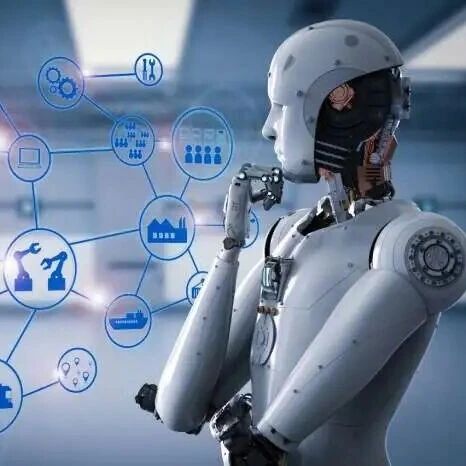
银河证券章俊:新“新三样”领衔,构筑中国产业发展新基座
2 1 Shi Ji Jing Ji Bao Dao· 2025-12-26 06:27
Core Viewpoint - The article discusses the transition of China's economic growth model from "factor expansion" to "innovation-driven" development, highlighting the emergence of new key industries: robotics, artificial intelligence (AI), and innovative pharmaceuticals, referred to as the new "three essentials" [1][4]. Group 1: New "Three Essentials" - The new "three essentials" represent a shift in focus from production quantity to defining technological pathways and standards, emphasizing the importance of algorithm capabilities, computational systems, and clinical data accumulation [4][5]. - Robotics, AI, and innovative pharmaceuticals are seen as critical to enhancing efficiency and driving growth through technological advancements rather than mere factor accumulation [7][10]. Group 2: Industrial Upgrade Logic - The transition to the new "three essentials" is framed within the context of diminishing returns from traditional growth models reliant on labor and capital, necessitating a reevaluation of growth paradigms and competitive logic [4][5]. - The focus on technology definition and intellectual property rights marks a departure from previous models that emphasized cost control and scale [4][5]. Group 3: Overcoming the "Middle-Income Trap" - The "middle-income trap" is characterized by a reliance on capital and labor for productivity gains, which leads to diminishing returns; the new "three essentials" aim to reshape the mechanisms of productivity formation [7][8]. - AI, robotics, and innovative pharmaceuticals are positioned to significantly lower marginal costs in research and development, thereby fostering a culture of continuous innovation [7][8]. Group 4: Strategic Importance - The development of the new "three essentials" is not only an economic issue but also a matter of national security, as it encompasses technology, biological, and data security within a unified framework [5][10]. - The strategic significance of these industries lies in their potential to enhance China's long-term competitiveness and resilience in the face of global technological competition [5][10]. Group 5: Robotics Industry Insights - China is positioned at a critical juncture in the robotics industry, with a comprehensive supply chain and rapid response capabilities, making it a leader in global robot applications [13][14]. - The country has made significant strides in patenting and innovation within the robotics sector, although challenges remain in high-end components and core technologies [13][14]. Group 6: AI Development Challenges - China's AI sector benefits from vast data resources and diverse application scenarios, yet it faces limitations in foundational technologies such as computing power and core algorithms [16][17]. - To transition from a partial leader to a comprehensive leader in AI, China must invest in high-end chips, algorithm development, and international standards [16][17]. Group 7: Innovative Pharmaceuticals - The growth in outbound transactions for innovative pharmaceuticals indicates a shift from passive participation to active engagement in global markets, although the proportion of original drugs remains low [19][20]. - The industry is moving towards a more competitive stance, with improvements in target selection and clinical validation capabilities, but still faces challenges in foundational research and global clinical trial leadership [21][20]. Group 8: Addressing Core Technology Dependencies - China's large market and engineering capabilities can mitigate risks associated with core technology dependencies, but they cannot replace the need for sustained investment in foundational technologies [23][24]. - A dual approach of fostering independent research and building a diverse technological ecosystem is essential for reducing systemic risks and enhancing strategic resilience [26][27].

新“新三样”领跑,接力中国资产重估
2 1 Shi Ji Jing Ji Bao Dao· 2025-09-23 03:33
Core Viewpoint - The emergence of new "new three samples" (robots, artificial intelligence, and innovative drugs) signifies a deeper industrial transformation in China, moving towards high-quality economic development and technological leadership [1][2][6]. Group 1: Industry Transformation - The new "new three samples" represent a shift from traditional factor-driven growth to new quality productivity-driven growth, highlighting the need for strategic industries to support this transition [2][7]. - Robots, AI, and innovative drugs are seen as the pillars of a technology-intensive, high-value-added new economy, marking a transition from scale advantage to technology leadership [2][8]. Group 2: Market Performance - The robot sector has gained significant market recognition, with companies like Huichuan Technology (300124.SZ) exceeding a market value of 200 billion yuan, and several stocks in this sector doubling in price this year [4]. - In the AI sector, companies like "Ji Lian Hai" and "Yi Zhong Tian" have shown remarkable performance, achieving explosive growth in both earnings and stock prices [4]. - The innovative drug sector is represented by companies like Hengrui Medicine (600276.SH), nearing a market value of 500 billion yuan, and BeiGene (06160.HK), which has achieved profitability for the first time [4][19]. Group 3: Policy Support - The Chinese government has issued the "Artificial Intelligence+" action plan, emphasizing the strategic importance of AI in industrial development [3][17]. - Recent policies have been introduced to support the innovative drug sector, including measures to enhance the approval process for clinical trials and promote international market development [20][21]. Group 4: Global Positioning - China's new "new three samples" are transitioning from "catching up" to "leading," with robots entering the first tier globally, AI making strides in application, and innovative drugs rapidly advancing through international collaboration [4][22][23]. - The robot industry has maintained its position as the largest industrial robot market globally, with sales reaching 302,000 units in 2024 [22]. - The AI sector is projected to exceed 700 billion yuan in scale by 2024, driven by extensive application scenarios and data resources [22]. Group 5: Challenges and Bottlenecks - Despite progress, challenges remain in critical areas such as high-end servo motors, AI computing chips, and innovative drug target discovery, which require ongoing policy support and investment in foundational technologies [5][25]. - The robot sector still relies on imports for key components, while the AI sector faces risks related to computing power and infrastructure [25]. Group 6: Future Directions - To enhance competitiveness in the new "new three samples," policies should focus on data openness, regulatory reforms, and infrastructure development to support AI and innovative drug sectors [26][27][28]. - The establishment of a dynamic regulatory framework and international collaboration is essential for fostering innovation and ensuring long-term competitiveness [28].