
新质蛋白

Search documents
我国海洋微藻新质蛋白研究获进展
Zhong Guo Zi Ran Zi Yuan Bao· 2026-02-13 06:26
Core Viewpoint - The research team from the Third Institute of Oceanography, Ministry of Natural Resources, has made significant progress in the study of new protein sources derived from microalgae, highlighting their potential as sustainable protein alternatives in the context of increasing resource constraints and public health awareness [1] Group 1: Microalgae as a Protein Source - Microalgae are gaining attention as a preferred protein resource due to their rapid biomass accumulation, high protein content, balanced amino acid composition, and significantly lower environmental footprint compared to traditional protein sources [1] - The current challenge is to identify microalgae strains that possess both high nutritional value and the ability to grow stably under industrial conditions [1] Group 2: Research Findings - The research team has optimized the preparation process for new proteins derived from selected microalgae and analyzed their functional and nutritional potential, providing scientific references for the selection and application of sustainable protein sources in future functional food systems [1] - The study indicates that the selected microalgae proteins exhibit superior bioactivity, including antioxidant, anti-inflammatory, and anti-lipogenesis effects, underscoring their application potential as functional food supplements in human nutrition and health [1] Group 3: Challenges and Strategic Pathways - The paper outlines the challenges and key bottlenecks in the development and application of microalgae proteins in food and pharmaceutical raw materials [1] - It discusses strategic pathways to overcome these obstacles and achieve commercial viability for microalgae-derived proteins [1]
“双向奔赴”,领跑新质蛋白新赛道
Xin Hua Ri Bao· 2025-12-17 23:52
Core Viewpoint - The collaboration between China National Investment Corporation's subsidiary and Dongsheng Biotechnology marks a significant step in the new protein industry, integrating technology research and industrial application, and injecting strong momentum into the bio-manufacturing sector through central-local cooperation [1] Group 1: Bio-Manufacturing Overview - Bio-manufacturing is defined as the conversion of biological science and technology discoveries into actual products, processes, systems, and services, creating new manufacturing models and economic forms across various industries [2] - The bio-manufacturing industry in China has reached a scale of 1.6 trillion yuan, influencing downstream industries worth 10 trillion yuan, with projections to expand to 3 trillion yuan by 2030 [2] - New protein, a key component of bio-manufacturing, refers to edible proteins produced without traditional livestock or fishery methods, utilizing advanced biotechnologies for efficient production [2] Group 2: Strategic Recommendations - To seize opportunities in the new protein sector, it is recommended to establish interdisciplinary research platforms that integrate synthetic biology, fermentation engineering, and food science, facilitating shared research outcomes and accelerating technology application [3] - A complete industrial chain should be constructed, promoting deep integration of production, education, research, and application to shorten the distance from innovation to market [3] Group 3: Investment and Development - The "14th Five-Year Plan" emphasizes the need to strategically position future industries, with bio-manufacturing identified as a new economic growth point [4] - Dongsheng Biotechnology, a leading enterprise in the field, holds a 60% market share domestically and has established a mature production, learning, and research system [4] - The recent agreement allows for the direct use of existing fermentation facilities and the expansion of production capacity, facilitating the rapid industrialization of new protein [5] Group 4: Industry Insights - The global bio-manufacturing industry is still in its early stages, characterized by large platforms supporting technological innovation and small teams driving breakthroughs in synthetic biology [6] - The entry of state-owned enterprises into bio-manufacturing is timely, with significant investments exceeding 100 billion yuan and total market capitalization of invested companies surpassing 1 trillion yuan [6][7] - The collaboration aims to create a virtuous cycle of innovation, production, and market integration, enhancing the overall capacity and capabilities of Dongsheng Biotechnology [7]
国投集团锚定新质蛋白赛道,构建央企生物制造产研融合发展新模式
Di Yi Cai Jing· 2025-12-16 03:49
Core Insights - The National Investment Group has invested in 118 projects in the biomanufacturing sector, amounting to 22.5 billion yuan, which has driven investments exceeding 100 billion yuan [1][4] - The "14th Five-Year Plan" emphasizes the need for forward-looking layouts in future industries, positioning biomanufacturing as a new economic growth point [1] Investment and Development - The National Investment Group's Biomanufacturing Innovation Research Institute signed a share transfer agreement with Dongsheng Biotechnology, initiating a new protein industrialization project [2] - This collaboration aims to establish a complete chain of "technology research and development + industrial implementation" in the new protein sector, enhancing the role of state-owned enterprises in technology leadership and industrial promotion [2][5] - The new protein industry, based on synthetic biology technology, aims to reform traditional protein acquisition methods through industrial microbial fermentation [2] Market Potential - The biomanufacturing industry is expected to grow from 16 trillion yuan in 2025 to 30 trillion yuan by 2030, indicating a significant market expansion [2] - New protein concepts have emerged in the context of food security and sustainable development, aiming to reduce reliance on traditional livestock farming [2] Strategic Initiatives - The State-owned Assets Supervision and Administration Commission launched initiatives focusing on 15 key industries, including biomanufacturing, to accelerate the development of emerging industries [4] - The National Investment Group is the leading entity in cultivating the biomanufacturing industry, with a registered capital of 6 billion yuan for its innovation research institute [4] - The investment strategy combines direct investment and fund management to accelerate the growth of the biomanufacturing sector [4] Industry Leadership - The National Investment Group has invested in 98 projects in the biopharmaceutical sector, totaling 18.4 billion yuan, which has attracted over 108.6 billion yuan in social capital [4] - Companies like Innovent Biologics and Kelun-Biotech, backed by the National Investment Group, have become industry leaders [4] - Dongsheng Biotechnology is recognized as a leading global enterprise in glutaminase transaminase, with a 60% market share in China and products exported to 43 countries [4]


富祥药业(300497) - 300497富祥药业投资者关系管理信息20250905
2025-09-05 10:30
Financial Performance - The company reported an increase in mid-year performance compared to last year, but remains in a loss state [2] - Future strategies will focus on improving net profit through various products and avenues [2] Pharmaceutical Manufacturing - The decline in raw material prices for 6-APA and the recovery in prices for the key intermediate 4-AA will enhance the gross margin of the pharmaceutical business [3] - Successful completion of supplier qualification for the new process product, Tazobactam, is expected to reduce production costs and improve market competitiveness [3] - Expansion of Piperacillin production capacity is underway, with significant market demand for combination formulations [3] - New compound formulations are being launched, which will drive demand for related products [3] New Energy Business - The company leads in the industry for lithium battery electrolyte additives in terms of shipment volume and cost control [3] - Current prices for these additives are at historical lows, with limited room for further decline; a price rebound could significantly enhance profits [3] Synthetic Biology - The company is a pioneer in microbial protein production, with significant advancements in core strains, production technology, and market access [4][5] - The registration application for the new protein as a food ingredient has been accepted, with expectations for approval in the second half of the year [4][9] - The company is constructing a project with an annual capacity of 200,000 tons of microbial protein, aiming for a production scale of 20,000 tons of microbial protein and 50,000 tons of amino acid water-soluble fertilizer [5][15] Quality and Certification - The new protein has received multiple international certifications, including HALAL and KOSHER, and has passed various food safety management system certifications [6] - The company has developed proprietary strains and achieved international advanced levels in production technology [5][6] Market Expansion and Collaboration - Strategic partnerships have been established with various companies in the microbial protein sector, enhancing market penetration [11] - The company plans to build an open commercial transformation platform to accelerate product commercialization and brand development [10] Product Development - The new protein can be applied in various sectors, including plant-based meat alternatives, protein drinks, and health products [12] - The company is actively developing new applications and has created several product samples for market introduction [12] Environmental and Regulatory Compliance - The company’s production processes aim for zero emissions and align with national agricultural reduction goals [7][14] - The amino acid water-soluble fertilizer is positioned to meet growing market demands due to regulatory support for green products [15]

富祥药业:计划开发多款仿真肉产品
news flash· 2025-05-25 10:51
Core Viewpoint - Fuxiang Pharmaceutical plans to develop multiple plant-based meat products that closely mimic the texture and taste of real meat, leveraging new protein technology [1] Company Developments - The company aims to create over 10 consumer-oriented products through independent research and external collaborations [1] - Fuxiang has established the first domestic production line for microbial new protein with a capacity of 1,000 tons and is currently constructing a new line with an annual capacity of 20,000 tons [1] Industry Insights - According to Chen Jian, an academician from the Chinese Academy of Engineering, the production efficiency of new protein is 1,000 times higher than traditional livestock and fishery farming methods, with over 90% water savings and no need for pesticides or fertilizers [1] - The development of new protein can address key supply chain challenges in the meat, egg, and dairy industries, enhancing cost-effectiveness and sustainability, while also meeting national strategic needs for food security [1] - The industry has significant potential and market space for growth [1]
聚焦新质蛋白赛道!国投集团投生物制造超40亿!十五五末规划600亿!
合成生物学与绿色生物制造· 2025-05-18 13:56
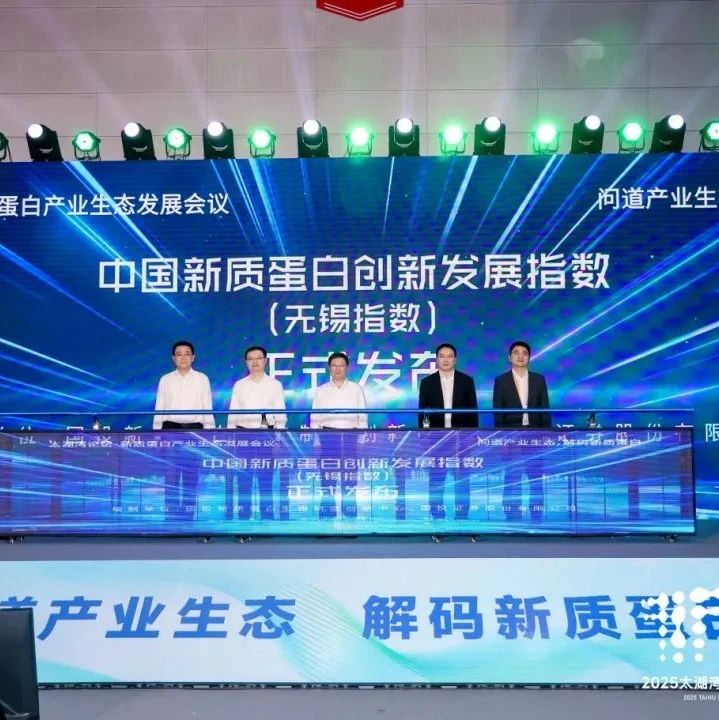
Core Viewpoint - The biomanufacturing industry is emerging as a new engine for economic growth, with a significant focus on the new protein sector as a key area for development [1][2]. Group 1: New Protein Manufacturing Center - The National Investment Group and Wuxi City have established the National Investment New Protein Biomanufacturing Innovation Center to address bottlenecks in new protein research and industrialization [2][4]. - The center aims to accelerate the development and cost optimization of various new protein products, covering fields such as food, nutrition, healthcare, and materials [2][4]. Group 2: Challenges and Opportunities - New protein is defined as edible protein not reliant on traditional livestock or fishery methods, utilizing innovative technologies like microbial fermentation and synthetic biology [4]. - China faces a significant protein gap, with 2024 grain imports projected to exceed 158 million tons, including 105 million tons of soybeans, which are primarily used for animal feed [5]. - The shortage of edible protein has become a safety issue, prompting the government to promote comprehensive food resource development [5]. Group 3: Investment and Development Strategy - Since 2020, the new protein industry in China has shown strong growth, although the capital market's downturn in 2023 has posed challenges [5][6]. - The National Investment Group has established the National Investment Biomanufacturing Innovation Research Institute with a registered capital of 6 billion yuan, marking a significant step in supporting the biomanufacturing industry [5][6]. - The group aims to achieve a total output value of 60 billion yuan in the biomanufacturing sector by the end of the 14th Five-Year Plan [6]. Group 4: Financial Support and Collaboration - The National Investment Group manages funds exceeding 270 billion yuan, having invested over 4 billion yuan in 25 biomanufacturing companies [6][7]. - The group has partnered with various local governments to establish industry guidance funds, including a 2 billion yuan biomanufacturing venture capital fund in Tianjin [6][7]. - Future plans include collaborating with private capital to explore differentiated management of mixed-ownership enterprises, enhancing the vitality and competitiveness of the industry [7].

投资金额超40亿,国投集团加快布局生物制造产业
Di Yi Cai Jing· 2025-05-17 08:43
Core Insights - The National Investment Group (国投) is establishing a dedicated CVC fund for the biomanufacturing industry, focusing on early-stage, small investments in hard technology to support strategic emerging industries and core technology breakthroughs [1][3] - The biomanufacturing industry is recognized as a new engine for economic growth, with the establishment of the National Investment Group's new protein biomanufacturing innovation center aimed at addressing bottlenecks in new protein research and industrialization [1][2] Group 1: Industry Development - The new protein, which does not rely on traditional livestock or fishery methods, is synthesized using innovative technologies like microbial fermentation, addressing the significant protein gap in China, where over 66% of grain imports are soybeans [2] - The shortage of edible protein has become a safety issue, prompting the government to promote a comprehensive approach to food resource development [2] Group 2: Investment and Funding - The National Investment Group has invested in 25 biomanufacturing companies, totaling over 4 billion yuan, and has established various government-guided funds to support the industry [4] - The National Investment Group's funds exceed 270 billion yuan, with investments in 424 specialized enterprises, supporting 120 companies to go public, which constitutes 10% of the total on the Science and Technology Innovation Board [3][4] Group 3: Strategic Initiatives - The establishment of the National Investment Group's Biomanufacturing Innovation Research Institute, with a registered capital of 6 billion yuan, marks a strategic initiative to cultivate the biomanufacturing industry [3] - The National Investment Group aims to achieve a total output value of 60 billion yuan in the biomanufacturing sector by the end of the 14th Five-Year Plan, focusing on various sub-sectors such as industrial strains and food additives [3]