新鲜现炸

Search documents
红餐:炸鸡品类发展报告2025
Xin Lang Cai Jing· 2025-12-24 10:33
Core Insights - The fried chicken market in China is experiencing rapid growth, with the market size expected to reach 105 billion yuan by 2025, up from 60 billion yuan in 2019, reflecting a compound annual growth rate (CAGR) of 9.4% [11][13] - The market is characterized by a fragmented landscape, with nearly 90% of fried chicken brands operating 50 stores or fewer, indicating significant room for consolidation and growth in chain operations [16][19] - The primary consumer demographic for fried chicken is young adults aged 18-35, who account for 79% of the market, highlighting the importance of targeting this age group in marketing strategies [26][29] Market Overview - The fried chicken market is projected to exceed 100 billion yuan by 2025, driven primarily by the young consumer base [3] - The number of fried chicken outlets in China is expected to reach 164,000 by November 2025 [13] - The market's growth is supported by a low investment threshold, attracting many individual operators, which contributes to a lower chain rate compared to other countries [19] Development Highlights - Brands are innovating through fresh frying techniques and regional flavors to differentiate themselves in a competitive market [28][30] - The fried chicken sector is increasingly leveraging social media and cultural elements in branding to appeal to younger consumers [56] Consumer Behavior - The average frequency of fried chicken purchases among consumers is high, with 32.8% purchasing at least once a week, indicating strong market penetration [29] - Fried chicken is popular across various consumption scenarios, including late-night snacks, social gatherings, and casual dining [29] Brand Innovation - Brands are focusing on product innovation by exploring different chicken parts and flavors, including local and regional specialties [41][42] - The trend of "freshly fried" offerings is becoming a key selling point, with many brands adopting transparent cooking processes to enhance consumer trust [37][38] Supply Chain and Investment - The fried chicken supply chain is becoming more mature, with established suppliers for chicken and seasonings, facilitating standardization and quality control [57][59] - The rise of street food and night markets is providing new growth opportunities for fried chicken brands, particularly in lower-tier cities [9] Market Segmentation - The fried chicken market is diversifying, with various styles including American, Korean, and Chinese fried chicken catering to different consumer preferences [7] - The majority of fried chicken brands operate small outlets, typically ranging from 10 to 30 square meters, optimizing for high foot traffic locations [50][51] Marketing Strategies - Brands are employing diverse marketing strategies, including social media engagement, celebrity endorsements, and cultural events to enhance brand visibility and consumer connection [56] - The use of data analytics to optimize product offerings and promotional strategies is becoming increasingly common among fried chicken brands [55]


炸鸡品类发展报告2025:地域风味与年轻客群助力赛道持续扩容
3 6 Ke· 2025-12-22 09:09
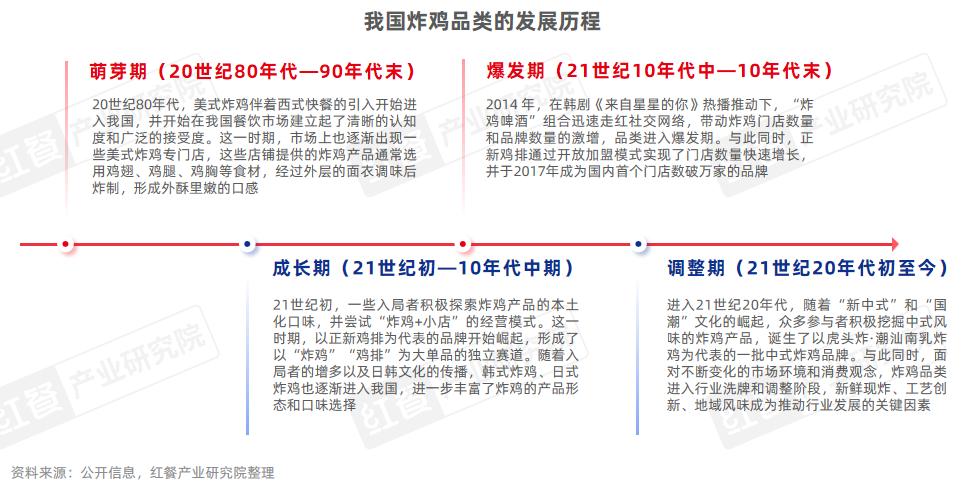
Core Insights - The fried chicken segment is experiencing rapid growth driven by the young consumer demographic, with a market size projected to increase significantly by 2025 [2][9]. Market Overview - The fried chicken market in China has evolved since the introduction of Western fast food in the 1980s, becoming a significant player in the restaurant industry [2]. - The market has diversified into various subcategories, including American, Korean, Chinese, and Japanese fried chicken, catering to different consumer tastes and cultural experiences [5]. Growth Factors - Four key factors contributing to the rapid growth of the fried chicken segment include standardization ease, mature supply chains, light investment models, and the rise of street food economies [8]. - The compound annual growth rate (CAGR) for the fried chicken market from 2019 to 2024 is projected at 9.4%, with an expected year-on-year growth rate of 11.7% by November 2025 [9]. Brand Landscape - As of November 2025, there are approximately 98,800 fried chicken-related enterprises in China, with an increase of nearly 4,000 from the end of 2024 [11]. - The market remains fragmented, with several brands like Zhengxin Chicken and emerging players rapidly expanding their store counts [12][15]. Consumer Demographics - The primary consumer base for fried chicken consists of young individuals aged 18 to 35, accounting for 79% of the market, with a notable frequency of purchase among this group [18][20]. - Fried chicken is popular across various consumption scenarios, including afternoon tea, late-night snacks, and social gatherings [20]. Product Innovation and Differentiation - Brands are focusing on fresh and transparent cooking processes, with many adopting open kitchen formats to enhance consumer experience [22]. - There is a trend towards local flavor adaptations and innovative product offerings, with brands exploring diverse chicken parts and regional tastes [26][27]. Store Formats and Strategies - Many fried chicken brands utilize small store formats (10-30 square meters) to optimize operational efficiency and adapt to various locations [29][32]. - The low investment requirement for small stores facilitates rapid expansion and market penetration [32]. Delivery and Marketing Strategies - The fried chicken segment has seen a significant shift towards online delivery, with over 50% of sales coming from this channel, indicating a growing trend [33][34]. - Brands are employing diverse marketing strategies to engage young consumers, including social media interactions and cultural themes [35][36]. Supply Chain Development - The growth of the fried chicken segment is supported by an increasingly robust supply chain, with partnerships between brands and leading suppliers ensuring quality and consistency [37][41]. - Some brands are investing in their supply chain capabilities to enhance operational efficiency and product quality [41][44]. Conclusion - The fried chicken segment is poised for continued growth, driven by young consumer preferences, product innovation, and supply chain enhancements, indicating a promising future for the industry [45].