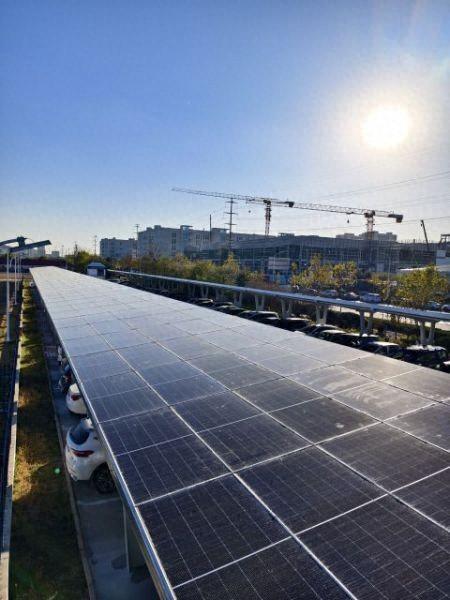
无废园区

Search documents
三部门部署氢能综合试点应用,氢能应用领域有望全面拓展
Xinda Securities· 2026-03-22 08:31
Investment Rating - The investment rating for the environmental sector is "Positive" [2] Core Insights - The report highlights the deployment of hydrogen energy comprehensive pilot applications by three departments, indicating a broad expansion of hydrogen energy application fields [3][18] - By 2030, the average price of hydrogen for end-use is expected to drop below 25 yuan per kilogram, with a target of 10 million fuel cell vehicles in the country, doubling the number from 2025 [19][20] - The policy aims to shift hydrogen applications from solely fuel cell vehicles to a dual focus on transportation and industrial applications, promoting a comprehensive ecosystem for hydrogen energy [19] Market Performance - As of March 20, the environmental sector has declined by 5.59%, underperforming the broader market, which saw a decrease of 3.38% [3][10] - The water management sector fell by 3.06%, while the waste-to-energy sector dropped by 5.05% [3][13] Industry Dynamics - On March 20, a joint implementation plan for high-quality development of energy-saving equipment was released, focusing on enhancing the efficiency of energy-saving equipment across various sectors [32] - The report discusses the importance of "waste-free" industrial practices, emphasizing the need for standards to guide industrial parks and enterprises in reducing waste and improving resource utilization [33] Investment Recommendations - The report suggests maintaining a focus on energy-saving and environmental protection sectors, which are expected to remain in high demand [4] - Specific companies recommended for investment include Hanlan Environment, Xingrong Environment, and Hongcheng Environment, with additional attention to companies like Wangneng Environment and Junxin Co [4]
山东首个污泥独立焚烧项目在青岛建成
Da Zhong Ri Bao· 2026-01-12 01:12
Core Insights - The independent sludge incineration project in Qingdao transforms sludge from a burden into a resource, achieving both economic and environmental benefits through energy self-sufficiency and local processing [1] Group 1: Project Overview - The project is located in the Xiaojianxi Solid Waste Comprehensive Disposal Park and can process 600 tons of sludge daily with an 80% moisture content [1] - Previously, about 30% of the sludge generated by Qingdao's sewage treatment plants required long-distance transportation for disposal, incurring high costs and safety risks [1] - The facility now enables 100% local digestion and harmless disposal of sludge [1] Group 2: Energy Efficiency - The project reduces reliance on external fuels by achieving stable self-sustaining combustion of sludge, with over 80% of the heat generated used to dry incoming wet sludge [1] - This process results in a more than 30% reduction in energy consumption and lowers operational costs [1] Group 3: Resource Utilization - The project benefits from "park synergy," utilizing biogas from a nearby landfill as backup energy and excess heat from biogas power generation as a cost-effective heat source [2] - Wastewater produced by the project is treated and reused within the park, saving 36,000 tons of fresh water annually [2] - Overall operational costs are further reduced by 10%, with the park's resource utilization rate reaching 95% [2] Group 4: Environmental Impact - The project addresses key pollution issues by collecting and incinerating odors and waste gases, effectively eliminating foul smells [3] - The incineration process reduces sludge volume to one-tenth of its original size, producing a stable, non-harmful ash that can be used as a building material [3] - The project creates a closed-loop system that integrates sludge disposal, waste management, wastewater treatment, and energy recovery, serving as a model for sustainable urban waste management [3]
"吃"掉污泥 "烧"出真金白银 山东首个污泥独立焚烧项目建成
Xin Hua Wang· 2026-01-10 03:00
Core Insights - The independent sludge incineration project in Qingdao transforms sludge from a burden into a resource, achieving both economic and environmental benefits through energy self-sufficiency and local processing [1] Group 1: Project Overview - The project is located in the Xiaojianxi Solid Waste Comprehensive Disposal Park and can process 600 tons of sludge daily with an 80% moisture content [1] - Previously, about 30% of the sludge generated by Qingdao's sewage treatment plants required long-distance transport for disposal, incurring high costs and safety risks [1] - The facility now enables 100% local digestion and harmless disposal of sludge [1] Group 2: Operational Efficiency - The project reduces reliance on external fuels by achieving stable self-sustaining combustion of sludge, leading to over 30% reduction in energy consumption and operational costs [1] - The integration of resources within the park allows for cost savings, such as using biogas from a nearby landfill and treated wastewater for non-potable uses, resulting in an additional 10% reduction in operational costs [2] Group 3: Environmental Impact - The project addresses key pollution issues by collecting and incinerating odors and waste gases at high temperatures, effectively eliminating foul smells [3] - The end product of the sludge treatment is a stable, non-hazardous ash that can be used as a building material, significantly reducing its volume and potential environmental threats [3] - The project exemplifies a closed-loop system that integrates sludge disposal, waste management, wastewater treatment, and energy recovery, setting a benchmark for sustainable urban waste management [3]
山东首个污泥独立焚烧项目在青建成
Da Zhong Ri Bao· 2026-01-10 01:13
Core Viewpoint - The establishment of Shandong's first independent sludge incineration project in Qingdao transforms sludge from a burden into a resource, generating economic and environmental benefits through energy self-sufficiency and efficient waste management [2][4]. Group 1: Project Overview - The sludge incineration project can process 600 tons of sludge with an 80% moisture content daily, addressing the previous need to transport 30% of the sludge out of the city for processing [2]. - The project achieves 100% local digestion and harmless disposal of sludge, eliminating high transportation costs and associated safety risks [2]. Group 2: Operational Efficiency - The project reduces energy consumption by over 30% by utilizing self-sustaining combustion, where over 80% of the heat generated is reused for drying incoming wet sludge [2]. - The overall operational costs are further reduced by 10% through a synergistic approach with neighboring facilities, utilizing biogas and excess wastewater for energy and water needs [3]. Group 3: Environmental Impact - The project effectively addresses odor and pollution issues by collecting and incinerating all foul gases at high temperatures, ensuring no harmful emissions [3]. - The final product of the incineration process is a stable powder with over 99% ash content, significantly reducing the volume of sludge and eliminating potential threats to land and water sources [3]. Group 4: Broader Implications - The project serves as a model for creating a "waste-free park," integrating sludge disposal, waste management, wastewater treatment, and energy recovery into a closed-loop system, showcasing a sustainable path for urban waste management [4].
从一粒磷肥料到一个产业集群
Xin Lang Cai Jing· 2025-12-27 22:49
Core Insights - The industrial structure of Qiannan Prefecture is undergoing a profound transformation driven by coupling, with traditional fertilizer's share in phosphate chemical products decreasing from 42.9% in 2018 to 20.5% in 2024, while the share of new energy battery materials like iron phosphate and lithium iron phosphate has surged to 35% from nearly zero [1] - The economic value created from phosphate resources has significantly increased, with the production capacity of iron phosphate and lithium iron phosphate accounting for over 50% of the province's total, and the added value per ton of phosphate rock rising from approximately 2500 yuan to around 6000 yuan, effectively doubling [1] - The new energy battery materials industry in Qiannan is expected to exceed 20 billion yuan by 2025 [1] Industry Transformation - The utilization rate of phosphogypsum in Qiannan has reached an industry-leading 97%, transforming environmental burdens into a green building materials industry with an annual output value exceeding 500 million yuan [2] - Qiannan's industrial development strategy emphasizes a clear focus on diverse industries, not solely reliant on phosphate [3] Regional Development - Under the "coupling symbiosis" model, various counties in Qiannan are identifying unique industrial rhythms, leading to complementary advantages and distinctive development [4] - The independent county of Dushan has become the largest production base for micro and small bearings in Guizhou, with 28 bearing and supporting enterprises and over 1500 production lines, capable of producing 1.1 billion sets of deep groove ball bearings annually [4] Technological Innovation - Qiannan is leveraging technological innovation to convert resource advantages into developmental strengths, with companies like Qixin focusing on high-sulfur coal processing to produce valuable chemical products [16] - The region is fostering a "government-industry-university-research-application" innovation ecosystem, with 219 innovative SMEs and 137 provincial-level specialized enterprises [18] Economic Growth - Qiannan has established a modern industrial system characterized by a "2+4+4" framework, with phosphate chemical and new energy battery materials as core engines, contributing over 650 billion yuan and accounting for more than 54% of industrial output [13] - The industrial value added in Qiannan has grown by 14% year-on-year from January to November, ranking first in the province, with industrial investment contributing significantly to economic growth [21]
能源早新闻丨第三轮第五批中央生态环境保护督察全面完成督察进驻阶段工作
中国能源报· 2025-12-22 22:33
Group 1: Industrial and Environmental Initiatives - The Ministry of Industry and Information Technology and the Ministry of Ecology and Environment are organizing a collection of typical cases for industrial green low-carbon practices, focusing on "waste-free parks" and "waste-free enterprises" to enhance resource utilization efficiency and reduce industrial solid waste at the source [2] - The third round of the fifth batch of central ecological environment protection inspections has been completed, covering 10 inspection teams that entered Beijing, Tianjin, and Hebei, as well as five central enterprises for routine inspections [2] Group 2: Energy Sector Developments - Domestic oil prices have been reduced by 170 yuan per ton for gasoline and 165 yuan per ton for diesel, effective from December 22 [3] - The construction of the main project for the Bai Long Nuclear Power Plant in Guangxi has officially started, with a total investment of approximately 120 billion yuan and a planned capacity of 8.62 million kilowatts [3] Group 3: Maritime and Oil Industry Innovations - The world's first methanol dual-fuel intelligent ultra-large oil tanker, "Kai Tuo," has been successfully delivered, designed to carry approximately 2.1 million barrels of crude oil, showcasing advanced performance in navigation and low emissions [4] - China's first offshore unmanned platform for high-temperature cooling and external transportation of oil-gas-water mixtures has been achieved, supporting national energy security with a peak daily oil production expected to exceed 2,300 tons [7]

工信部、生态环境部发布通知
中国能源报· 2025-12-22 08:23
Core Viewpoint - The article discusses the initiative by the Ministry of Industry and Information Technology and the Ministry of Ecology and Environment to collect typical cases of "waste-free parks" and "waste-free enterprises" to promote green and low-carbon industrial practices in China [3][4]. Group 1: Definition and Requirements - "Waste-free parks" are defined as industrial parks established for over three years, with a legal boundary, a unified management body, advanced production processes, low industrial solid waste generation intensity, high comprehensive utilization levels, and a sound solid waste management mechanism [4][5]. - "Waste-free enterprises" must also be established for over three years, have independent legal status, good credit records, advanced technology, low raw material consumption per product, and high comprehensive utilization rates of industrial solid waste [4][5]. Group 2: Basic Requirements for Applications - For "waste-free parks," the comprehensive utilization rate of industrial solid waste should be at least 90%, or it should have increased by over 20 percentage points in the last three years [5]. - For "waste-free enterprises," the comprehensive utilization rate of industrial solid waste should be at least 80%, or it should have increased by over 20 percentage points in the last three years. Additionally, the solid waste generation per product must be significantly lower than the industry average, or it should have decreased by at least 10% over the last three years [6][7]. Group 3: Work Arrangement - Local industrial and information departments, in collaboration with ecological environment departments, are tasked with guiding industrial parks and enterprises to voluntarily implement "waste-free" practices according to the "Guidelines for the Construction of Waste-Free Parks and Enterprises" [9]. - Successful cases of "waste-free" construction should be summarized and reported to the relevant authorities, promoting typical cases to encourage other parks and enterprises to adopt waste-free production models [9][10]. - By May 1, 2026, local departments are to recommend exemplary cases to the Ministry of Industry and Information Technology, with a limit of five cases per region, focusing on those with significant waste generation and utilization challenges [10].
两部门组织开展工业绿色低碳典型案例(“无废园区”“无废企业”方向)征集工作
Xin Lang Cai Jing· 2025-12-22 03:54
Core Viewpoint - The Ministry of Industry and Information Technology and the Ministry of Ecology and Environment of China have jointly issued a notice to organize the collection of industrial green low-carbon model cases, focusing on "waste-free parks" and "waste-free enterprises" [1] Group 1: Waste-Free Parks - The collection targets for waste-free parks include industrial parks that have been established for more than three years, have legal boundaries and scope, and possess a unified management body at the provincial level or above [1] - Eligible parks should have reasonable industrial planning, advanced production processes and equipment, low intensity of industrial solid waste generation, high level of comprehensive utilization, sound solid waste management mechanisms, and complete utilization and disposal facilities [1] - The parks should have formed demonstrative models that are significant and replicable [1] Group 2: Waste-Free Enterprises - The collection targets for waste-free enterprises include those that have been established for more than three years, have independent legal status, are operating normally, and have a certain production scale with good credit records [1] - Eligible enterprises should have advanced process technology, low raw material consumption per unit product, and high comprehensive utilization rate of industrial solid waste [1] - The enterprises should have established demonstrative models in terms of solid waste reduction, circular utilization, and harmless disposal that are significant and replicable [1]
“无废园区”怎么建?这四个着力点要抓好
Zhong Guo Huan Jing Bao· 2025-11-04 00:28
Core Concept - The "Zero Waste Park" is a cellular engineering model of the "Zero Waste City," aimed at efficient waste management through source reduction, resource utilization, and harmless disposal, promoting a harmonious coexistence between humans and nature [1] Group 1: Source Reduction - Source reduction is the foundational project for building "Zero Waste Parks," with significant progress in the green and low-carbon transformation of industries, yet still in a critical upgrading phase [2] - Emphasis on technological innovation to empower source reduction, including increased investment in clean production technology and support for green upgrades in production processes [2] - Encouragement for enterprises to explore green alternatives for raw materials and establish a refined, green production management system to minimize waste generation [2] Group 2: Industrial Collaboration - The need to break down industry barriers for waste utilization, allowing waste from one enterprise to become raw materials for another, thus achieving resource circulation [3] - Integration of the zero waste concept into overall park development planning, focusing on industrial positioning and attracting complementary waste utilization enterprises [3] - Promotion of collaboration among upstream and downstream enterprises to form a circular economy industrial chain through resource sharing and mutual advantages [3] Group 3: Hazardous Waste Management - Improvement of hazardous waste management measures, including pilot programs for point-to-point disposal exemptions within designated industrial park areas [4] - Encouragement for regional enterprises to innovate in hazardous waste utilization and disposal methods, fostering collaborative utilization and disposal facilities [4] - Establishment of cooperative mechanisms among different industries to enhance collaboration and reduce marginal costs of waste treatment [4] Group 4: Smart Regulation - Addressing waste management challenges, particularly for small and medium-sized enterprises, through the use of information technology and smart regulation [5] - Development of an integrated intelligent regulatory platform for real-time monitoring of waste types, quantities, and flows, ensuring effective pollution control [5][6] - Implementation of dynamic monitoring and early warning mechanisms for waste generation and disposal rates, enhancing regulatory foresight and adaptability [6] Group 5: Cultural Development - Establishment of a governance framework involving party leadership, park management, enterprise participation, and social involvement to cultivate a "zero waste culture" [7] - Encouragement for leading enterprises to take the initiative in zero waste construction, promoting gradual development through demonstration [7] - Engagement of educational institutions and environmental organizations to provide tailored zero waste transformation solutions, reducing costs and improving efficiency [7]
青岛高新区:“碳”寻绿色发展新机遇
Zhong Guo Xin Wen Wang· 2025-08-05 06:35
Core Viewpoint - Qingdao High-tech Zone is making significant strides in green development, with 7 enterprises selected as green factories for 2025, contributing to a total of 23 city-level, 4 provincial-level, and 7 national-level green factories in the area [1] Group 1: Green Factory Initiatives - The concept of "green factories" is central to the green manufacturing system, focusing on five dimensions: land efficiency, harmless raw materials, clean production, resource recycling, and low-carbon energy [1] - China National Coatings' Qingdao branch has implemented solar panels that generate 438,000 kWh annually, accounting for 10% of its energy consumption, and reducing CO2 emissions by approximately 292 tons per year [1] - Pangu Intelligent Manufacturing Co., a leader in lubrication and hydraulic fields, emphasizes technological innovation as the core driver of green development, optimizing product design and production processes to enhance energy and resource efficiency [2][4] Group 2: Collaborative Development - The AstraZeneca inhalation aerosol production base project adheres to LEED green building standards and aims to create a "zero-carbon factory" by integrating advanced green and smart technologies [5] - Qingdao High-tech Zone is focusing on the biopharmaceutical and medical device industries, establishing a "full-chain recycling + micro-management" model to promote green transformation [6] Group 3: Waste Management and Resource Utilization - Qingdao Yibang Bioengineering Co. has developed a circular economy model that transforms waste chicken embryos into organic fertilizer, achieving 100% resource utilization and reducing carbon emissions by 8,200 tons annually [6] - The high-tech zone has implemented a centralized hazardous waste management strategy for small and micro enterprises, reducing disposal costs by 43% and achieving 100% compliance in hazardous waste management [7] Group 4: Policy Support and Achievements - Qingdao High-tech Zone is promoting "waste-free parks" and has achieved a solid waste utilization rate of 99.71% and hazardous waste utilization rate of 95% [9] - Over the past five years, the industrial value-added growth rate has averaged 14.7%, while sulfur dioxide emissions have decreased by 93.4% and nitrogen oxides by 30.3% [9]