人造卫星

Search documents
人造卫星新突破!卫星产业ETF(159218)连续两日逆市揽金1.7亿,年内合计超25亿
Sou Hu Cai Jing· 2026-01-30 01:27
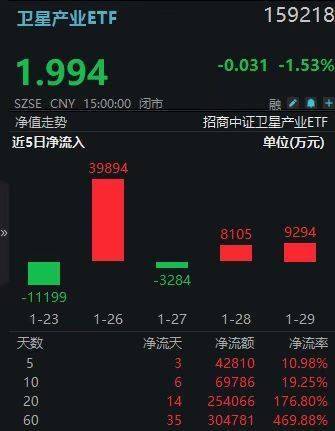
Group 1 - The core viewpoint of the article highlights that despite a 1.53% decline in the satellite industry ETF (159218), there has been a significant net inflow of funds, totaling over 1.7 billion yuan in the last two trading days and approximately 25.4 billion yuan year-to-date [1][3] - The analysis indicates that the "buying on dips" behavior is driven by strong expectations stemming from a groundbreaking technological advancement in the satellite industry, which could extend the design life of satellites from 3 years to 30 years, reduce energy consumption by 20%, and decrease weight by 90% [3] - This technological breakthrough is expected to revolutionize the satellite industry by transforming manufacturing costs, launch costs, and operational efficiency, thereby opening up a trillion-yuan market space for commercial aerospace [3] Group 2 - The continuous net inflow into the satellite industry ETF (159218) reflects the market's deep recognition and forward-looking bets on the long-term growth narrative of the satellite industry [3] - Despite short-term market fluctuations influenced by sentiment, funds are viewing each adjustment as an opportunity to position for the upcoming decade of growth in the space economy [3]

印度主力运载火箭再遭失败,16颗卫星打水漂
Yang Zi Wan Bao Wang· 2026-01-13 04:50
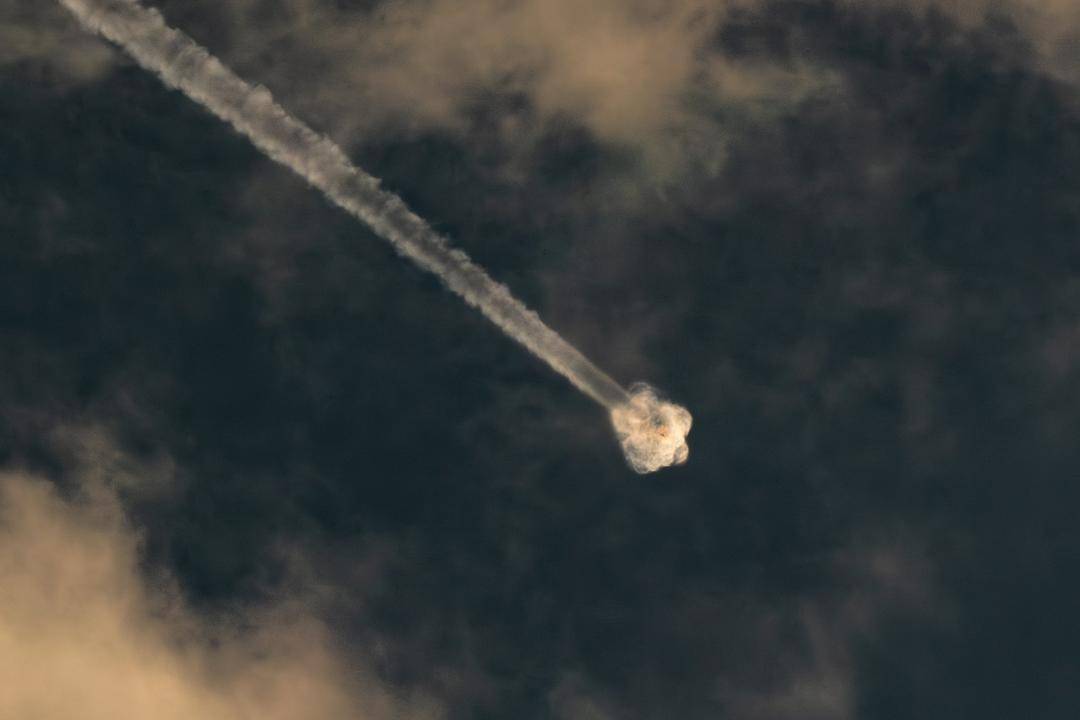
Core Insights - The PSLV-C62 mission, launched on January 12, 2026, from the Satish Dhawan Space Centre, faced failure, resulting in the loss of all 16 satellites onboard [2][4] - This marks the second consecutive failure for the PSLV series, following the PSLV-C61 mission in May 2025, which also encountered issues during the third stage [2] Group 1: Mission Details - The PSLV-C62 carried one primary payload and 15 secondary payloads, with a total mass of several hundred kilograms, including satellites from domestic and international clients [4] - The PSLV rocket, developed by the Indian Space Research Organisation (ISRO), is a third-generation launch vehicle with a height of 44.4 meters and a weight of 320 tons, capable of delivering 1,750 kilograms to a 600-kilometer sun-synchronous orbit [4] Group 2: Performance Metrics - As of January 12, 2026, the PSLV has conducted 64 launches, achieving 59 successful missions and 5 failures, resulting in an overall success rate of approximately 92% [4] - Despite its historical success, the PSLV's payload capacity and success rate are considered lower compared to similar rockets from major space-faring nations such as the USA, Russia, and Europe [4]
印度新年首次太空发射失败 印度主力马火箭让16颗卫星全损失
Xin Lang Cai Jing· 2026-01-13 04:20
Core Viewpoint - India's PSLV-C62 rocket mission, which was the country's first space launch of 2026, failed, resulting in the loss of all 16 satellites onboard, marking the second consecutive failure for the PSLV series [1] Group 1: Mission Details - The PSLV-C62 rocket was launched from the Satish Dhawan Space Centre in Sriharikota and was the 64th flight of the PSLV series [1] - The mission carried one primary payload and 15 secondary payloads, with a total mass of several hundred kilograms, including satellites from domestic and international clients [1] - The rocket's first two stages performed normally, but a severe anomaly occurred in the third stage, preventing the rocket from reaching its intended orbit [1] Group 2: Historical Context - The PSLV rocket, developed by the Indian Space Research Organisation (ISRO), has a history dating back to the late 1970s and is a third-generation launch vehicle [1] - The PSLV has a height of 44.4 meters and a weight of 320 tons, capable of delivering 1,750 kilograms to a 600-kilometer sun-synchronous orbit [1] - As of January 12, 2026, the PSLV has conducted 64 launches, with 59 being completely successful and 5 failures, resulting in an overall success rate of approximately 92% [1] Group 3: Comparative Analysis - The PSLV's payload capacity and success rate are considered lower compared to similar rockets from major space-faring nations such as China, the United States, Russia, and Europe [1]
未来三天可能发生较强地磁活动,我国北方大部有机会看到极光
Xin Jing Bao· 2025-11-06 04:00
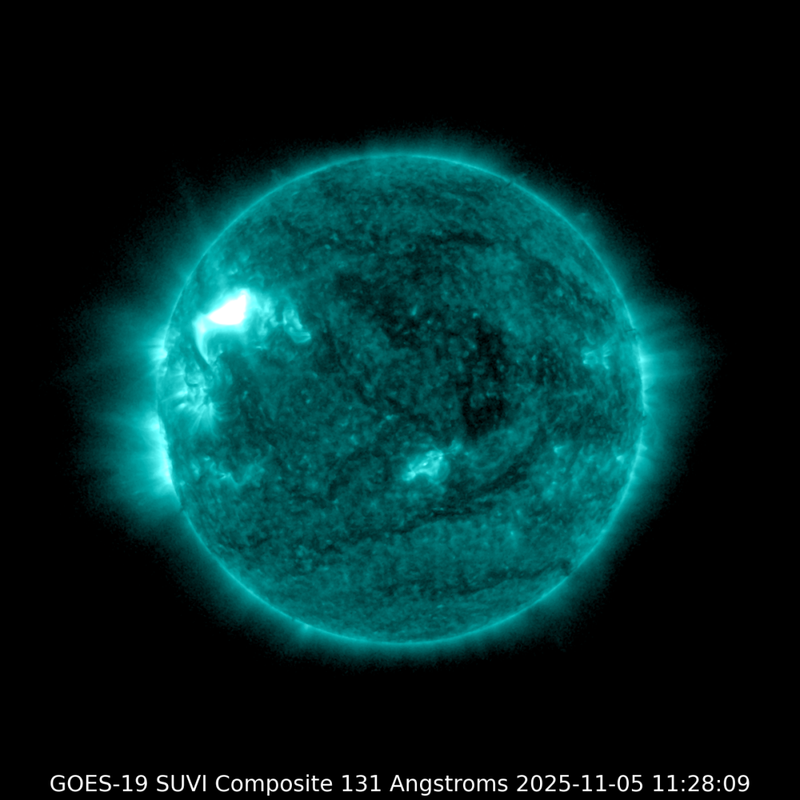
Core Points - The article reports two significant solar flares occurring on November 5 and 6, with maximum intensities of M7.4 and M8.6, accompanied by coronal mass ejections (CME) [1][5] - The solar activity is expected to lead to strong geomagnetic activity over the next three days, with potential auroras visible in northern regions of China, including Heilongjiang, Xinjiang, and Inner Mongolia [5][6] Group 1: Solar Activity - The solar flares are characterized by high-energy releases and are associated with CME, which can impact Earth's magnetic field [5][6] - The magnetic field strength of the sun is significantly higher than that of Earth, which contributes to the geomagnetic effects observed during solar events [6][11] Group 2: Geomagnetic Effects - Geomagnetic storms can affect high-tech equipment, particularly satellites and navigation systems, due to atmospheric drag and ionospheric instability [11] - Wildlife that relies on magnetic fields for navigation, such as homing pigeons, may experience difficulties during geomagnetic storms [11] Group 3: Solar Activity Monitoring - The article highlights the importance of monitoring solar activity, particularly the sunspot group 14274, which has a complex magnetic structure and potential for further eruptions [13][14] - The presence of another sunspot group, 14275, is also noted, which could pose additional challenges if it becomes active [14]
把握航天航空投资机遇,航天ETF(159267)正式上市
2 1 Shi Ji Jing Ji Bao Dao· 2025-08-01 01:07
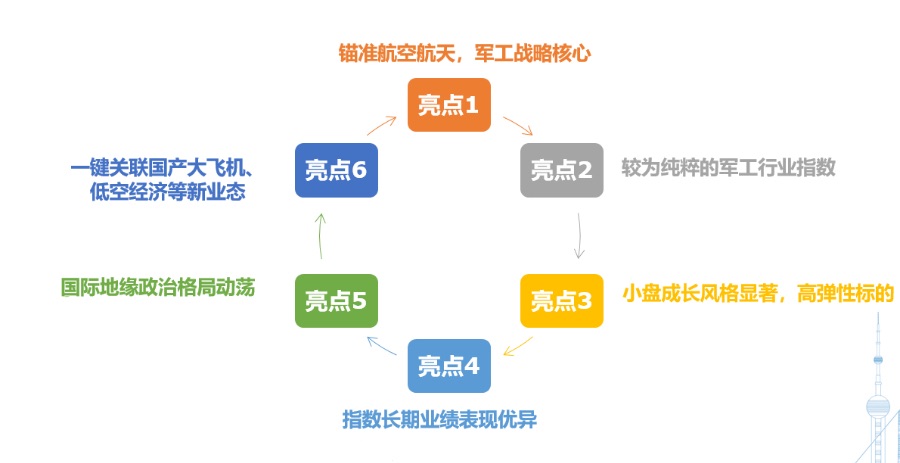
Core Viewpoint - The article highlights the growth potential and investment opportunities in the aerospace and defense industry, particularly focusing on the commercial space sector and the domestic aircraft manufacturing market, driven by favorable policies and technological advancements [7][8][9]. Group 1: Aerospace and Defense Industry Overview - The Huazhong National Aerospace Industry ETF closely tracks the National Aerospace Industry Index, which includes high-quality companies in aerospace equipment, military electronics, ground weaponry, and aerospace equipment, with a defense industry representation of 98.2% [2]. - Key companies in the National Aerospace Index include AVIC Shenyang Aircraft Corporation (weight 8.37%, market cap 182.41 billion), AVIC Xi'an Aircraft Industry Group (weight 5.36%, market cap 79.96 billion), and others [3]. Group 2: Historical Performance - Since 2020, the National Aerospace Index has achieved a cumulative return of 38.4%, with an annualized return of 6.4% and an annualized volatility of 33.4%, showing significant excess returns during market rebounds compared to the China Securities Military Industry Index [5]. Group 3: Catalysts for Growth - The commercial space sector is entering a new phase of scale and marketization, supported by recent regulatory frameworks from the National Space Administration aimed at enhancing quality supervision [7][8]. - The domestic aircraft market is seeing stable deliveries of the C919 aircraft, with China Commercial Aircraft Corporation predicting the delivery of 9,323 aircraft over the next 20 years, valued at approximately 1.4 trillion USD [9]. - The low-altitude economy is expanding rapidly, with a projected market size of 1.064 trillion RMB by 2026, reflecting a growth rate of 33.8% in 2023 [10]. Group 4: Policy and Regulatory Environment - Strengthened regulations and new policies from the Science and Technology Innovation Board are expected to enhance project quality and industry management, promoting long-term healthy development in the aerospace sector [11]. - The frequency of space launches has reached a new high, with 35 successful launches in the first half of the year, indicating a robust growth trajectory for the industry [11].