日本修宪

Search documents
日本民众集会抗议高市早苗修宪企图
Xin Hua She· 2026-02-27 15:49
Core Viewpoint - A significant public protest occurred in Tokyo against Prime Minister Fumio Kishida's recent signals regarding constitutional amendments, particularly concerning Article 9 of Japan's pacifist constitution, which prohibits war and military action as means to resolve international disputes [1][2]. Group 1: Public Response - Nearly a thousand people participated in the protest outside the Prime Minister's residence, expressing their opposition to Kishida's constitutional revision efforts [1]. - Protesters held signs with messages such as "Oppose War, Protect the Constitution" and chanted slogans like "Oppose Constitutional Revision" and "Guard Peace" [1]. - Many young individuals were present at the protest, indicating a generational concern regarding the potential shift in Japan's military stance [1]. Group 2: Concerns Over Military Direction - Protesters voiced concerns that Kishida's administration is moving towards a militaristic state, which they deem dangerous, especially as the government increases defense spending while citizens face economic hardships [1]. - The historical context of Japan's past militarism and invasions was highlighted by protesters, emphasizing the need to protect Article 9 of the constitution [1][2]. Group 3: Constitutional Context - Japan's constitution, enacted in 1947, is known as the "Peace Constitution" due to Article 9, which renounces war and the use of military force for international disputes [2]. - Kishida and right-wing factions in Japan have long sought to amend Article 9, raising concerns across various sectors of Japanese society following his recent reaffirmation of commitment to constitutional revision [2].
陈鸿斌:高市早苗来势汹汹,日本修宪势头恐难阻挡?
Xin Lang Cai Jing· 2026-02-22 05:31
Core Viewpoint - The article discusses the strong push by Japan's Prime Minister Sanae Takaichi for constitutional reform, emphasizing the need for constructive discussions in the National Diet to expedite the submission of a new constitutional draft. Despite the current lack of a two-thirds majority in the Senate, there is potential for the ruling Liberal Democratic Party (LDP) to regain control in the 2028 elections, which could facilitate the passage of constitutional amendments [1][3][11]. Group 1: Constitutional Reform Efforts - Takaichi's administration aims to submit a new constitutional draft to the National Diet, with the first step being the submission of proposals from various parties to the constitutional review committee [3][4]. - The LDP has faced challenges in advancing constitutional reform due to a lack of majority support and opposition from the Komeito party, which has historically opposed amendments [4][5]. - The constitutional review committees in both houses of the Diet have been relatively inactive, with significant delays in establishing a drafting group for a new constitution [7][8]. Group 2: Political Dynamics - Takaichi's recent election victory has led to the appointment of a pro-reform figure, Keishi Nishiura, as the head of the House of Representatives' constitutional review committee, indicating a shift towards more aggressive reform efforts [9][11]. - The LDP's previous attempts at reform under former Prime Minister Shinzo Abe were largely unsuccessful, with significant public resistance to changes in the pacifist constitution [8][11]. - Recent polls indicate a growing support for constitutional amendments among newly elected members of the Diet, with 93% of them favoring reform, a significant increase from previous surveys [16][17]. Group 3: Public Opinion and External Influences - Public support for constitutional reform has been rising, with various media outlets reporting over 50% approval for amendments, particularly regarding the inclusion of the Self-Defense Forces in the constitution [14][15][16]. - The U.S. has been a vocal supporter of Japan's constitutional reform, advocating for changes that would allow Japan to take a more active role in international security [19][20][21]. - Neighboring countries, including China and South Korea, are closely monitoring Japan's reform efforts, indicating potential regional tensions arising from these changes [23].


高市早苗将确定连任
Xin Lang Cai Jing· 2026-02-18 13:07
Group 1 - The core viewpoint of the article is the confirmation of Takashi Sawa as Japan's new Prime Minister following the resignation of the current cabinet [1][3] - The Japanese Constitution mandates that a special Diet session must be convened within 30 days after a House of Representatives election to elect a new Prime Minister [3] - Takashi Sawa expressed a clear intention to amend the constitution to include the Self-Defense Forces, which has sparked significant public criticism due to existing constitutional restrictions on military forces [3] Group 2 - In the February 8 House of Representatives election, the ruling coalition of the Liberal Democratic Party and the Japan Innovation Party secured a majority of seats, allowing Takashi Sawa to continue in power [3] - Takashi Sawa won the Liberal Democratic Party presidential election on October 4, 2025, and subsequently won the first round of voting in the House of Representatives Prime Minister nomination election on October 21 [3]
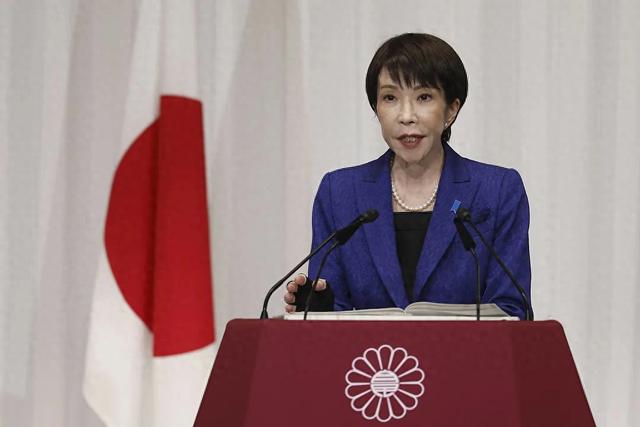
高市早苗正式连任日本首相,将开启“政治暴走” | 国际识局
Xin Lang Cai Jing· 2026-02-18 08:05
Core Viewpoint - The recent election results in Japan have solidified the political power of Prime Minister Sanna Takashi, but they also raise concerns about potential aggressive policies and internal party divisions [4][8]. Group 1: Election Results and Political Implications - The Liberal Democratic Party (LDP) won 316 seats in the House of Representatives, surpassing the two-thirds majority threshold, and formed a coalition with the Japan Innovation Party, totaling 352 seats [4]. - Takashi's victory is seen as a consolidation of her power, but it also raises fears of a "political rampage" due to her strong military expansion intentions [4][8]. Group 2: Policy Directions and Concerns - Takashi has expressed intentions to amend the constitution to include the Self-Defense Forces, indicating a shift towards a more militaristic stance [4][6]. - Analysts warn that if Takashi believes her majority is solely due to her efforts, she may adopt a hardline approach, with limited checks from the opposition due to their weakened state [4][8]. Group 3: Internal Party Dynamics - There are indications of potential divisions within the LDP, with some members expressing concerns about Takashi's leadership and the party's direction [8]. - The Japan Innovation Party's influence is reportedly declining, complicating the coalition dynamics and potentially limiting their ability to negotiate effectively with the LDP [8].

日本开历史倒车,必将撞南墙
Zhong Guo Xin Wen Wang· 2026-02-15 07:36
Core Viewpoint - The recent Japanese House of Representatives election resulted in Prime Minister Fumio Kishida's Liberal Democratic Party securing 316 seats, surpassing a two-thirds majority, which signals a potential move towards constitutional revision [1] Group 1: Election Results - The Liberal Democratic Party led by Prime Minister Fumio Kishida won 316 seats in the recent election, achieving a significant majority [1] Group 2: Constitutional Revision Signals - Following the election, Kishida indicated intentions to create conditions for an early national referendum on constitutional revision [1] Group 3: Regional and International Implications - The rise of right-wing forces in Japan is seen as a threat to both Japan's own security and regional stability, challenging the post-war international order [1] - The Chinese Foreign Ministry urged Japan to acknowledge international concerns and pursue a path of peaceful development, warning against a return to militarism [1]
国际观察|高市选后即欲修宪,值得警惕
Xin Lang Cai Jing· 2026-02-12 06:09
Core Viewpoint - Following the House of Representatives election, Japanese Prime Minister and Liberal Democratic Party (LDP) President Sanna Takashi quickly signaled intentions to amend the constitution, stating that she would create conditions for an early national referendum on constitutional revision [1][3]. Group 1: Constitutional Amendment Intentions - Takashi expressed her expectation for deepened discussions on constitutional amendments among political parties and the public, emphasizing her commitment to advancing campaign promises, including constitutional revision [3]. - The LDP aims to amend Article 9 of the constitution to formally recognize the Self-Defense Forces (SDF) as a legitimate military organization, which has been a long-standing goal of right-wing factions in Japan [3][6]. - The LDP's coalition partner, the Japan Innovation Party, supports accelerating discussions on the constitutional status of the SDF, indicating a unified front among right-leaning parties [3]. Group 2: Legislative and Public Challenges - Despite the LDP's majority in the House of Representatives, the coalition does not hold a majority in the House of Councillors, making it challenging to pass constitutional amendments [6]. - Constitutional amendments require a two-thirds majority in both houses and a majority in a national referendum, which remains a significant hurdle for the ruling coalition [6]. - Public opinion on constitutional revision is not fully unified, and the specific wording of any proposed amendments could influence public sentiment significantly [6][7]. Group 3: Risks and Concerns - Experts warn that the push for constitutional revision by Takashi and right-wing factions poses risks to Japan's post-war international order and could lead to increased militarization [9][10]. - The government’s actions, including increased defense spending and expanded SDF activities, are seen as steps toward undermining the principles established by Article 9, which renounces war and military forces [9][10]. - There is a growing concern among scholars and legal experts that Japan's current trajectory may lead to a departure from its pacifist constitution, potentially increasing the risk of conflict [10].
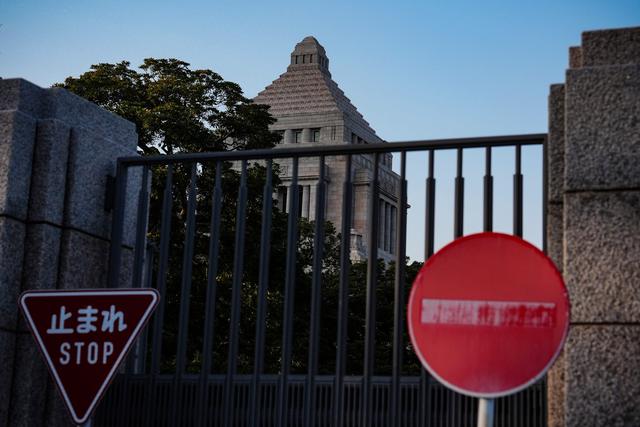
国际观察丨高市选后即欲修宪,值得警惕
Xin Hua Wang· 2026-02-12 04:36
Core Viewpoint - Following the recent House of Representatives election, Japanese Prime Minister and Liberal Democratic Party (LDP) President, Kishi Sanae, has signaled a strong intention to amend the constitution, aiming to create conditions for an early national referendum on constitutional revision [1][2]. Group 1: Constitutional Amendment Intent - Kishi expressed her desire for all political parties and the public to engage in deeper discussions regarding constitutional amendments, emphasizing her commitment to advancing campaign promises, including constitutional revision [2]. - The LDP has reached the legal threshold in the House of Representatives with over two-thirds of the seats, enabling them to initiate constitutional amendment motions [1][3]. - The LDP's coalition partner, the Japan Innovation Party, has also called for accelerated discussions on the constitutional positioning of the Self-Defense Forces [2]. Group 2: Challenges to Amendment - Despite the electoral gains, the LDP and its coalition face challenges in the House of Councillors, where they do not hold a majority, making it difficult to pass amendment proposals [3]. - Even if motions are initiated in both houses, the success of a national referendum remains uncertain, as public opinion on constitutional revision is not fully unified [3]. - Concerns have been raised by various media outlets regarding the potential for the ruling party to push through amendments without broad consensus, highlighting the lack of urgency for constitutional changes [3]. Group 3: Risks and International Concerns - Experts warn that the right-wing forces in Japan are attempting to undermine the post-war international order and the principles established by the constitution, particularly Article 9, which renounces war [5][6]. - The current government’s policies, including increased defense spending and expanded Self-Defense Forces activities, are seen as steps towards militarization and constitutional revision [6]. - There is significant concern from both international observers and Japanese scholars regarding the potential shift in Japan's national identity and security posture, which could lead to increased risks of conflict [6].
高市早苗赌赢后彻底不装了日本野心升级彻底摊牌?
Xin Lang Cai Jing· 2026-02-10 16:59
Core Viewpoint - Japan's ambitions are escalating, with the recent election victory of Kishi Sanae leading to a push for constitutional amendments, military expansion, and nuclear capabilities [1] Group 1: Election Results and Immediate Actions - The ruling coalition secured over half of the seats in the 51st House of Representatives election held on February 9 [1] - Kishi Sanae immediately announced plans to promote a national referendum for constitutional amendments [1] Group 2: Historical Context of Japan's Constitutional Amendments - Japan's Peace Constitution, implemented in 1947, includes Article 9, which renounces war and prohibits military forces [1] - Historical attempts to amend the constitution have faced resistance, with notable figures like Kishi Nobusuke advocating for military capabilities [1] - The 1992 Peacekeeping Law allowed Japan's Self-Defense Forces to operate abroad, marking a significant shift in military policy [1] Group 3: Recent Developments in Military Policy - The 2022 security strategy revision introduced the concept of "counterattack capabilities" and significantly increased military spending [1] - In 2023, Japan relaxed restrictions on defense equipment exports, moving towards military normalization [1] - Kishi Sanae's proposed "three-step" plan includes urgent amendments, clarifying the Self-Defense Forces' status, and removing the prohibition on military capabilities [1] Group 4: Future Military Aspirations - Japan aims to achieve a defense budget of 2% of GDP, with military spending increasing for 14 consecutive years [1] - There are discussions about developing nuclear submarines and reassessing the non-nuclear principles [1] - The revival of historical military ranks is also being considered, indicating a significant shift in Japan's military posture [1]
军报文章:警惕日本右翼妄图突破和平宪法加速“重新武装”
Xin Lang Cai Jing· 2026-02-10 00:32
Core Viewpoint - The recent victory of the ruling coalition led by Sanae Takaichi in the Japanese House of Representatives election is expected to accelerate Japan's security policy adjustments and "rearmament" processes, raising concerns among neighboring countries and the international community [1]. Group 1: Election Outcomes and Implications - The ruling coalition's victory provides a strong mandate for Takaichi's government to push forward with significant initiatives, including a substantial increase in the defense budget for the fiscal year 2026 [1]. - The ruling coalition now holds more than two-thirds of the seats in the House of Representatives, facilitating the potential constitutional amendment to include the Self-Defense Forces in Japan's constitution [1]. Group 2: Defense Budget and Military Policy - Takaichi's administration plans to raise the defense budget to 9.04 trillion yen for fiscal year 2026, ahead of the original target of 2027 to reach 2% of GDP [2]. - The government aims to develop "counter-strike capabilities" and relax restrictions on arms exports, indicating a shift towards military modernization and increased influence in regional security matters [2]. Group 3: Security Policy Changes - Following the election, Takaichi expressed intentions to discuss revisions to the "Three Non-Nuclear Principles" and "Three Security Documents," which could represent a significant shift in Japan's security policy [2]. - The potential revision of the "Three Non-Nuclear Principles" is seen as a move that could undermine the deterrent effect of the U.S.-Japan alliance, raising alarms about regional stability [2]. Group 4: Historical Context and International Concerns - The election results reflect deeper structural issues and trends in Japan, with historical militarism during World War II still casting a long shadow over Japan's international obligations [3]. - The increase in defense spending and attempts to amend key security principles have led to fears that Japan may become a destabilizing factor in the region, prompting calls for reflection on its historical actions and commitments to peace [3].
高市早苗大获全胜,历史要开始加速了
Xin Lang Cai Jing· 2026-02-09 10:10
Core Viewpoint - The recent Japanese election is seen as a significant event that may accelerate historical processes in the country, with the ruling Liberal Democratic Party (LDP) achieving a decisive victory, securing 316 out of 465 seats in the House of Representatives, surpassing the two-thirds majority needed for constitutional amendments [1][12]. Political Landscape - The election results indicate a strong mandate for Prime Minister Kishi Sanae, allowing her to easily pass her policy proposals in the Diet [12]. - There is a potential for Japan to accelerate constitutional amendments, military expansion, and the repeal of the non-nuclear principles, aiming to break free from the post-World War II constraints [3][14]. - The election results suggest a complete mobilization of far-right forces within Japan, indicating a consensus and broad support for these policies [3][14]. Market Reactions - Following the election results, the Nikkei 225 index surged over 5%, reaching a new historical high of over 57,000 points, reflecting domestic optimism regarding Japan's path towards normalization [4][16]. - In contrast, the Japanese yen weakened, falling below 157, indicating a pessimistic outlook from international investors regarding Japan's aggressive political moves [7][19]. Diverging Perspectives - The stock market's rise represents domestic enthusiasm for Japan's potential normalization, while the yen's decline reflects international skepticism about Japan's radical approach [10][21]. - This divergence highlights a cultural tendency in Japan to pursue a singular direction once a collective decision is made, often ignoring external opinions [21][22].