
旧石器时代考古

Search documents
滁州首次发现旧石器遗存
Xin Lang Cai Jing· 2026-02-09 17:11
作为安徽省迄今发现石制品最丰富的旧石器遗址,周王遗址共出土各类石制品 1 万余件,遗址揭露了从 石核 - 石片技术到细石叶技术的完整文化序列,为构建安徽区域旧石器时代晚期文化框架提供了关键实 物材料。值得关注的是,遗址下文化层发现的 9 处石制品和赭石加工遗迹,是长江下游地区首次发现的 旧石器时代晚期人类活动面及赭石利用遗迹,生动再现了古人类制作石器、加工赭石的生活图景,为研 究旧石器晚期现代人的石器技术、象征性行为及空间利用模式提供了珍贵样本,对探讨现代人行为起源 及早期现代人扩散路径具有重要学术价值。而上文化层出土的细石叶石核、两面尖状器、端刮器等细石 叶技术相关产品,更是安徽省首次确认的细石叶技术遗存,为解开中国及东亚地区细石叶技术的传播扩 散之谜、探究更新世末期人类适应环境的生存策略提供了关键线索。 星报讯 近日,在2024-2025年安徽重要考古新发现和优秀田野考古工地推介会上,滁州定远周王遗址成 功入选安徽重要考古新发现。这是滁州地区首次确认的旧石器时代遗存,其发现不仅填补了滁州乃至皖 东北旧石器考古的研究空白,更将该地区有人类活动的历史大幅提前到了数万年前,改写了区域历史溯 源的认知。 此次考古 ...
中国社会科学院发布“2025年中国考古新成果”
Yang Shi Xin Wen· 2026-02-04 01:26
今天,中国社会科学院在京发布6项"2025年中国考古新成果"。 a Barra TANKE the rans 1 400 1 201 Call 7 r 17 09 18 11 AST Status 1 2 15 t in the a 10 10 1 e ar 1 and States and one of the 19 STIP 1 2 1 4 - 1 - 1 - 1 - 1 - 1 - 1 - 1 1 10 at 2017 1 A Sta and - September 1 1 stee - 2 CTS F The A t the star r and p 1 1 1 LE START UK 1 1 2 1 2 1 2 1 2 1 2 1 2 Callers and and the see ch 19 28 per 1999 t 本次发布的第一项考古成果聚焦旧石器时代:通过2022年到2025年持续发掘、研究,考古工作者在河北阳原县新庙庄遗址,发现距今12万年—1.3万年间的 古人类遗存,为探索华北现代人的起源与演化提供了系统材料。 △河北阳原县新庙庄遗址5号地点文化层底部揭露的"热处理石料"的"炉" e ...

万年地层中叩问“从哪里来”(现场评论)
Ren Min Ri Bao· 2025-08-26 22:22
Core Insights - The discovery of the Mengxi River site provides significant archaeological evidence that enriches the understanding of human history and the origins of Chinese civilization [1][2][3] - The findings, including ancient plant seeds and animal fossils, suggest that early humans in East Asia were more complex and innovative than previously thought, challenging the notion of a "bottleneck" in human evolution in the region [1][2] Group 1: Archaeological Discoveries - The Mengxi River site has revealed four varieties of Sichuan pepper, indicating that the culinary culture of "spicy China" may have originated in the Paleolithic era [1] - The site, dating back 60,000 years, provides a new perspective on the lifestyle of early humans in China, contributing to the understanding of the origins of Chinese civilization [1][2] - The excavation has uncovered a wealth of plant remains, including hundreds of thousands of seeds, which rewrite the history of early plant utilization and reflect the beginnings of agricultural civilization [2] Group 2: Historical Context - The archaeological evidence from the Mengxi River site supports the existence of ancient humans in China dating back 2 million years, with significant sites identified in Shaanxi and Hebei provinces [2] - The findings from the site, including systematic evidence of fire use and complex activities, are crucial for studying the origins and evolution of modern humans in East Asia [1][2] - The ongoing archaeological work is expected to yield more significant discoveries that could further reshape the understanding of human evolution and the origins of civilization in China [3]
世界级重大考古成果!中国发现30万年前东亚最早木器
Zhong Guo Xin Wen Wang· 2025-07-03 23:07
Core Findings - The discovery of 35 well-preserved wooden artifacts dating back 300,000 years at the Gantangqing site represents a significant archaeological achievement, marking the earliest known wooden tools in East Asia [1][2][3] - The research was published in the prestigious journal "Science," highlighting the importance of this multidisciplinary study [1] Archaeological Significance - The wooden tools were primarily made from pine species (approximately 70%), with a small percentage from other types, indicating a diverse use of local resources [2] - The tools exhibit clear signs of human modification, with specific designs for digging edible plant roots, showcasing advanced tool-making skills of early humans [2][3] - The findings contribute to understanding the cultural and technological characteristics of Paleolithic humans in East Asia, filling a gap in the study of wooden artifacts from this period [3] Research Methodology - The research team employed various dating methods, including paleobiostratigraphy and optically stimulated luminescence, to confirm the age of the artifacts [2] - A comprehensive analysis of the site's geomorphology and stratigraphy helped explain the preservation of these ancient wooden tools [2] Comparative Analysis - Compared to wooden tools found in European and African sites, the Gantangqing artifacts are more diverse, particularly in the prevalence of small, handheld tools [2] - The simultaneous discovery of stone tools, bone artifacts, and plant remains at the site is rare in global Paleolithic archaeological contexts, underscoring the site's significance [2]
【海南日报】海南首次发现旧石器时代旷野遗址
Hai Nan Ri Bao· 2025-05-16 02:22
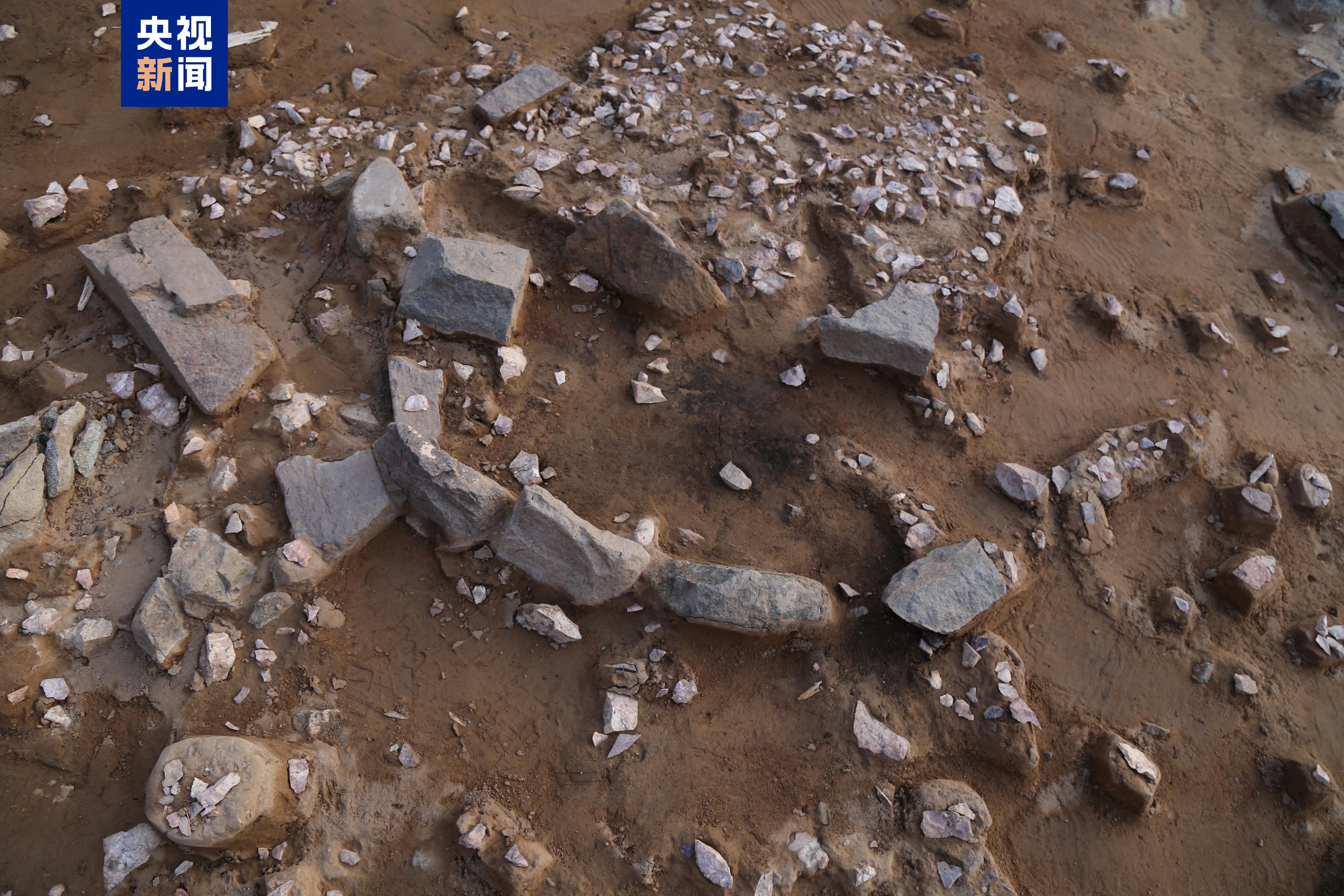
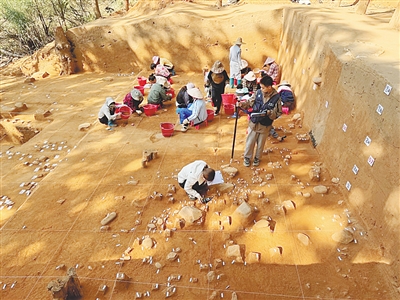
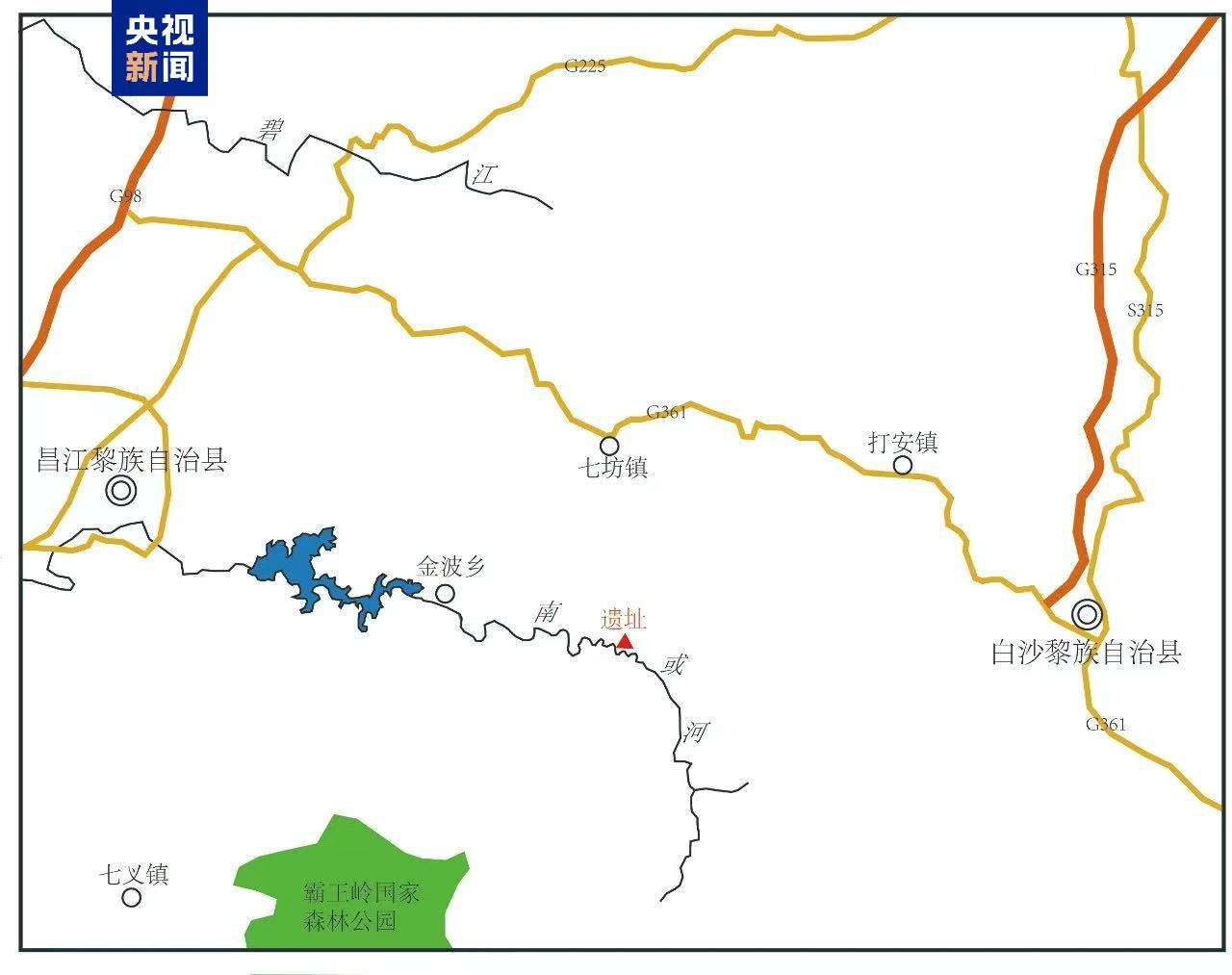
Core Insights - The Nanhuh River site is the first Paleolithic open-air site discovered in Hainan, providing significant archaeological value and insights into prehistoric human activities in the region [1][4]. Summary by Sections Discovery and Excavation - The Nanhuh River site, located in Baisha Li Autonomous County, was discovered in 2023 and confirmed as a Paleolithic cultural site with over 6,000 stone artifacts and more than 20,000 screened stone products [1][3]. - The excavation is scheduled from September to December 2024, conducted by the Chinese Academy of Sciences, Hainan Provincial Institute of Cultural Relics and Archaeology, and Sun Yat-sen University [1]. Archaeological Significance - The site is noted for its well-preserved evidence of human stone tool production and other life activities, indicating a rich cultural layer and a significant archaeological find in Hainan [3][4]. - It is characterized as the largest, best-preserved, and most culturally rich prehistoric open-air site known in Hainan, with a clear chronological sequence [3]. Cultural Context - The stone artifacts from the site exhibit characteristics of southern China's pebble tool culture, while also showing unique adaptive features that differentiate them from other known stone tool technologies in southern China [3][4]. - The findings suggest that the Nanhuh River area may represent a settlement cluster, providing a basis for further regional archaeological studies and insights into human interactions and cultural exchanges in southern China and Southeast Asia [4].
距今1万年前后 海南首次发现旧石器时代旷野遗址
Yang Shi Xin Wen· 2025-05-14 12:52
Core Insights - The Nanhuh River site in Hainan Province has been confirmed as a significant archaeological site primarily from the Paleolithic era, with excavation planned from September to December 2024 [1][3]. Group 1: Archaeological Findings - Over 6,000 stone artifacts have been unearthed, with more than 20,000 artifacts processed, alongside a considerable amount of fruit shells and charcoal remains [6]. - Radiocarbon dating suggests the site dates back approximately 10,000 years [6]. - The discovery of fire pit remains and well-preserved human stone tool production sites indicates that ancient humans engaged in stone tool manufacturing and other subsistence activities at this location [6]. Group 2: Cultural and Historical Significance - The Nanhuh River site is the largest, best-preserved, and most stratified prehistoric open-air site known in Hainan, significantly enriching the types and cultural connotations of prehistoric archaeology in the region [6]. - The site exhibits characteristics of southern China's pebble tool culture while also showing unique adaptive features that differentiate it from other known stone tool technologies in southern China [8]. - The archaeological findings provide crucial evidence for studying interactions and cultural exchanges between populations in southern China and Southeast Asia, highlighting its extensive academic value [9].
揭开古人类生活的更多谜底
Ren Min Ri Bao· 2025-04-28 22:36
Core Insights - The article highlights the significant advancements in prehistoric archaeology in Sichuan, particularly the recognition of the Mengxi River site as one of the top ten archaeological discoveries in China for 2024, marking a pivotal moment for the region's archaeological research [1][3]. Group 1: Archaeological Discoveries - The Mengxi River site is the second prehistoric site in Sichuan to receive national recognition, following the Piluo site, showcasing the region's growing importance in prehistoric archaeology [1][3]. - Since 2019, over 300 new Paleolithic sites have been discovered in Sichuan, transforming the understanding of the region's archaeological landscape from a previously limited number of sites to a rich tapestry of cultural and historical significance [3][4]. - The Piluo site, discovered in 2020, contains some of the most well-preserved Acheulean tools in East Asia, dating back over 200,000 years, indicating early human presence in the eastern Tibetan Plateau [4][5]. Group 2: Research and Development - The archaeological team, led by Zheng Zhexuan, has expanded from a single member to 11, reflecting a significant growth in expertise and capacity to explore and document ancient human activities in the region [5]. - The Mengxi River site has revealed a well-preserved ancient society dating back 60,000 to 80,000 years, providing new insights into early human life and their interactions with the environment [4][5]. - The discovery of the Taohua River site in 2022, which includes over 10,000 stone tools, indicates a complex early human settlement, further establishing Sichuan as a critical area for understanding human prehistory [5].