时序基础模型

Search documents
时序大模型重大突破!羚羊能源3.0唤醒“沉睡数据”,电力交易与设备运维双场景落地
Zhong Guo Neng Yuan Wang· 2025-11-10 10:40
Core Viewpoint - The release of the Antelope Energy Model 3.0 marks a significant advancement in the integration of AI and energy sectors, providing replicable solutions for the intelligent transformation of China's energy industry [1][9]. Group 1: Model Upgrades and Applications - Antelope Energy Model 3.0 features three major upgrades: continuous enhancement of foundational capabilities, deep integration of AI into business scenarios, and the establishment of a comprehensive toolchain for data processing and model evaluation [3][4]. - The model addresses key industry challenges by enhancing time-series modeling capabilities, which are crucial for maintaining the dynamic balance of power systems [4][6]. - The model has been successfully applied in various scenarios, including power forecasting, load forecasting, and electricity price prediction, achieving significant improvements in accuracy [6][7]. Group 2: Industry Collaboration and Ecosystem Building - The launch event was attended by government officials, industry leaders, and academic experts, emphasizing the collaborative effort in exploring the integration of AI and the energy industry [3][8]. - Antelope Company is actively building an industrial ecosystem by partnering with major state-owned enterprises and assisting in the development of large models for various applications [8][9]. - The company aims to support the high-quality development of the energy sector and contribute to achieving carbon neutrality goals through continuous technological iteration and scenario expansion [9].

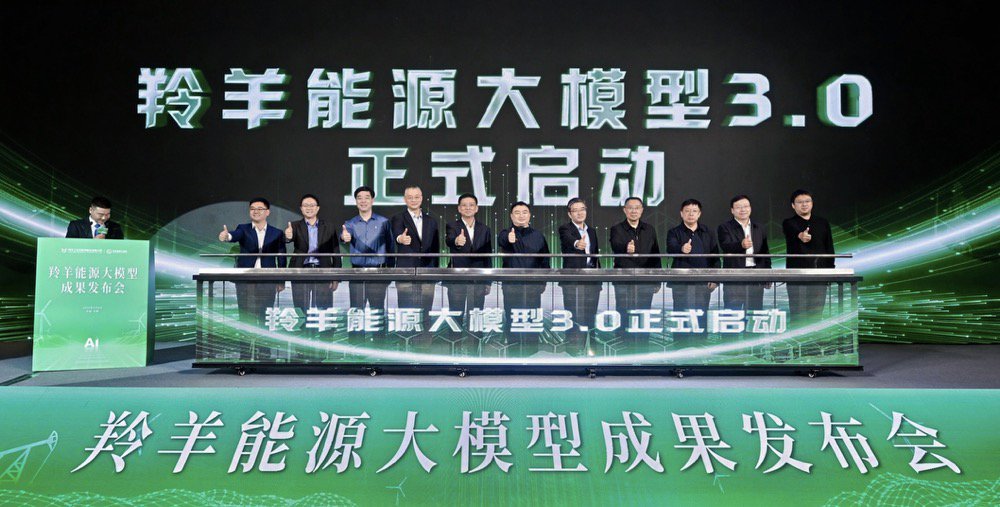
大模型技术加快能源行业智能化转型
Zhong Guo Jing Ji Wang· 2025-11-10 06:15
Core Insights - The release of Antelope Energy's Model 3.0 at the 8th World Voice Expo marks a significant upgrade in the "AI + Energy" sector, aiming to facilitate the intelligent transformation of China's energy industry and explore replicable solutions [1] Group 1: Model Upgrades - The upgrade direction of Antelope Energy's Model 3.0 includes continuous enhancement of foundational capabilities, focusing on time-series capabilities in addition to language and visual abilities [1] - The integration of AI into business scenarios aims to address real-world issues, while a comprehensive toolchain for data cleaning, training frameworks, and model evaluation is being constructed [1] Group 2: Importance of Time-Series Data - The core of safe and efficient consumption of new energy and stable grid operation lies in accurately managing the dynamic balance of power systems, which requires analyzing data across the entire energy production, transmission, and consumption chain [1] - Time-series foundational models are crucial for understanding load dynamics and supporting forward-looking decisions in energy systems, highlighting their increasing importance [1] Group 3: Addressing Industry Pain Points - Antelope Energy's Model 3.0 addresses industry challenges by establishing a unified time-series foundational framework that resolves traditional model fragmentation issues [2] - The model leverages self-supervised learning capabilities from hundreds of billions of time-series data to autonomously extract deep features and establish long-cycle modeling capabilities, enabling rapid generalization even with scarce new scene data [2] Group 4: Equipment Operation and Maintenance - The Equipment Operation and Maintenance Model integrates language and time-series foundational models, utilizing a "dual-engine drive" architecture to create a comprehensive intelligent system covering operation monitoring, fault management, scheduled maintenance, and quality management [2] - The model has been successfully implemented in sectors such as petrochemicals, wind power, and thermal power, achieving significant efficiency improvements, including a 62% increase in anomaly diagnosis efficiency and a 33% increase in maintenance efficiency in a wind farm application [2]
中金 | 大模型系列(5):大语言时序模型Kronos的A股择时应用
中金点睛· 2025-10-14 23:40
Core Insights - The article discusses the development and application of the Kronos model, a Time-Series Foundation Model (TSFM) specifically designed for financial market data, particularly K-line data [3][9][17] - Kronos aims to address the challenges of low signal-to-noise ratio and strong non-stationarity in financial time series data, which often hinder the performance of general-purpose models [3][9] - The model employs a two-phase framework: K-line tokenization and autoregressive pre-training, allowing it to effectively learn the complex "language" of financial markets [12][13][17] Summary by Sections Introduction to TSFM - TSFMs have emerged from the success of large-scale language models in NLP and CV, focusing on pre-training on diverse time series data to create a general-purpose model adaptable to various tasks [2][6] - The key advantages of TSFMs include their generalization and transfer learning capabilities, enabling them to learn universal time patterns and trends from vast datasets [2][6] Overview of Kronos Model - Kronos is tailored for financial K-line data, utilizing a "domain pre-training + fine-tuning" approach to deeply understand financial market characteristics [3][9] - The model's architecture includes a specialized tokenizer and a large autoregressive Transformer model, which learns the syntax and dynamics of financial data [9][12][17] Performance Evaluation of Kronos - Initial tests of the Kronos standard model on major A-share indices showed a high correlation between predicted and actual closing prices, with a Spearman correlation coefficient of 0.732 for the 5-day forecast [4][19] - The model's predictive performance improved significantly when fine-tuned, achieving a Spearman correlation of 0.856 for the same forecast [4][39] Application of Kronos in Timing Strategies - The article explores the application of Kronos in constructing timing strategies based on predicted closing prices, specifically for the CSI 1000 index [30][33] - The strategy generated positive returns, but it missed significant upward trends since July 2025, indicating a reliance on prior index reversal logic [30][33] Enhanced Performance with Fine-Tuning - A fine-tuned version of Kronos demonstrated a 33.9% return in 2025, with an annualized excess return of 9%, outperforming the original method by over 20 percentage points [5][42] - The fine-tuning process involved adjusting model parameters and rolling adjustments to better adapt to market conditions, leading to improved predictive accuracy [34][42] Conclusion - Kronos represents a significant advancement in financial time series forecasting, effectively capturing the complexities of financial data and translating predictions into actionable investment strategies [17][42]