时间资产

Search documents
AI泡沫有多大?
虎嗅APP· 2025-12-05 00:23
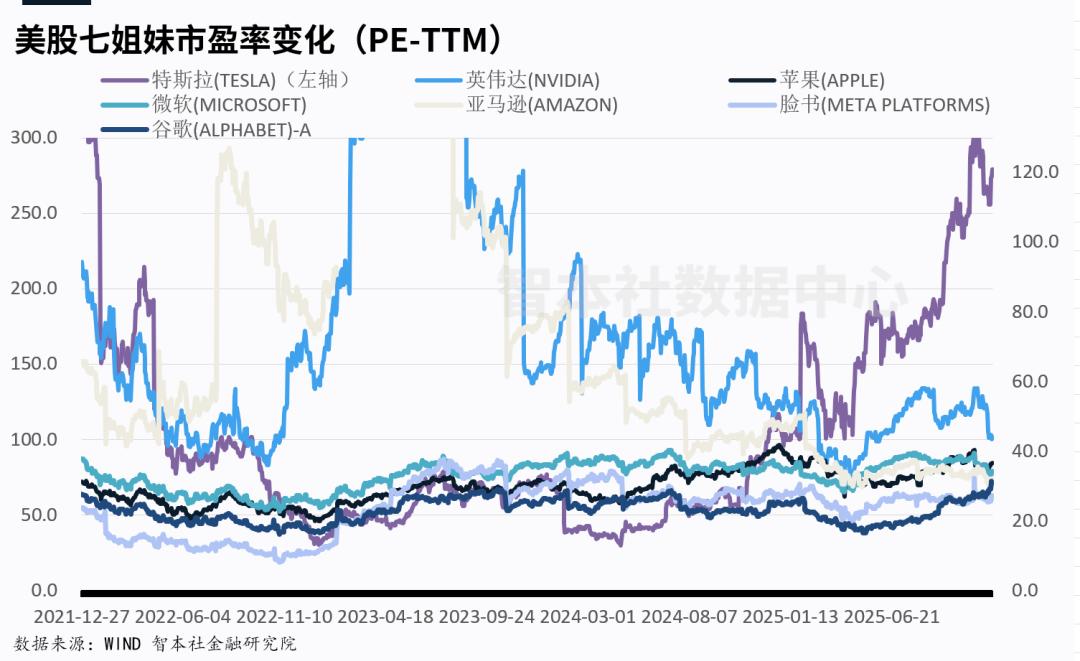
Core Viewpoint - The article discusses the current AI investment landscape, highlighting the significant contributions of AI to the stock market and the economy, while addressing concerns about potential bubbles in the market [4][5][6]. Group 1: AI Investment and Market Performance - Since the release of ChatGPT on November 30, 2022, major U.S. stock indices have seen substantial increases, with the Dow Jones, S&P 500, and Nasdaq rising by 40%, 73%, and 112% respectively over three years [4]. - The AI sector has been a major driver of profits and stock price increases in the U.S. market, with the "Magnificent Seven" stocks rising approximately 280%, while other S&P 500 components showed limited growth [5]. - AI investments have significantly impacted the U.S. economy, with computer equipment and software investments rising from 2.9% to 3.3% of nominal GDP, contributing about 60% to GDP growth in the first half of the year [10][45]. Group 2: Understanding Bubbles - The article distinguishes between two types of bubbles: industrial investment bubbles and secondary market bubbles, emphasizing the importance of understanding supply and demand in the context of AI investments [9][50]. - Historical data suggests that the probability of a market crash following a significant rise is low, with only a 6.9% chance of a market halving within a year after doubling [7]. - The current AI investment landscape is characterized by strong profitability among leading tech companies, with dynamic price-to-earnings (P/E) ratios generally between 25-35, contrasting with the inflated ratios seen during the 2000 internet bubble [14][48]. Group 3: Economic Cycles and Trends - The U.S. economy is currently experiencing a unique convergence of three cycles: AI technology innovation, physical investment, and a Federal Reserve interest rate reduction cycle, providing a robust foundation for market performance [23][54]. - The article predicts that the next five years will see significant commercialization of AI applications, which will enhance operational efficiency and expand market demand [24]. - The article also notes that the current economic environment is favorable for investment, as historical patterns indicate that market downturns can present buying opportunities when the macroeconomic fundamentals remain strong [22][56]. Group 4: Investment Strategies - Investors are encouraged to participate in the AI investment trend, as both U.S. and Chinese tech companies are heavily investing in AI, making it essential for investors to engage in this sector [30]. - The article suggests a long-term investment strategy focused on major tech companies and index ETFs, particularly in the U.S. market, which has a strong foundation in value investing driven by multinational corporate profits [32][33]. - It emphasizes the importance of not chasing high prices and instead taking advantage of market corrections to buy into quality assets [33].


AI泡沫有多大?
3 6 Ke· 2025-12-03 10:33
Group 1 - Since the release of ChatGPT on November 30, 2022, major US stock indices have experienced significant increases, with the Dow Jones, S&P 500, and Nasdaq rising by 40%, 73%, and 112% respectively by December 2, 2025 [1] - The AI sector has contributed significantly to the profits and gains in the US stock market, with the "Magnificent Seven" stocks rising approximately 280%, while other S&P components showed limited growth [2] - Concerns about an AI bubble have increased as US stocks reach historical highs, prompting discussions on how to identify and invest in potential bubbles [3][4] Group 2 - Bubbles can be categorized into two types: industrial investment bubbles and secondary market bubbles, each with distinct characteristics and identification methods [5] - The current investment in computer equipment and software in the US has increased from 2.9% to 3.3% of nominal GDP since 2023, contributing significantly to economic growth [6] - Historical trends indicate that while over-investment occurs during technological revolutions, it often lays the groundwork for long-term industry growth [7] Group 3 - Secondary market bubbles are characterized by significant deviations in asset prices from earnings, with historical experience guiding the identification of such bubbles [9] - Key indicators for identifying secondary market bubbles include profitability and debt levels, with the "Magnificent Seven" currently having a dynamic P/E ratio around 30, compared to 40-60 during the internet bubble [10][13] - The AI sector has driven substantial returns in the S&P 500, contributing 75% of total returns and 79% of profit growth since the release of ChatGPT [13] Group 4 - The current AI investment phase is characterized by large-scale investments and rising stock prices, with the commercialization of AI applications expected to occur in the next five years [15][21] - The US economy is experiencing a combination of AI innovation cycles, physical investment cycles, and a Federal Reserve easing cycle, which are expected to drive growth [20][25] - The focus on AI is driven by the need for efficiency in high-cost knowledge work, with AI poised to replace many traditional roles [23][24] Group 5 - Investors are encouraged to participate in the AI wave, as both US and Chinese tech companies are heavily investing in AI, making it a necessity for survival in the market [27] - Strategies for participating in the market include long-term investments in index ETFs and multinational companies, particularly in the tech sector [30] - The concentration of capital in tech stocks is attributed to the transition to a post-industrial economy, where time assets become increasingly valuable [31][32]