
智慧种粮

Search documents
习近平总书记关切事·嘱托丨沃野兴农人的丰收密码
Xin Hua She· 2026-01-06 13:11
Core Viewpoint - The article emphasizes the importance of food security and the role of modern agricultural technology in enhancing grain production and quality, as highlighted by President Xi Jinping's directives to agricultural practitioners [2][4][8]. Group 1: Grain Production - The article describes the efforts of Xu Zongxiang, a prominent grain farmer in Anhui Province, who has successfully increased wheat yields through modern agricultural practices, achieving over 800 kg per mu in 2022 [4][5]. - Xu Zongxiang has established a farmer training school to share his knowledge and techniques with local farmers, promoting a collaborative model that has expanded to cover 300,000 mu of farmland [5][4]. - The article notes that Xu's initiatives align with President Xi's encouragement for large-scale farmers to lead smaller farmers in improving grain production [4][3]. Group 2: Vegetable Industry - Wang Shufen, a leading expert in vegetable breeding, has focused on enhancing the quality and safety of vegetables, responding to President Xi's call to integrate technology into agriculture [8][10]. - Her team has developed several new varieties of radishes, including the high-quality "Sheng Luoyan Yu," which is resistant to various diseases and suitable for saline-alkali conditions [10][8]. - The article highlights that 80% of vegetable cultivation varieties in Shandong have been domestically produced, showcasing significant progress in agricultural self-sufficiency [10]. Group 3: Tea Industry - The article discusses the work of Professor Liao Hong in promoting ecological tea farming in Wuyishan, which has improved tea quality and farmer incomes through innovative practices [12][16]. - Liao's team has implemented a model that combines ecological planting with traditional methods, resulting in increased tea yield and quality without the use of chemical fertilizers [12][16]. - The article mentions the broader impact of the technology commissioner system, which has mobilized thousands of agricultural scientists to support rural development in Fujian Province [16][12].

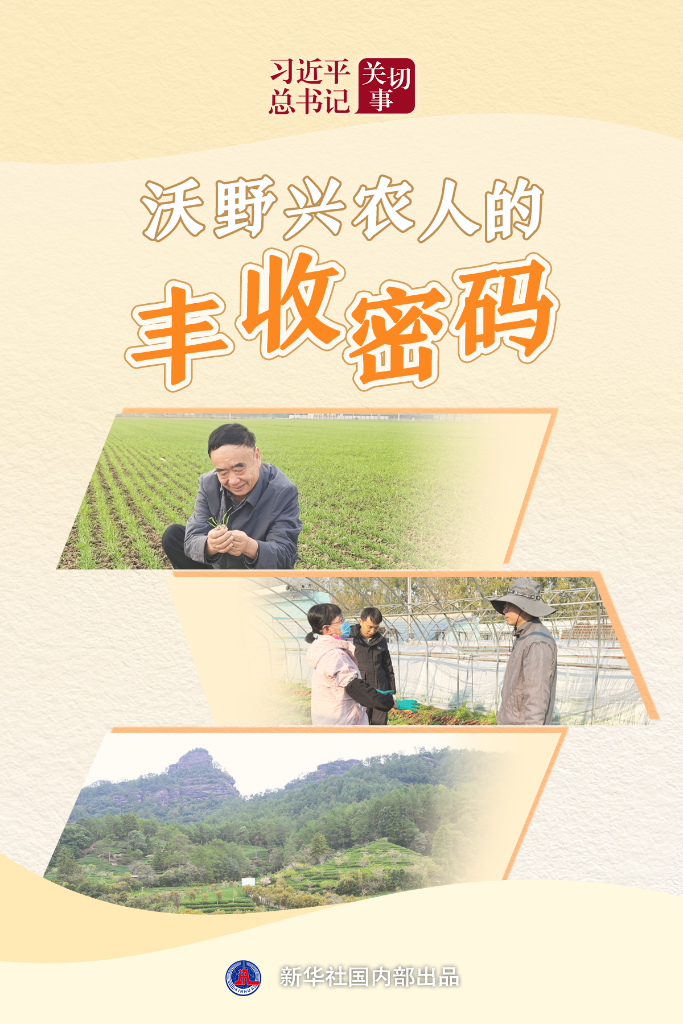
沃野兴农人的丰收密码
Xin Hua Wang· 2026-01-06 07:04
Core Viewpoint - The emphasis on food security and the integration of modern agricultural technology to enhance grain production and quality is a priority for China's agricultural development, as highlighted by President Xi Jinping's directives [1][4]. Group 1: Grain Production - The importance of large-scale grain producers applying modern agricultural technology to support smaller farmers in grain cultivation is underscored [1][4]. - Xu Zongxiang, a prominent grain farmer, has achieved significant yields, with his wheat production reaching over 800 kilograms per mu, which is substantially higher than the average [3][4]. - The collaborative model of "large farmers supporting small farmers" has expanded to cover 300,000 mu of farmland in Taihe County, promoting knowledge transfer and improved yields among local farmers [5]. Group 2: Vegetable Industry - The focus on quality in vegetable breeding and cultivation is exemplified by Wang Shufen, who has developed several new varieties of radishes, with three already obtaining plant variety rights [6][7]. - The application of technology in vegetable production has led to significant advancements, with 80% of vegetable cultivation varieties in Shandong now being domestically produced [8]. Group 3: Tea Industry - The promotion of ecological tea farming practices by Professor Liao Hong has improved tea quality and farmer income, demonstrating the effectiveness of integrating traditional and modern agricultural methods [9][10]. - The implementation of the technology commissioner system has mobilized a large number of agricultural scientists to support rural development, with 90,000 technology commissioners recognized in Fujian Province [10].
中国饭碗将端得更稳更牢
Jing Ji Ri Bao· 2025-11-02 21:52
Core Insights - The article emphasizes the importance of ensuring stable grain production in the face of complex climate conditions and extreme weather challenges by leveraging technology and policy support [1][2][3] Group 1: Technological Support - The Ministry of Agriculture and Rural Affairs has released key grain and oil varieties and promoted technologies to enhance grain production, focusing on stabilizing area, increasing yield, and improving quality [1] - During the harvest season from September to October, adverse weather conditions were mitigated through coordinated efforts in agricultural meteorology, machinery harvesting, and drying equipment to safeguard the autumn grain harvest [1] Group 2: Policy Support - A comprehensive policy system has been established to support grain production, including subsidies for farmland fertility protection, producer subsidies, agricultural insurance premium subsidies, and minimum grain purchase prices [1] - The central government has allocated disaster relief funds multiple times to assist in grain production and ensure harvests in response to frequent natural disasters [1] Group 3: Challenges and Risks - The article highlights ongoing challenges such as decreasing and deteriorating arable land resources, frequent extreme weather and pest outbreaks, water scarcity in northern regions, and declining willingness among producers to grow grain [1] Group 4: High-Standard Farmland Construction - High-standard farmland is deemed essential for stable grain production, necessitating continuous construction and upgrading, with a focus on quality and effective prevention of "non-grain" usage [2] - There is a need for organic integration of water-saving irrigation and other facilities in northern high-standard farmland to enhance disaster resilience and production stability [2] Group 5: Income Protection Mechanism - A robust income protection mechanism for grain farmers is crucial, requiring improvements in the agricultural policy system that integrates pricing, subsidies, and insurance [2] - The promotion of precision farming technologies and the establishment of a comprehensive "smart farming" model are encouraged to enhance efficiency and reduce costs [2] Group 6: Development of Socialized Services - Expanding and improving socialized services is vital for integrating smallholders into modern production and promoting advanced technology to ordinary farmers [3] - The strategy of storing grain in the land and technology aims to strengthen the foundation of grain production and ensure that China's grain bowl remains stable and secure [3]