
智能体即服务(AaaS)

Search documents
英伟达连发7款“王炸”芯片,目标从芯片商转向AI工厂!黄仁勋的思路变了?业内:一句话总结就是“卖标准”
Mei Ri Jing Ji Xin Wen· 2026-03-18 09:26
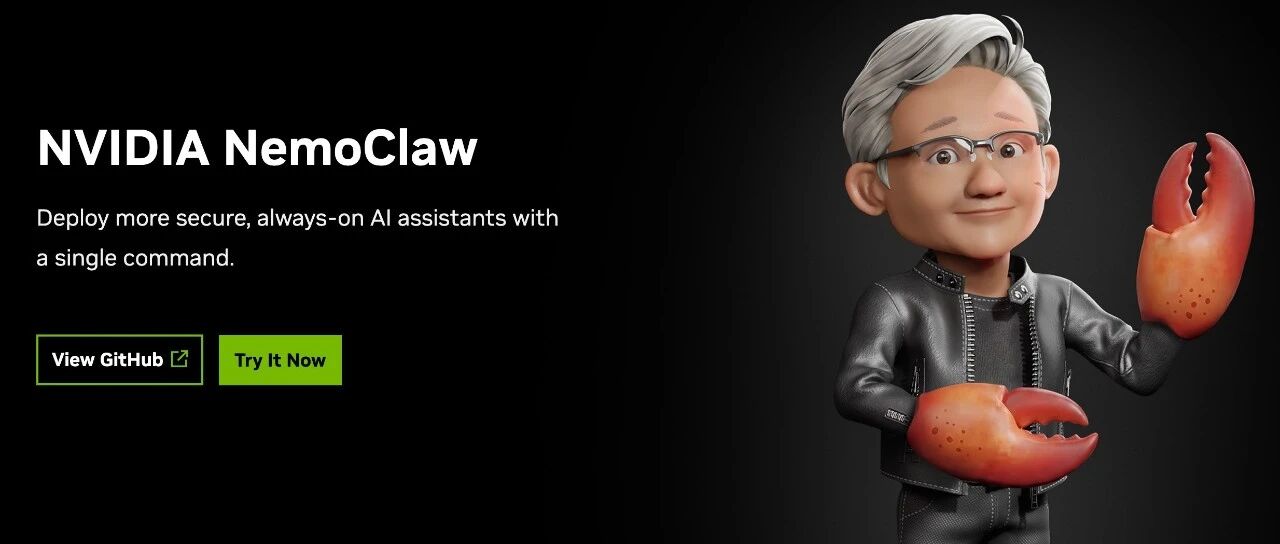
Core Insights - NVIDIA is transitioning from a chip company to an AI factory and AI infrastructure company, emphasizing the importance of its ecosystem and tools for AI development [2][13][17] - The introduction of OpenClaw is seen as a significant advancement, likened to the impact of Linux, and is expected to evolve traditional SaaS into "Agent as a Service" (AaaS) [3][4][12] - NVIDIA's CEO highlighted the company's goal of achieving $1 trillion in revenue from computing chips by 2027, doubling the previous year's forecast of $500 billion for 2026 [12] Product and Technology Developments - The GTC 2026 event showcased the Vera Rubin platform, which consists of seven chips and five racks, marking a pivotal moment for Agentic AI and infrastructure development [8][9] - Key components of the Vera Rubin platform include the Vera CPU, which is designed for agent-based AI and offers double the efficiency of traditional CPUs, and the Groq 3 LPU, which focuses on large language model inference [9][12] - The NemoClaw software stack was introduced to enhance data privacy and security for autonomous agents, providing a sandbox environment for development [7] Market Strategy and Positioning - NVIDIA's strategy is to create a high barrier to entry for competitors by building a comprehensive ecosystem and optimizing token costs to attract more users [2][12][16] - The company is focusing on the growing demand for AI applications and is positioning itself as a solutions provider rather than just a computing power supplier [13][16] - The emphasis on "burning more tokens" reflects the industry's need for efficient computing resources, with NVIDIA leading in the metric of "tokens per watt" [12][16]


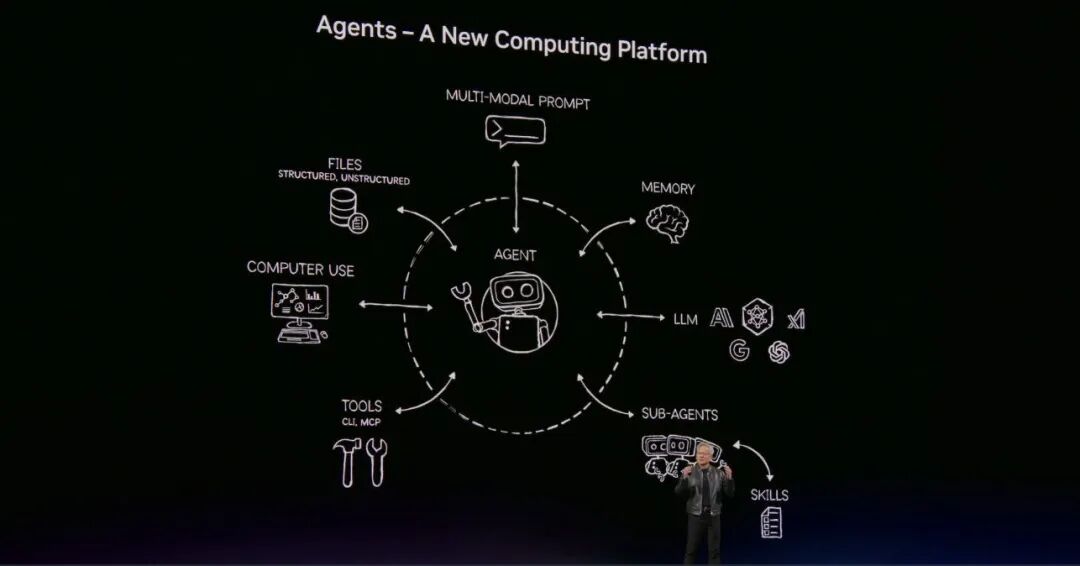
传统软件被颠覆?英伟达黄仁勋谈“龙虾”行业影响
第一财经· 2026-03-17 06:38
Core Viewpoint - The article discusses the transformative impact of OpenClaw on the software industry, likening its significance to that of Linux and HTML, and emphasizes the shift from traditional SaaS to Agentic as a Service (AaaS) [3][4]. Group 1: OpenClaw and Its Implications - OpenClaw is seen as a foundational technology for the next generation of software, enabling AI agents to autonomously execute tasks and reshaping software architecture [3][4]. - Huang Renxun advocates for every company to adopt an OpenClaw strategy, suggesting that traditional SaaS will evolve into AaaS, which focuses on delivering results rather than just tools [4][5]. Group 2: Market Dynamics and Future Trends - The discussion around the obsolescence of low-end SaaS has intensified, with industry experts predicting that companies lacking a competitive edge will be eliminated [5]. - A report from CITIC Securities indicates that the shift towards AI will lead to a change in software companies' business models, moving from tool sales to result-based pricing [5][6]. Group 3: Security Considerations - At the GTC conference, NVIDIA introduced NemoClaw to ensure enterprise-level application security, integrating OpenClaw's capabilities with its Nemotron AI model [6]. - The development of OpenClaw aims to create a secure environment for building powerful AI assistants, highlighting the importance of safety in AI applications [6].
全球AaaS(智能体即服务)八大龙头企业盘点
Cai Fu Zai Xian· 2025-09-10 06:55
Group 1: China - Industry Scene Driven and Platform Evolution - Agent as a Service (AaaS) is a significant innovation in the PaaS layer of the AI era, encapsulating AI Agents as service units to support enterprises in executing tasks, collaboration, and decision-making [1] - MaiFengShi is the largest marketing and sales AI SaaS company in China, utilizing its self-developed AI-Agentforce platform to commercialize AaaS, successfully implemented in finance, retail, and education sectors [1] - Huawei Cloud leverages the Pangu large model and Ascend computing power to offer multi-agent collaboration and orchestration capabilities, focusing on government and industrial manufacturing sectors [1] - Lenovo proposes a "Super Factory + AaaS" model, delivering agents via subscription, with representative products serving IT operations, marketing, and office scenarios [1] - China Mobile has built a "Smart Middle Platform AaaS" system, accumulating hundreds of capabilities and opening them to government, culture and tourism, and finance sectors, achieving large-scale utilization through its operator-level platform [1] Group 2: United States - Tech Giants Building Full-Stack Services - Microsoft Azure AI Agent Service is set to officially launch in 2025, providing enterprise-level agent runtime that supports multi-agent collaboration, task orchestration, and compliance, already implemented in finance and manufacturing sectors [2] - Amazon AWS Agents for Bedrock offers a managed agent service with built-in API calls, memory, and monitoring capabilities, with typical applications in travel booking and insurance claims, emphasizing a low-code building experience [3] - Google Cloud Vertex AI Agent Builder provides a platform for agent development and operation, featuring session management, long-term memory, and built-in tools, applied in customer service and recommendations in retail and e-commerce [4] - Salesforce Agentforce deeply integrates agents into CRM, covering the entire customer service and sales tasks, becoming a new engine for driving company revenue [4] - AaaS is emerging as the primary delivery form for digital employees in enterprises, with overseas vendors focusing on underlying runtime and platform capabilities, while Chinese companies emphasize scenario-based and delivery efficiency [4]