智能化绿色化融合化

Search documents
深圳福田经济发展进中提速
Jing Ji Ri Bao· 2026-01-29 02:25
Group 1 - The core viewpoint highlights the economic development of Shenzhen's Futian District during the "14th Five-Year Plan" period, showcasing significant growth in economic indicators such as total economic output surpassing 500 billion and 600 billion yuan, fixed asset investment exceeding 300 billion yuan, and import-export totals breaking 800 billion and 900 billion yuan [1] - Futian District has established three new trillion-yuan industrial clusters in new energy, smart terminals, and software information services, with the number of specialized and innovative "little giant" enterprises increasing fivefold compared to the "13th Five-Year Plan" period [1] - By 2025, the financial sector's added value in Futian is expected to exceed 240 billion yuan, with the introduction of 12 licensed financial institutions, bringing the total to over 300 for the first time, and the number of financial institutions increasing by 1.5 times to 132, marking a six-year high [1] Group 2 - The "15th Five-Year Plan" will focus on integrating intelligence and green development, ensuring completeness, advancement, safety, and enhancing international competitiveness, aiming to establish industrial clusters with a total output of "2 trillion, 8 hundred billion, and 4 hundred billion" yuan [2] - The strategy will continue to promote the transformation of "CBD + Innovation Zone" to achieve a total economic scale of one trillion yuan as soon as possible [2]
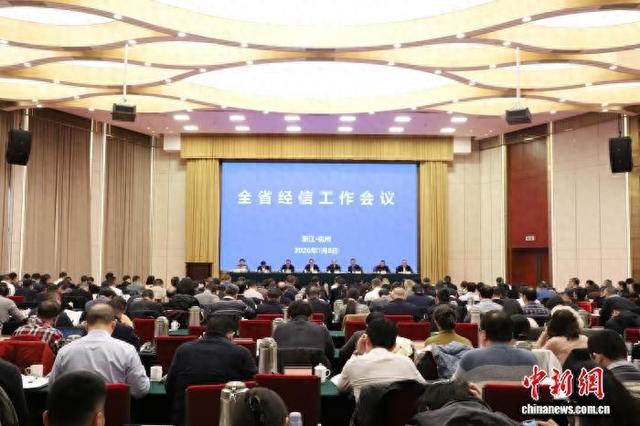
主攻智能化绿色化融合化 浙江谋划新型工业化“新五年”
Xin Lang Cai Jing· 2026-01-08 12:49
Core Viewpoint - Zhejiang aims to achieve an average annual growth of 5.5% in industrial added value during the "14th Five-Year Plan" period, with the digital economy's core industries accounting for 14% of GDP by 2030, and to establish a globally advanced manufacturing base by 2030 [1][3]. Group 1: Industrial Growth Targets - By 2025, Zhejiang's industrial added value is expected to grow by 6.8%, surpassing the province's GDP growth by approximately 1.3 percentage points [3]. - The province has set specific targets for 2026, including a 6% growth in industrial added value, an 8% growth in the digital economy's core industries, and over 8% growth in manufacturing investment [5]. Group 2: Achievements and Progress - Over the past five years, Zhejiang has effectively responded to challenges such as the pandemic and trade frictions, enhancing the resilience of key industrial chains and making significant progress in building a globally advanced manufacturing base [3][4]. - Key achievements include surpassing 3 trillion yuan in industrial added value, over 1 trillion yuan in the digital economy's core industries, and the establishment of 8 national advanced manufacturing clusters, with 5 clusters generating over 100 billion yuan in revenue [3][4]. Group 3: Future Directions and Strategies - Zhejiang will focus on the integration of intelligence, green technology, and innovation, with advanced manufacturing clusters as the main battleground and artificial intelligence as a key variable [4][6]. - The province plans to implement action plans for industries such as new materials, biomedicine, and commercial aerospace, while promoting the development of future industries through initiatives like the "Spark Plan" [6].

第十届中国制造强国年会成功在京召开
Feng Huang Wang Cai Jing· 2025-12-29 05:36
Core Insights - The 10th China Manufacturing Power Conference was held in Beijing, focusing on the theme "Rooted in the Real Economy, Moving Towards New Directions" and discussing the high-quality development path of China's manufacturing industry during the 14th and 15th Five-Year Plans [1][15] - The conference gathered over 400 guests from various sectors, including government, industry, academia, and research, to explore key topics such as strengthening the foundation of the real economy and developing new productive forces [1][2] Group 1: Key Themes and Discussions - The conference emphasized the importance of high-end, specialized, market-oriented, refined, and effective approaches to empower the real economy [2] - Li Yizhong, former Minister of Industry and Information Technology, highlighted the need for intelligent, green, and integrated development in building a modern industrial system, focusing on AI applications, low-carbon transitions, and the fusion of manufacturing and services [3][4] - Su Bo, former Deputy Minister of Industry and Information Technology, stated that China has reached a manufacturing power development index of 128.85, narrowing the gap with Germany and Japan, and emphasized the need for a three-step strategy for manufacturing power construction during the 15th Five-Year Plan [4][5] Group 2: Strategic Recommendations - Six key tasks were proposed for the 15th Five-Year Plan, including enhancing technological innovation, advancing digital economy, fostering new productive forces, promoting green growth, and strengthening the resilience of industrial supply chains [5][6] - Liu Lihua, former Deputy Minister of Industry and Information Technology, discussed the importance of consolidating the foundation of the real economy and leading the development of new productive forces, reflecting on the achievements of the manufacturing industry during the 14th Five-Year Plan [6][8] Group 3: Innovations and Future Directions - The conference introduced the "Innovation Development Index for Small and Medium-Sized Enterprises" to evaluate and support local industrial clusters, aiming to enhance the innovation capabilities of SMEs [10][11] - The "Two-Innovation Integration" public service platform was launched to assist in the development of industrial clusters, providing data-driven insights and support for local industries [11][12] - Liu Fei, Deputy Secretary-General of the China Manufacturing Power Research Institute, presented the "Invisible Champion Growth Path" report, outlining the characteristics of successful small and medium-sized enterprises in China [13][14] Group 4: Historical Context and Future Outlook - The conference marked a significant milestone, coinciding with the conclusion of the "Made in China 2025" initiative and the beginning of the 15th Five-Year Plan, reinforcing the commitment to building a modern industrial system [15][16] - The event has evolved into a major platform for discussing the future of China's manufacturing industry, aiming to continue contributing to the construction of a manufacturing power [15][16]

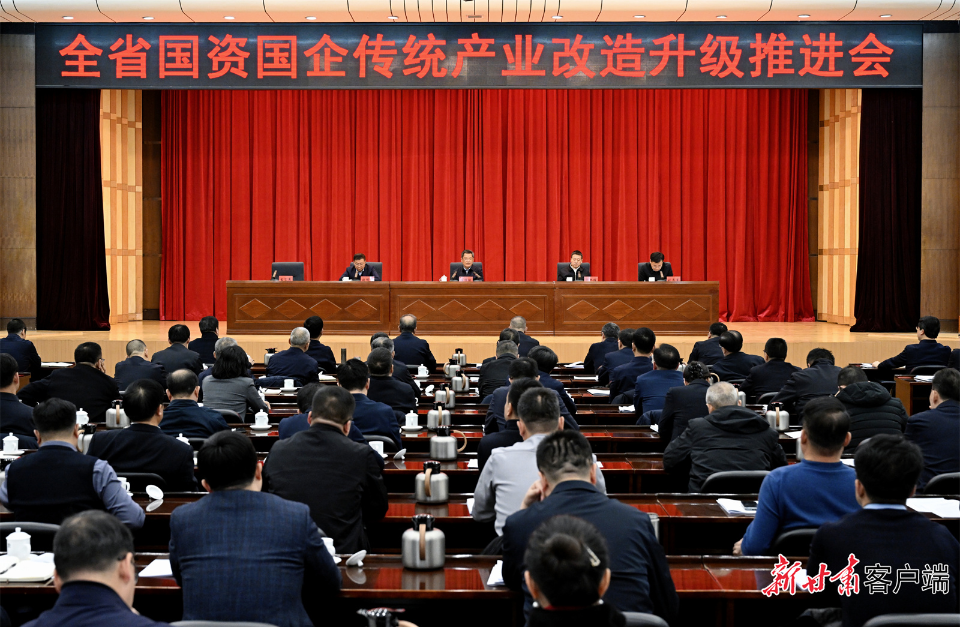
任振鹤在全省国资国企传统产业改造升级推进会上强调 坚持智能化绿色化融合化方向 推动传统产业改造升级实现新的突破和跃升
Xin Lang Cai Jing· 2025-12-26 14:57
Core Viewpoint - The meeting focused on the transformation and upgrading of traditional industries in Gansu Province, emphasizing the need for innovation, technology integration, and sustainable development to strengthen the modern industrial system [2][3]. Group 1: Key Strategies for Transformation - Emphasis on technological innovation as the core driving force for intelligent transformation and upgrading of traditional industries [3]. - The need to enhance market awareness, innovation consciousness, cross-industry awareness, and competitive awareness among enterprises [2]. - Focus on integrating green and low-carbon development into the industrial transformation process, promoting sustainable growth [3]. Group 2: Implementation and Support Mechanisms - The establishment of a green manufacturing system and the development of a circular economy to support environmental sustainability [3]. - The importance of data as a key production factor to drive smart manufacturing and the integration of digital technology with the real economy [3]. - A call for project reserves, financial support, and internal motivation to ensure effective implementation of transformation tasks [3]. Group 3: Collaborative Development and Safety - The need for industry collaboration to drive integrated development across the entire supply chain [3]. - Emphasis on enhancing the resilience and competitiveness of the industrial supply chain through strong leadership from key enterprises [3]. - A focus on safety management and risk prevention to ensure a solid foundation for safe enterprise development [3].

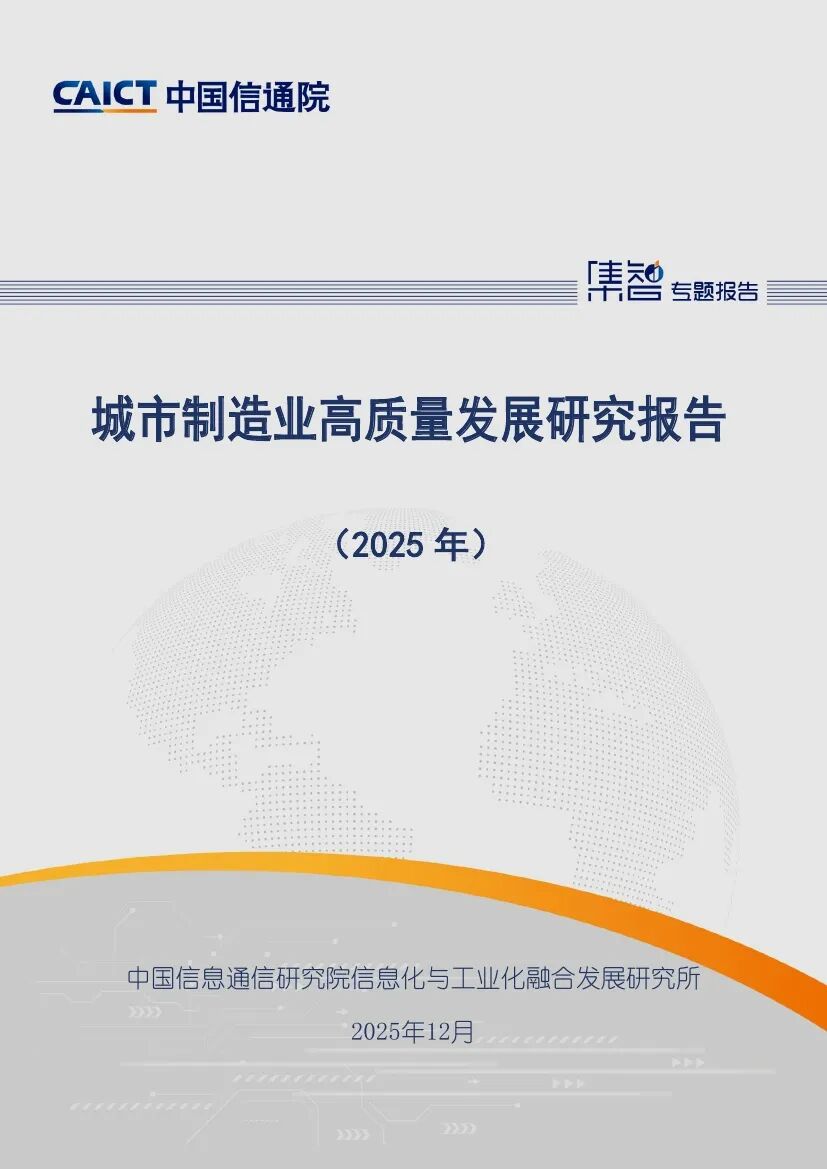
中国信通院:城市制造业高质量发展研究报告(2025年)
Xin Lang Cai Jing· 2025-12-19 12:44
Core Viewpoint - The report emphasizes the importance of high-quality development in urban manufacturing, highlighting the need for innovation, coordination, green practices, openness, and sharing as guiding principles for future growth in the sector [5][17]. Group 1: Opportunities and Challenges in Urban Manufacturing - Urban manufacturing is entering a new phase driven by innovation, with cities increasingly recognized as innovation hubs [13][14]. - The integration of smart, green, and collaborative practices is becoming a new direction for industrial upgrades, expanding growth opportunities in urban manufacturing [15]. - Urban manufacturing faces new challenges amid rapid transformation, including pressures to boost domestic demand and adapt to changing market conditions [16]. Group 2: Characteristics of Strong Manufacturing Cities - The distribution of strong manufacturing cities remains stable, with a notable concentration in the eastern region of China, while central regions are experiencing localized growth [22][25]. - Strong manufacturing cities are characterized by high-end, intelligent, and green development, leading to significant transformation outcomes [29][30]. - Technological innovation and industrial reform are driving forces, with strong cities concentrating innovation resources and achieving substantial advancements in key sectors [38][40]. Group 3: Issues in High-Quality Development - There are significant disparities in the quality of manufacturing development across regions, necessitating improved coordination and development levels [8][17]. - The efficiency of technology transfer and the proportion of basic research and original innovation remain relatively low, indicating areas for improvement [8][17]. - Structural contradictions in external openness and the need for enhanced effectiveness in foreign investment are evident [8][17]. Group 4: Outlook for Urban Manufacturing Development - Optimizing regional spatial layouts for manufacturing and focusing on collaborative development paths among key city clusters are essential for future growth [8][17]. - Building an integrated innovation ecosystem that connects industry, academia, research, finance, and application is crucial for enhancing the conversion of research outcomes [8][17]. - There is a strong emphasis on elevating levels of intelligence, greenness, and integration in manufacturing practices to drive deep industrial transformation [8][17].