智能战争

Search documents
新BAT十年战争
3 6 Ke· 2026-01-28 11:39
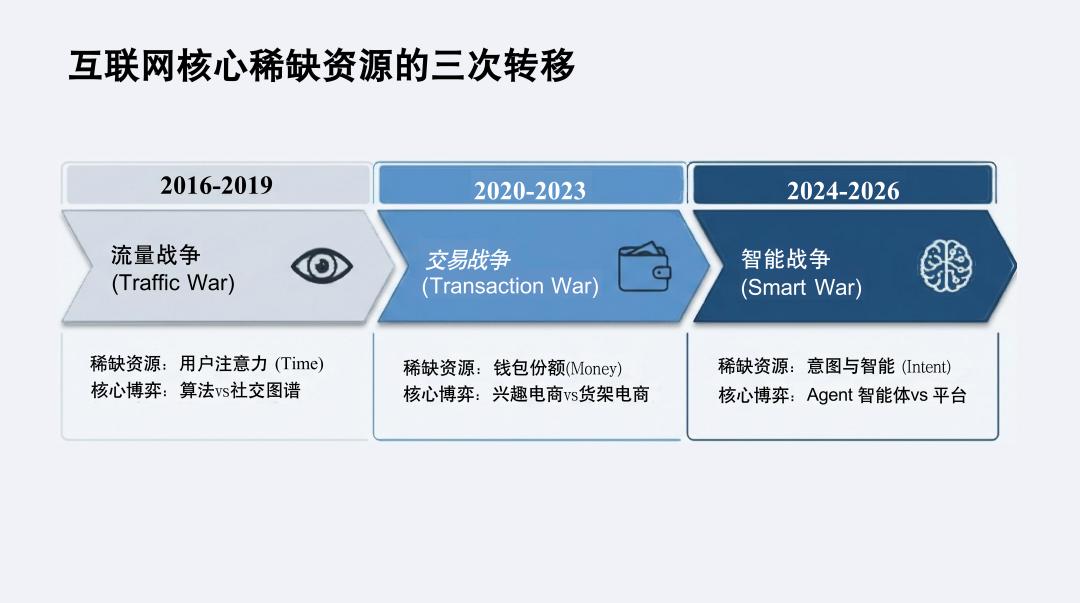
Core Insights - ByteDance's valuation is currently estimated at $480 billion, surpassing Alibaba and posing significant competition to both Alibaba and Tencent in various sectors [1][2]. - The traditional "BAT" (Baidu, Alibaba, Tencent) framework has been disrupted, with ByteDance emerging as the new center of gravity in the tech landscape [4]. Group 1: Historical Context and Competition - The competition has evolved from a focus on user attention (2016-2019) to a battle for consumer spending (2020-2023), and is expected to shift towards AI-driven competition (2024-2026) [6][45]. - ByteDance's rise began with its innovative recommendation engine, which allowed it to capture user engagement more effectively than traditional platforms [12][26]. - By 2019, ByteDance's digital advertising revenue surpassed Baidu's, marking the end of the old BAT era [17]. Group 2: Market Dynamics - The transition to "transaction wars" saw ByteDance establish a significant presence in e-commerce, with its GMV skyrocketing from approximately 500 billion yuan in 2020 to 2.6 trillion yuan by 2023 [32]. - During this period, Alibaba faced severe challenges, including regulatory issues and competition from both ByteDance and Pinduoduo, leading to a significant decline in its market position [34][33]. - Tencent's response to the competition included the launch of WeChat Video Accounts, which integrated various services within its ecosystem, allowing for a more seamless user experience [38][41]. Group 3: Future Outlook - The upcoming "intelligent wars" will focus on AI capabilities, with companies vying for control over user intent through advanced AI agents [45][46]. - ByteDance is rapidly advancing in AI, launching its AI assistant "Doubao," which has gained over 100 million daily active users, showcasing its potential in the AI space [54]. - Alibaba is also pivoting towards AI, with its open-source model gaining traction among developers, while Tencent is restructuring to enhance its AI capabilities [66][60]. Group 4: Key Metrics - As of now, Tencent leads in monthly active users with 1.4 billion on WeChat, while ByteDance boasts two products (Douyin and TikTok) with over 1 billion monthly active users each [71]. - In e-commerce, Alibaba remains the leader with a GMV of approximately 8 trillion yuan, but ByteDance's e-commerce segment has reached around 3 trillion yuan, significantly impacting Alibaba's market share [71].



即将到来的智能战争:不可避免的未来?
Hu Xiu· 2025-09-18 23:52
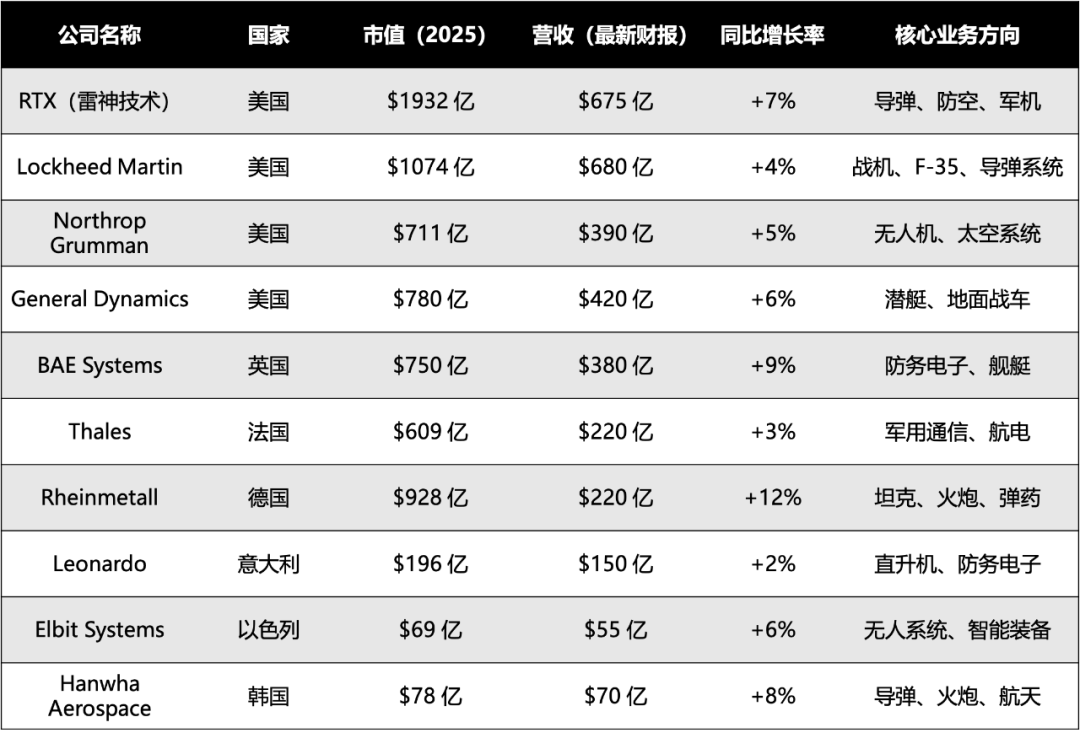
Group 1: War Evolution and Technology - The article discusses the shift from traditional warfare to a new form of "intelligent warfare" characterized by the use of drones, AI, and real-time data collaboration [2][5][11] - Historical context shows that warfare has always evolved with technological advancements, moving from manpower in the cold weapon era to industrial warfare and now to intelligent warfare [4][5][11] Group 2: Military Spending Implications - If major global powers increase military spending to 5% of GDP, it would lead to a structural transformation in military economics [6][10] - Current military expenditures are approximately $997 billion for the US (3.5% of GDP), $314 billion for China (1.6% of GDP), and €343 billion for the EU (1.9% of GDP) [7][8][9] - The global military expenditure could potentially double from $2.7 trillion to over $5 trillion, with 30%-35% allocated to equipment procurement and intelligent system development [10] Group 3: Key Defense Companies Overview - Major defense companies and their financials for 2024-2025 include: - RTX (Raytheon Technologies): Market Cap $193.2 billion, Revenue $67.5 billion, Growth +7% [21] - Lockheed Martin: Market Cap $107.4 billion, Revenue $68 billion, Growth +4% [21] - Northrop Grumman: Market Cap $71.1 billion, Revenue $39 billion, Growth +5% [21] - General Dynamics: Market Cap $78 billion, Revenue $42 billion, Growth +6% [21] - BAE Systems: Market Cap $75 billion, Revenue $38 billion, Growth +9% [21] - Thales: Market Cap $60.9 billion, Revenue $22 billion, Growth +3% [21] - Rheinmetall: Market Cap $92.8 billion, Revenue $22 billion, Growth +12% [21] - Leonardo: Market Cap $19.6 billion, Revenue $15 billion, Growth +2% [21] - Elbit Systems: Market Cap $6.9 billion, Revenue $5.5 billion, Growth +6% [21] - Hanwha Aerospace: Market Cap $7.8 billion, Revenue $7 billion, Growth +8% [21] Group 4: Future Warfare Scenarios - Potential future scenarios include: - A full-scale intelligent war driven by AI and unmanned systems if major powers enter irreconcilable conflicts [22] - A normalization of low-intensity, multi-regional conflicts without full-scale wars or true peace [23] - The possibility of peace being restructured through technology that helps prevent conflicts [24]