有色金属指数

Search documents
金融工程定期:有色金属板块的资金行为监测
KAIYUAN SECURITIES· 2025-10-10 08:42
- The non-ferrous metal index (000819.SH) has increased by 83.14% since 2025, and by 83.87% since April 7, 2025, significantly outperforming the Wind All A Index during the same period [2][11][12] - Public fund holdings in the non-ferrous metal sector have rebounded since August 2025, based on real-time calculations using public market data such as fund net value, disclosed holdings, and research activities [3][15] - ETF holdings in the non-ferrous metal sector have been steadily increasing since July 2025, reflecting the growing popularity of index investment products, with the total scale of public ETF funds exceeding 4.3 trillion yuan by the end of Q2 2025 [3][18][20] - Margin balance in the non-ferrous metal sector has been rising since July 2025, indicating increased investor optimism about the market outlook [3][22][23] - Chip yield characteristics show that the current profitability effect of the non-ferrous metal index is 25.14%, with chip yield reflecting the return rate of current prices relative to historical chip costs [3][25][26] - Institutional research has been most frequent for companies such as Northern Rare Earth, Yunnan Copper, and Chihong Zinc & Germanium in 2025 [4][27][29] - Ganfeng Lithium, Huayou Cobalt, and Zijin Mining have received the highest attention from Snowball platform influencers since September 15, 2025 [4][30][31][32] - Major funds have flowed into companies such as Quartz Co., Bowei Alloy, and Shenghe Resources since September 15, 2025, with large and super-large orders used as proxy variables for major funds [4][34][35][38] - Companies such as Bowei Alloy, Jinli Permanent Magnet, and China Rare Earth have appeared on the Dragon Tiger List since September 15, 2025, reflecting the most active trading dynamics in the market [4][39] - High-frequency shareholder data indicates significant increases in shareholder numbers for companies such as Chifeng Gold, Huafeng Aluminum, and Hunan Gold, which may signal potential risks for subsequent stock prices [4][41][43]





共享基经丨与AI一起读懂ETF(十五):同样是有色主题,这三个指数有何不同?
Mei Ri Jing Ji Xin Wen· 2025-05-21 09:51
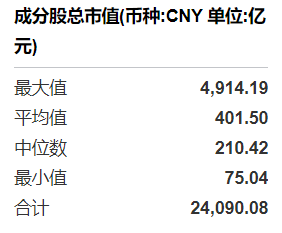
Core Viewpoint - The article discusses the recent collective rise of gold-themed ETFs and related non-ferrous metal ETFs, highlighting the differences among three key indices: the China Securities Non-Ferrous Metals Index, the China Securities Sub-Industry Non-Ferrous Metals Theme Index, and the National Non-Ferrous Metals Industry Index [1]. Group 1: Differences Among Indices - **Constituent Stock Composition**: The China Securities Non-Ferrous Metals Index includes a broad range of listed companies involved in the mining, smelting, and processing of non-ferrous metals, with an average market capitalization of approximately 40.2 billion CNY [2]. The China Securities Sub-Industry Non-Ferrous Metals Theme Index focuses on larger, more liquid companies within specific sub-industries, with an average market capitalization of about 45.9 billion CNY [3]. The National Non-Ferrous Metals Industry Index selects 50 prominent securities based on industry classification standards, with an average market capitalization of around 46.7 billion CNY [4]. - **Industry Distribution**: The top five industries in the China Securities Non-Ferrous Metals Index are copper, gold, aluminum, rare earths, and lithium, with a relatively balanced distribution [6]. The China Securities Sub-Industry Non-Ferrous Metals Theme Index also lists the same top five industries, but copper's share exceeds 30% [8]. Similarly, the National Non-Ferrous Metals Industry Index has a comparable distribution, with copper also exceeding 30% [10]. - **Top Ten Weightings**: The cumulative weighting of the top ten stocks in the China Securities Non-Ferrous Metals Index is 45.91% [12]. In contrast, the China Securities Sub-Industry Non-Ferrous Metals Theme Index has a cumulative weighting of 51.22% [12], while the National Non-Ferrous Metals Industry Index stands at 52.1% [12]. Notably, the largest stock, Zijin Mining, has a weight of less than 11% in the China Securities Non-Ferrous Metals Index, but exceeds 16% in the other two indices [12]. Group 2: Similarities Among Indices - **Industry Focus**: All three indices concentrate on the non-ferrous metals sector, reflecting the performance of listed companies in this industry, closely tied to the overall development trends, market supply and demand, and price fluctuations of non-ferrous metals [18]. - **Constituent Stock Selection Rules**: Each index selects stocks from the Shanghai and Shenzhen markets (with the National Non-Ferrous Metals Industry Index also including the Beijing Stock Exchange) based on liquidity and market capitalization to ensure a representative sample of the industry [18]. - **Valuation Levels**: The valuation levels of the three indices are consistent, with all having a TTM price-to-earnings ratio below the historical 20th percentile, indicating a historically low valuation [18].