期望确认理论

Search documents
小米汽车,遭遇“滑铁卢”?
Xin Lang Cai Jing· 2025-12-15 00:27
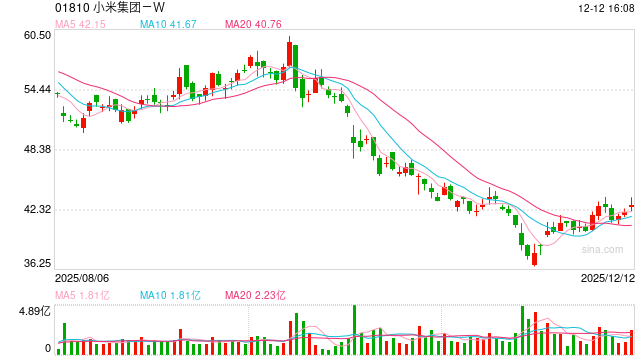
Core Viewpoint - Xiaomi Group reported a record third-quarter revenue of 113.1 billion yuan, with adjusted net profit increasing by 80.9% year-on-year, but faced a significant market reaction with a 4.81% drop in stock price the following day, leading to a market capitalization decline of approximately 602 billion yuan from its peak [20][21][3] Financial Performance - The automotive segment generated revenue of 28.3 billion yuan, a year-on-year increase of 197.9%, marking the first quarter of positive operating profit at 700 million yuan and a gross margin of 25.5% [21][20] - Xiaomi's market capitalization fell to approximately 998 billion yuan, down from a historical high of 1.6 trillion yuan [3][21] Automotive Business Challenges - There has been a significant decline in order growth for Xiaomi's automotive business, with a nearly 70% drop in order increments since October compared to the first half of the year [22][4] - Weekly new orders for Xiaomi vehicles decreased from 12,000 in Q2 to 4,000-5,000, with monthly new orders now below 20,000 [22][4] Market Sentiment and Consumer Behavior - Initial excitement around the launch of the YU7 model, which saw 200,000 units reserved in three minutes, has turned into a negative sentiment, with resale values for orders dropping significantly [23][5] - The perception of a "virtual inventory" created by speculative order accumulation has led to a market imbalance, further diminishing consumer interest [24][5] Production and Delivery - Xiaomi's second-phase factory achieved a stable output of 5,000 units per month, with plans to reach a peak of 70,000 units by early 2026 [7][25] - Despite having over 350,000 backlog orders, the current delivery pace suggests these orders may be fulfilled by mid-2026 [25][7] Competitive Landscape - Competitors like NIO and Zeekr are actively targeting potential Xiaomi customers with attractive offers, intensifying market competition [26][7] - Xiaomi's strategy to introduce immediate vehicle sales is seen as a necessary response to declining order reserves [27][7] Brand and Reputation Issues - Recent safety incidents involving Xiaomi vehicles have led to public scrutiny and a decline in consumer trust, impacting the brand's reputation [29][10] - The company's response to safety concerns has been criticized for lacking urgency and empathy, contrasting with competitors' proactive measures [34][35] Strategic Adjustments - Xiaomi has initiated personnel changes to enhance its automotive sales and service structure, aiming to integrate its ecosystem more effectively [36][7] - Plans for new vehicle launches in 2026 indicate an effort to diversify product offerings and address current market challenges [15][37] Future Outlook - The implementation of a reduced vehicle purchase tax in 2026 is expected to increase competitive pressure and potentially lower profit margins [38][7] - Xiaomi must adapt its approach to align with the automotive industry's longer production cycles and safety priorities, moving away from its previous consumer electronics strategies [38][33]

小米汽车,遭遇“滑铁卢”?
汽车商业评论· 2025-12-14 23:06
Core Viewpoint - Xiaomi Group reported a record Q3 2025 financial performance with revenue of 113.1 billion yuan and adjusted net profit of 11.3 billion yuan, a year-on-year increase of 80.9% [4][5] - Despite the strong financial results, Xiaomi's stock price fell by 4.81% the day after the earnings report, reflecting concerns about the long-term growth potential of its automotive business [7][8] Financial Performance - Xiaomi's Q3 2025 revenue reached 113.1 billion yuan, marking the fourth consecutive quarter of revenue exceeding 100 billion yuan [4] - The adjusted net profit for the quarter was 11.3 billion yuan, representing an 80.9% increase year-on-year [4] Automotive Business Insights - The automotive segment generated 28.3 billion yuan in revenue for the quarter, a 197.9% year-on-year increase, and achieved a positive operating profit of 700 million yuan with a gross margin of 25.5% [5] - However, there has been a significant decline in order growth for Xiaomi's vehicles, with a nearly 70% drop in new orders since October compared to the first half of the year [8][10] - Weekly new orders for Xiaomi vehicles have decreased from 12,000 in Q2 to 4,000-5,000, with monthly new orders now below 20,000 [10] Market Dynamics - The initial excitement around Xiaomi's vehicle orders has shifted, with reports of speculative order trading leading to a perception of decreased demand [11] - The introduction of "immediate purchase" options and discounts on certain models indicates a shift in supply-demand dynamics, revealing a change in market sentiment [15][18] Brand and Reputation Challenges - Xiaomi's automotive brand has faced scrutiny due to safety concerns following two high-profile accidents, which have negatively impacted consumer trust and stock performance [24][28] - The company's marketing strategies have been criticized for lacking transparency, leading to public backlash and a decline in brand reputation [26][30] Strategic Adjustments - Xiaomi has begun restructuring its automotive sales and service operations to address current challenges, including personnel changes aimed at improving channel resource allocation [29][35] - The company plans to launch three new vehicle models in 2026, which will test its product development and market adaptability [37] Future Outlook - Xiaomi anticipates increased competition and pressure on automotive margins due to upcoming policy changes, including a reduction in purchase tax subsidies [39] - The company must adapt its approach to align with the automotive industry's longer production cycles and safety standards, moving away from its previous consumer electronics strategies [39]