小米17Pro

Search documents
小米汽车,遭遇“滑铁卢”?
Xin Lang Cai Jing· 2025-12-15 00:27
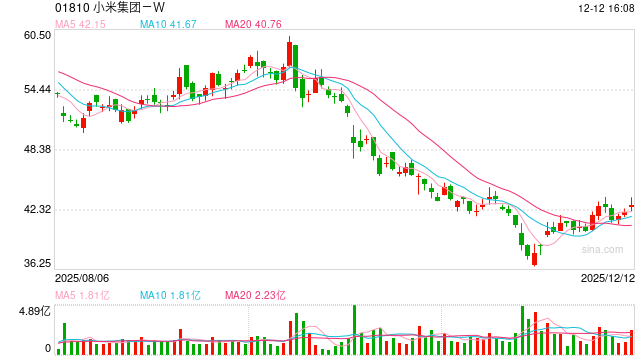
Core Viewpoint - Xiaomi Group reported a record third-quarter revenue of 113.1 billion yuan, with adjusted net profit increasing by 80.9% year-on-year, but faced a significant market reaction with a 4.81% drop in stock price the following day, leading to a market capitalization decline of approximately 602 billion yuan from its peak [20][21][3] Financial Performance - The automotive segment generated revenue of 28.3 billion yuan, a year-on-year increase of 197.9%, marking the first quarter of positive operating profit at 700 million yuan and a gross margin of 25.5% [21][20] - Xiaomi's market capitalization fell to approximately 998 billion yuan, down from a historical high of 1.6 trillion yuan [3][21] Automotive Business Challenges - There has been a significant decline in order growth for Xiaomi's automotive business, with a nearly 70% drop in order increments since October compared to the first half of the year [22][4] - Weekly new orders for Xiaomi vehicles decreased from 12,000 in Q2 to 4,000-5,000, with monthly new orders now below 20,000 [22][4] Market Sentiment and Consumer Behavior - Initial excitement around the launch of the YU7 model, which saw 200,000 units reserved in three minutes, has turned into a negative sentiment, with resale values for orders dropping significantly [23][5] - The perception of a "virtual inventory" created by speculative order accumulation has led to a market imbalance, further diminishing consumer interest [24][5] Production and Delivery - Xiaomi's second-phase factory achieved a stable output of 5,000 units per month, with plans to reach a peak of 70,000 units by early 2026 [7][25] - Despite having over 350,000 backlog orders, the current delivery pace suggests these orders may be fulfilled by mid-2026 [25][7] Competitive Landscape - Competitors like NIO and Zeekr are actively targeting potential Xiaomi customers with attractive offers, intensifying market competition [26][7] - Xiaomi's strategy to introduce immediate vehicle sales is seen as a necessary response to declining order reserves [27][7] Brand and Reputation Issues - Recent safety incidents involving Xiaomi vehicles have led to public scrutiny and a decline in consumer trust, impacting the brand's reputation [29][10] - The company's response to safety concerns has been criticized for lacking urgency and empathy, contrasting with competitors' proactive measures [34][35] Strategic Adjustments - Xiaomi has initiated personnel changes to enhance its automotive sales and service structure, aiming to integrate its ecosystem more effectively [36][7] - Plans for new vehicle launches in 2026 indicate an effort to diversify product offerings and address current market challenges [15][37] Future Outlook - The implementation of a reduced vehicle purchase tax in 2026 is expected to increase competitive pressure and potentially lower profit margins [38][7] - Xiaomi must adapt its approach to align with the automotive industry's longer production cycles and safety priorities, moving away from its previous consumer electronics strategies [38][33]

小米汽车,遭遇“滑铁卢”?
汽车商业评论· 2025-12-14 23:06
Core Viewpoint - Xiaomi Group reported a record Q3 2025 financial performance with revenue of 113.1 billion yuan and adjusted net profit of 11.3 billion yuan, a year-on-year increase of 80.9% [4][5] - Despite the strong financial results, Xiaomi's stock price fell by 4.81% the day after the earnings report, reflecting concerns about the long-term growth potential of its automotive business [7][8] Financial Performance - Xiaomi's Q3 2025 revenue reached 113.1 billion yuan, marking the fourth consecutive quarter of revenue exceeding 100 billion yuan [4] - The adjusted net profit for the quarter was 11.3 billion yuan, representing an 80.9% increase year-on-year [4] Automotive Business Insights - The automotive segment generated 28.3 billion yuan in revenue for the quarter, a 197.9% year-on-year increase, and achieved a positive operating profit of 700 million yuan with a gross margin of 25.5% [5] - However, there has been a significant decline in order growth for Xiaomi's vehicles, with a nearly 70% drop in new orders since October compared to the first half of the year [8][10] - Weekly new orders for Xiaomi vehicles have decreased from 12,000 in Q2 to 4,000-5,000, with monthly new orders now below 20,000 [10] Market Dynamics - The initial excitement around Xiaomi's vehicle orders has shifted, with reports of speculative order trading leading to a perception of decreased demand [11] - The introduction of "immediate purchase" options and discounts on certain models indicates a shift in supply-demand dynamics, revealing a change in market sentiment [15][18] Brand and Reputation Challenges - Xiaomi's automotive brand has faced scrutiny due to safety concerns following two high-profile accidents, which have negatively impacted consumer trust and stock performance [24][28] - The company's marketing strategies have been criticized for lacking transparency, leading to public backlash and a decline in brand reputation [26][30] Strategic Adjustments - Xiaomi has begun restructuring its automotive sales and service operations to address current challenges, including personnel changes aimed at improving channel resource allocation [29][35] - The company plans to launch three new vehicle models in 2026, which will test its product development and market adaptability [37] Future Outlook - Xiaomi anticipates increased competition and pressure on automotive margins due to upcoming policy changes, including a reduction in purchase tax subsidies [39] - The company must adapt its approach to align with the automotive industry's longer production cycles and safety standards, moving away from its previous consumer electronics strategies [39]
小米17Pro“背屏截屏”功能上新:3种模式,已开始推送更新
Feng Huang Wang· 2025-12-08 07:04
Core Insights - Xiaomi officially announced the launch of new screenshot features for the Xiaomi 17 Pro series, including three modes: pure screenshot, screenshot + half body, and screenshot + full body [1] Group 1: Product Features - The new screenshot functionality is part of an update that is currently being rolled out, with full deployment expected by mid-December [1] - Additional features for the Xiaomi 17 Pro series include new wallpaper experiences such as electronic pets and dynamic photo/video wallpapers, enhancing personalization options [1] - The update also supports personalized content sharing, including back screen screenshot with case and AI wallpaper saving to albums [1]

北水动向|北水成交净买入87.19亿 北水抛售芯片股及科网股 全天减持腾讯(00700)超12亿港元
智通财经网· 2025-10-31 10:06
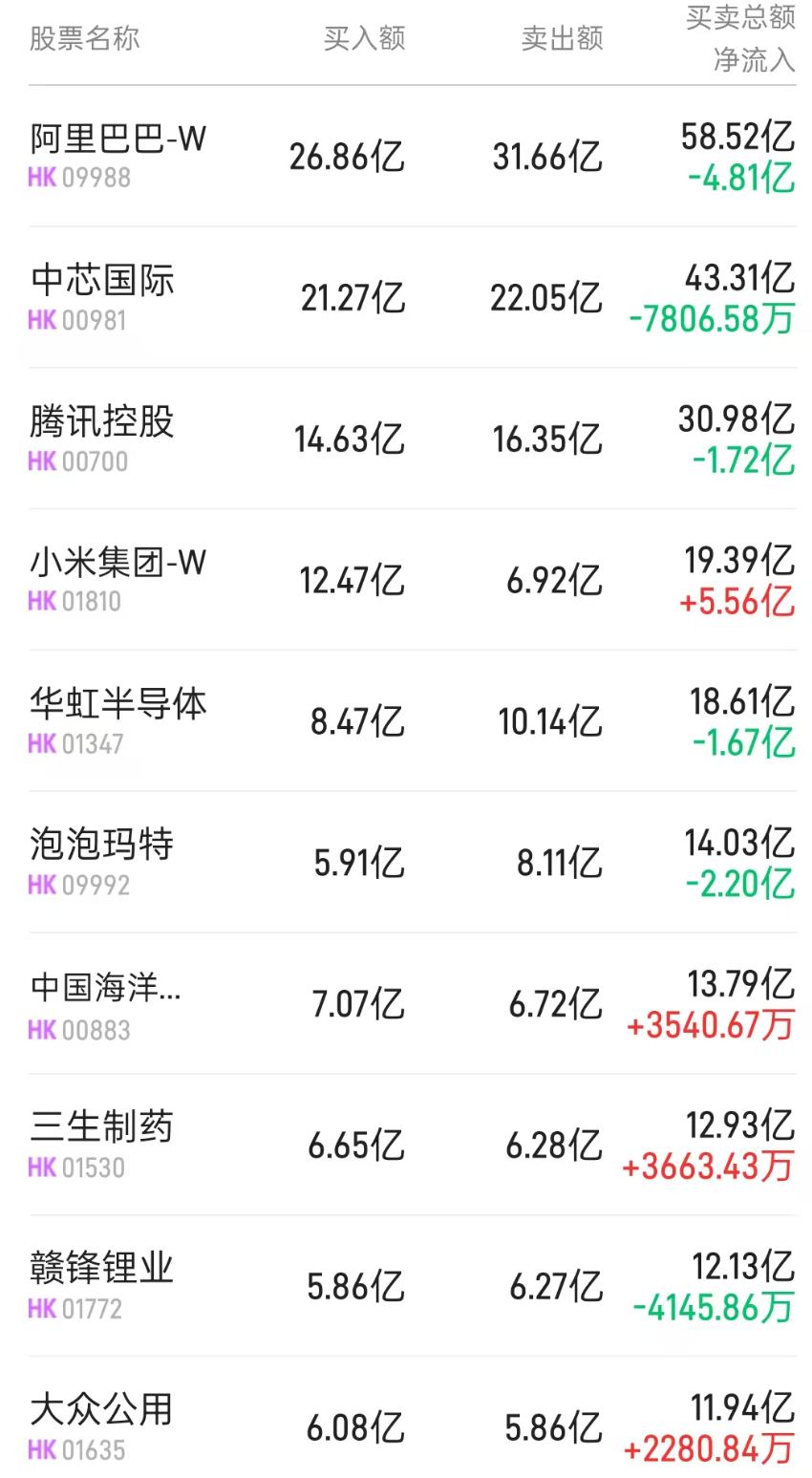
Core Insights - The Hong Kong stock market saw a net inflow of 87.19 billion HKD from northbound trading on October 31, with 57.72 billion HKD from the Shanghai Stock Connect and 29.47 billion HKD from the Shenzhen Stock Connect [1] Group 1: Net Inflows and Outflows - The most bought stocks included Xiaomi Group-W (01810), Meituan-W (03690), and Sanofi Pharmaceutical (01530) [1] - The most sold stocks included Tencent (00700), SMIC (00981), and Hua Hong Semiconductor (01347) [1] Group 2: Stock Performance Details - Xiaomi Group-W (01810) had a net inflow of 6.46 billion HKD, supported by optimistic forecasts for its smartphone and electric vehicle businesses [5] - Meituan-W (03690) received a net inflow of 4.64 billion HKD, with news of its international food delivery brand Keeta launching operations in Brazil [5] - Sanofi Pharmaceutical (01530) saw a net inflow of 754.6 million HKD, following the registration of a new cancer treatment in clinical trials [5] Group 3: Notable Sell-offs - Tencent (00700) experienced a net outflow of 12.19 billion HKD, amid increased short-selling activities in the market [7] - SMIC (00981) faced a net outflow of 7.11 billion HKD, as the semiconductor sector reacted to potential changes in AI chip export policies [8] - Hua Hong Semiconductor (01347) had a net outflow of 4.73 billion HKD, reflecting broader trends in the chip industry [8]




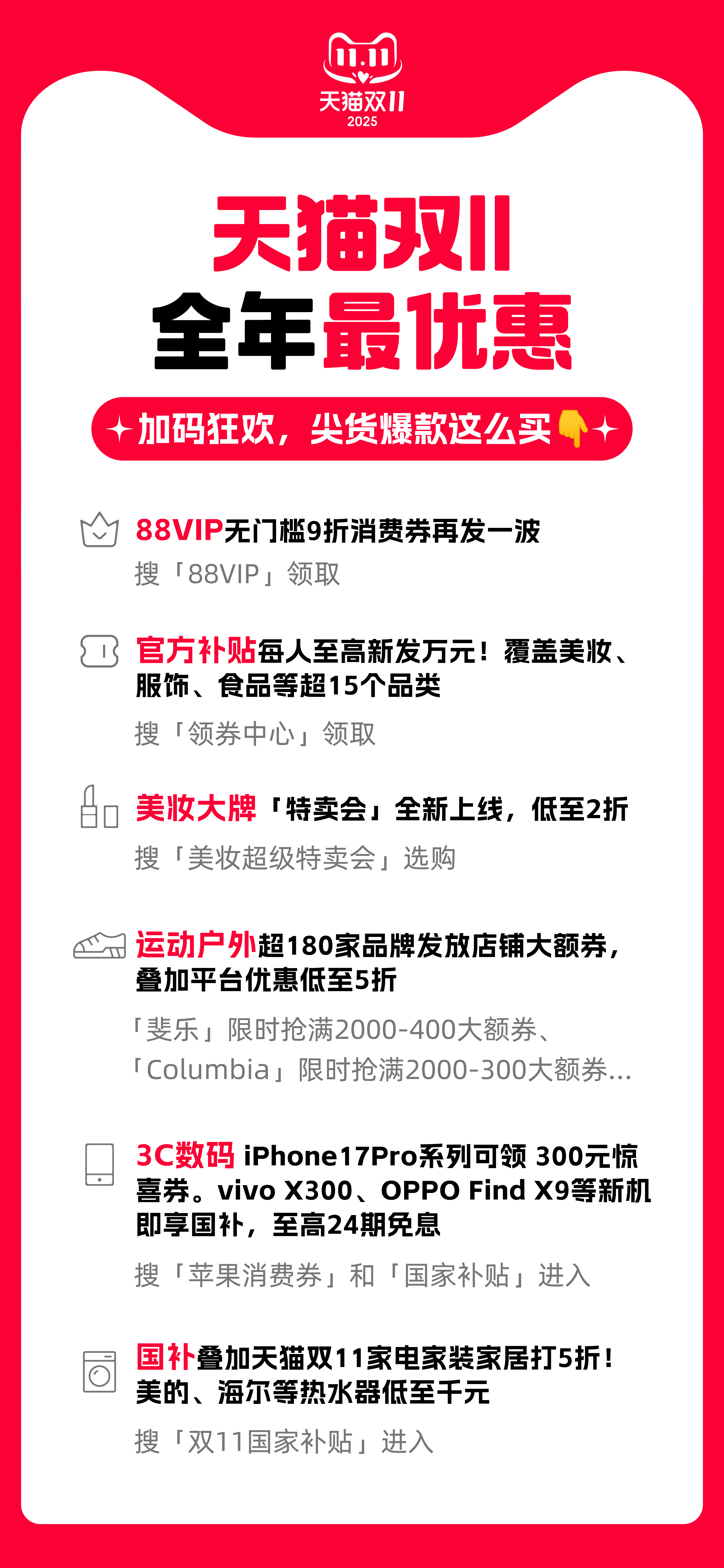
88VIP无门槛9折消费券再发一波 全年最优惠 天猫“双11”再加码
Zheng Quan Ri Bao Wang· 2025-10-31 08:49
Core Points - Tmall's "Double 11" event is offering significant discounts, including a base 15% off and additional no-threshold 10% coupons, industry-specific coupons, and shopping credits [1] - Multiple promotional rights will be released at midnight, creating an optimal shopping opportunity for consumers [1] Discounts and Promotions - 88VIP coupons are being issued with a no-threshold 10% discount, which can be combined with other platform discounts [18] - Consumers can receive up to 10,000 yuan in category coupons across over 15 popular categories, including beauty, apparel, and food [19] - A new "Beauty Brand Sale" is introduced, offering discounts as low as 20%, with specific products significantly reduced in price [20] - Over 180 outdoor sports brands are participating, offering store-wide coupons that can be combined with platform discounts for up to 50% off [21] - New smartphone models, such as the iPhone 17 Pro, come with surprise coupons worth 300 yuan, while Huawei offers discounts up to 1,500 yuan [22] - Home appliances and furnishings can be purchased at 50% off after applying multiple discounts, including a base 15% off, 10% coupons, and up to 20% in national and brand subsidies [23] - Pet brands are also offering discounts, with some products available for as low as 54% off after applying various coupons and shopping credits [24] Event Duration - The Tmall "Double 11" event will run until November 14 at midnight, encouraging consumers to take advantage of the best deals of the year [25]
雷军回应小字争议,一切都结束了
Xin Lang Cai Jing· 2025-10-29 01:16
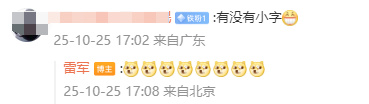
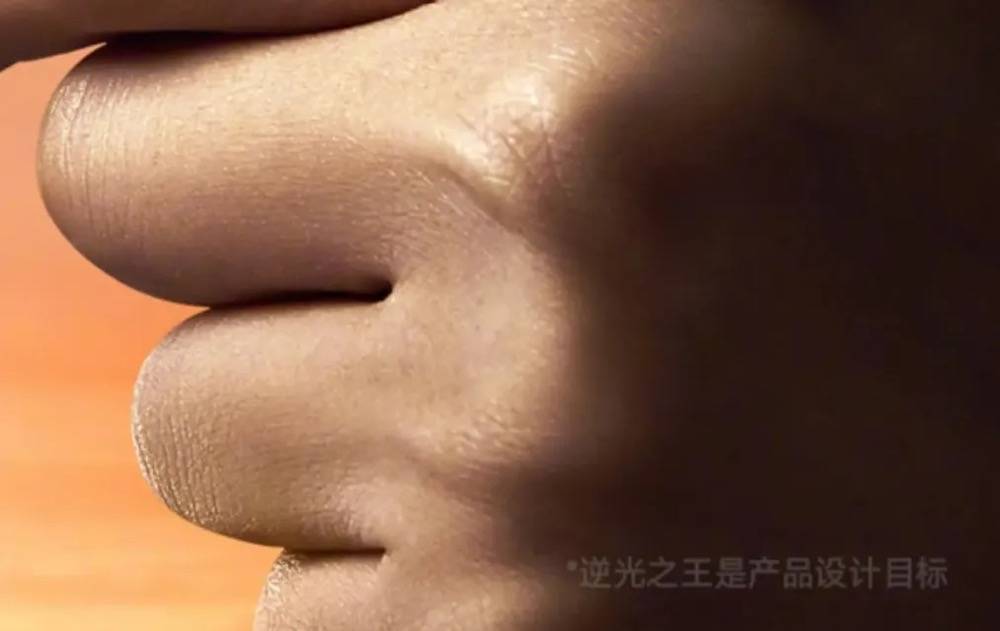
Core Viewpoint - The article discusses the controversy surrounding Xiaomi's marketing practices, particularly the use of small print disclaimers that often accompany bold claims in their advertisements, leading to consumer skepticism and criticism [2][20][30]. Group 1: Xiaomi's Marketing Practices - Xiaomi's recent announcement of the YU7's performance in a winter endurance test was overshadowed by a comment questioning the presence of small print disclaimers, which received significant attention in the comments section [2][3]. - The term "small print" has become synonymous with Xiaomi's marketing, as consumers have learned to scrutinize advertisements for hidden disclaimers following previous controversies [3][10]. - The article highlights that Xiaomi's marketing tactics, such as claiming to be the "king of endurance," often come with disclaimers that dilute the impact of the claims, leading to public mockery and distrust [20][22][30]. Group 2: Industry Context - The use of small print disclaimers is not unique to Xiaomi; it is a common practice across various industries, where companies use bold claims to attract attention while hiding critical information in fine print [8][9]. - The article cites examples from other sectors, such as food and skincare, where misleading marketing practices are prevalent, indicating a broader industry issue [8][9]. - The criticism of Xiaomi's marketing reflects a growing consumer awareness and demand for transparency, as consumers are now more inclined to verify claims rather than take them at face value [26][30]. Group 3: Consumer Trust and Brand Reputation - The article emphasizes that while bold marketing can generate initial interest, long-term consumer trust is built on product quality and transparency rather than clever advertising [27][30]. - The backlash against Xiaomi's marketing strategies could lead to a decline in brand loyalty, as consumers feel misled by exaggerated claims that are later qualified by small print [24][30]. - The article concludes that for Xiaomi to maintain its market position, it must shift its focus from short-term marketing gimmicks to delivering genuine product value and fostering customer trust [30].
招银国际:降小米集团-W目标价至61.3港元 料第三季经调整净利润同比增60%
Zhi Tong Cai Jing· 2025-10-28 03:44
Core Viewpoint - 招银国际 expects Xiaomi Group-W (01810) to achieve a year-on-year adjusted net profit growth of 60% to 10.01 billion RMB in Q3, aligning with market expectations [1] Group 1: Financial Performance - The anticipated gross margin for Q3 is 22.9%, surpassing the market forecast of 22.5% despite rising BOM costs [1] - The target price for Xiaomi has been adjusted from 62.96 HKD to 61.3 HKD, while maintaining a "buy" rating [1] Group 2: Future Outlook - The outlook for Q4 remains positive, with expectations that the Xiaomi 17 Pro and Pro-max will enhance the sales mix [1] - Strong delivery performance in the electric vehicle segment is noted, with improvements in profitability and potential capacity expansion [1] - The internet business is projected to grow steadily, with an expected gross margin of 75% [1] Group 3: Adjustments to Profit Forecasts - The adjusted net profit forecasts for fiscal years 2025 to 2027 have been slightly reduced by 3% to 4% to account for weak smartphone performance, electric vehicle breakeven in Q3, and rising BOM costs [1]
“韭菜”觉醒了!雷军演讲翻车,小米的套路,这次真的没人买账了
Sou Hu Cai Jing· 2025-10-18 03:12
Core Viewpoint - The article discusses the decline of Xiaomi's brand appeal and consumer trust, highlighting a recent incident involving the Xiaomi SU7 vehicle that exposed serious safety flaws, leading to a significant backlash against the company and its marketing strategies [3][21][28]. Group 1: Marketing and Consumer Perception - Xiaomi's marketing narrative, once captivating, has lost its effectiveness as consumers are now more critical and less willing to buy into emotional stories [3][21]. - The recent presentation by Lei Jun, Xiaomi's CEO, was met with indifference from the audience, contrasting sharply with previous years where such events were celebrated by fans [6][9]. - Consumers are increasingly frustrated with Xiaomi's product delivery and service issues, as evidenced by numerous complaints during the presentation [8][21]. Group 2: Safety and Product Issues - A serious incident involving the Xiaomi SU7, where a vehicle caught fire due to a design flaw in the hidden door handle, has raised significant safety concerns [11][12]. - Industry experts criticized Xiaomi for prioritizing aesthetics over safety, highlighting the absence of physical door handles as a dangerous cost-cutting measure [14][16]. - The SU7's advanced driver-assistance system has also been flagged for reliability issues, leading to a recall of over 110,000 vehicles [16][18]. Group 3: Trust and Brand Reputation - The safety crisis has resulted in a breakdown of trust between consumers and Xiaomi, as reflected in the negative reception of Lei Jun's speech [21][30]. - Xiaomi's attempts to replicate its successful smartphone marketing strategies in the automotive sector have backfired, revealing a lack of understanding of the complexities involved in car manufacturing [23][26]. - The company faces a critical challenge in restoring consumer trust, which requires a focus on delivering safe, reliable products and transparent communication [30].

雷军的演讲失去了“魔力”
Hu Xiu· 2025-09-30 14:03
Core Viewpoint - Lei Jun's sixth annual personal speech, themed "Change," received a significant amount of negative feedback, contrasting with the positive reception of his previous speeches [1][2][5] Group 1: Audience Reaction - The comments on the speech were largely negative, focusing on product quality issues, excessive marketing, and a general fatigue with Lei Jun's narrative of hard work and struggle [7][8] - Many viewers expressed confusion over Lei Jun's sudden decline in popularity, especially after a successful year with the launch of the Xiaomi Su7 and the fulfillment of the car manufacturing promise [9][19] - The audience's sentiment reflects a shift from admiration to skepticism regarding Lei Jun's storytelling and the company's direction [21][35] Group 2: Narrative Challenges - Xiaomi's corporate narrative faces significant challenges, as effective storytelling is crucial for organizational cohesion and customer engagement [22][23] - Lei Jun's previous "weakness" narrative, which resonated with audiences during difficult times, is becoming less effective as the company grows and faces new challenges [30][34] - The current technological landscape has shifted towards a demand for more robust and innovative products, leading to criticism of Xiaomi's technological capabilities [39][42] Group 3: Market Context - The automotive industry is becoming increasingly competitive, with higher consumer expectations for safety, design, and experience in electric vehicles [41][42] - As new hard-tech companies emerge, there is a growing public expectation for Xiaomi to demonstrate stronger technological advancements [39][40] - Xiaomi is perceived as needing a significant breakthrough in its product offerings to meet these evolving market demands [43]
泡泡玛特收入首超迪士尼,黄金突破3850元,小米17Pro背屏爆火
3 6 Ke· 2025-09-30 05:23
Group 1 - Pop Mart's revenue surpasses Disney for the first time, with the price of blind boxes skyrocketing to 1499 yuan, indicating strong market demand [4][1] - The secondary market price for the hidden "Little Bear Biscuit" pendant has surged to 929 yuan, a 16-fold increase from the official price of 59 yuan [4] - The overall price for a complete box has increased from 354 yuan to 1499 yuan, with over 3000 clicks on the platform indicating consumer interest [4] Group 2 - Gold prices have surged, with spot gold breaking the 3850 USD mark, reaching a record high of 3851.879 USD per ounce [3][4] - This price increase has been ongoing for seven consecutive days, surpassing the previous high of 3834.12 USD per ounce [4] Group 3 - Xiaomi's 17 Pro model has gained popularity due to its unique "back screen" feature, which has sparked discussions on social media [3][4] - The concept of "pain machines" is derived from Japanese "otaku culture," where items are customized with anime and game elements [4] Group 4 - Yu Chengdong has been appointed to lead Huawei's IRB, with the appointment personally signed off by Ren Zhengfei [5] - Jensen Huang has sold 225,000 shares of NVIDIA, cashing out over 40 million USD [6] - Apple had plans to launch an 8GB budget iPad, with a prototype recently exposed [6]