机制建设

Search documents
泰州:以“三个建设”赋能审计高质量发展
Xin Hua Ri Bao· 2025-12-01 07:24
Core Insights - The audit rectification process has improved engineering quality supervision and closed three management loopholes, resulting in a reduction of over 400,000 yuan in fiscal funds for a single project [1] - The Taizhou Municipal Audit Bureau emphasizes political construction, quality construction, and self-construction to enhance audit work and support local economic and social development [1][2] Group 1: Political and Quality Construction - The bureau prioritizes political construction by deepening theoretical learning through the "first agenda" system, ensuring audit work aligns with central objectives [1][2] - A comprehensive mechanism has been established for major issues reporting, enhancing the effectiveness of upper-level deployments, with two meetings of the Municipal Audit Committee held and eight special reports submitted this year [1][2] Group 2: Quality Control and Audit Process - The bureau focuses on key areas such as engineering construction and policy implementation, integrating various professional forces to enhance audit effectiveness through data screening, on-site verification, and risk assessment [2] - A full-process control system has been developed, detailing audit project workflows and clarifying key responsibilities, ensuring objective and fair audit conclusions [2] Group 3: Team Building and Technological Integration - The bureau strengthens discipline and team building through regular warning education and on-site inspections, enhancing the integrity of audit personnel [3] - A mentorship and assessment mechanism has been established to support the rapid development of young auditors, alongside the integration of digital technologies and big data into audit practices [3]
管理不会奖励老黄牛,因为没有人在意垃圾工作
Hu Xiu· 2025-06-08 05:59
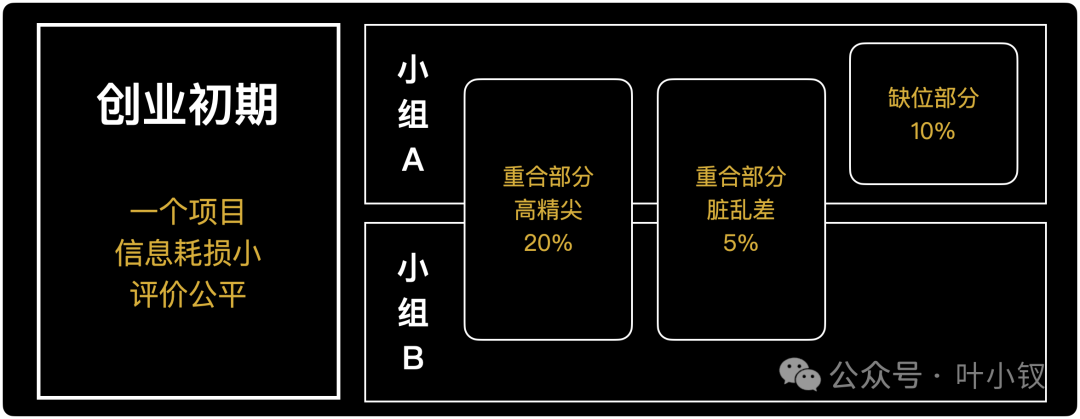
Group 1 - The core objective of management is to maximize human efficiency [1][57] - Effective task execution is crucial, which involves addressing issues of information distortion and evaluation failure [2][57] - The article discusses how management problems escalate in a company and potential solutions [3] Group 2 - In the early stages of a company, typically with fewer than 50 employees, efficiency is high due to minimal information loss and clear evaluation paths [4][6] - As the company grows to around 500 employees, management methods must evolve, as reliance on individual heroes becomes insufficient [7][8] - The basic solution is to break down tasks and restructure information channels and evaluation systems, leading to the creation of subsidiaries or project teams [9][10] Group 3 - As the team size increases, issues such as overlapping responsibilities and unclear task ownership become more pronounced, leading to inefficiencies [11][15] - The need for systematic value calculation and structural optimization arises, highlighting the importance of both human and legal governance [16][18] - Problems stemming from information distortion and evaluation failure require proper outlets to prevent negative employee sentiment [19][20] Group 4 - Cultural construction is essential for addressing management issues, as it provides guidance in areas not covered by formal systems [29][31] - Mechanism construction, distinct from cultural construction, focuses on establishing specific processes to ensure consistent performance [41][43] - The concept of "review" is highlighted as a low-cost mechanism to address issues, although it often devolves into a blame game [44][49] Group 5 - The article emphasizes that management is not about achieving perfection but minimizing inefficiencies and focusing resources on critical areas [62] - The balance between human governance and legal governance is crucial for long-term stability and addressing short-term challenges [60][61] - The overall goal is to ensure that all problems have a proper outlet, thereby reducing team negativity and enhancing efficiency [26][25]