
杀伤链

Search documents
当 AI 进入战场:Anthropic 与五角大楼的正面冲突,以及无人承担的道德代价|声东击西
声动活泼· 2026-03-13 10:08
Core Viewpoint - The article discusses the conflict between Anthropic, a company focused on "safe AI," and the U.S. Department of Defense, centered around a $200 million contract and the ethical implications of AI in military applications [2]. Group 1: Contract and Collaboration - The collaboration between Anthropic and the Pentagon began around 2023, escalating into conflict by early 2026, culminating in legal actions and political fallout [4]. - A significant milestone was the signing of a $200 million contract in July 2025, making Claude the first large language model integrated into U.S. military systems [4]. - Claude, integrated with Palantir's Maven system, provides support for video analysis, intelligence data integration, and operational planning, significantly reducing the manpower needed for data analysis [4]. Group 2: Ethical Considerations and Red Lines - Anthropic, founded by former OpenAI members, emphasizes ethical AI use, initially aligning with the Biden administration's views on safety [6]. - The conflict intensified when the Pentagon demanded the removal of restrictions on military applications, while Anthropic maintained two key red lines: prohibiting the use of its technology for mass domestic surveillance and fully autonomous lethal weapons [8]. - The designation of Anthropic as a "supply chain risk" by the Trump administration marked a significant shift, effectively labeling the company as a national security threat [8]. Group 3: Market Impact and Competition - The fallout from the Pentagon's actions severely impacted Anthropic's business, cutting off military contracts and forcing other defense suppliers to sever ties with the company [9]. - In a dramatic turn, OpenAI announced a contract with the Pentagon shortly after Anthropic's ban, intensifying competition and public sentiment against Anthropic [9]. - Despite the challenges, Anthropic saw a surge in app downloads as users rallied in support, indicating a potential marketing opportunity amidst the controversy [9]. Group 4: AI in Military Operations - The article highlights the concept of the "kill chain," where AI can assist in various stages of military operations, from target identification to damage assessment [11]. - AI's role in military operations raises ethical questions about decision-making and accountability, particularly regarding who is responsible for actions taken by AI systems [12]. - The use of AI in military contexts, such as the Israeli "Lavender" system, illustrates the potential for rapid decision-making but also the moral implications of automated warfare [13][14]. Group 5: Future Implications and Governance - The discussion emphasizes the need for policies to govern the use of AI in warfare, questioning the extent to which technology companies should influence military decisions [16]. - The lack of international regulations and accountability frameworks for autonomous weapons remains a significant concern, as the technology continues to evolve without oversight [20]. - The article concludes with a call for awareness of AI's pervasive influence on society and the importance of ethical considerations in its deployment [20].


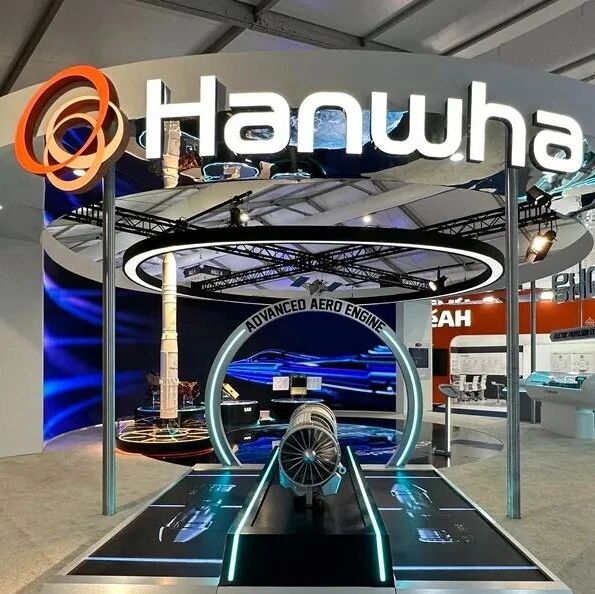
单日狂飙22%!军工狂潮席卷全球! 韩华航空航天引领亚洲军工!
美股IPO· 2026-03-03 04:44
Core Viewpoint - The article highlights a significant surge in South Korean defense and military stocks following the escalation of conflict in the Middle East, driven by investor sentiment towards defense stocks amid geopolitical tensions [1][6]. Group 1: Stock Performance - South Korean defense stocks experienced substantial gains, with Hanwha Aerospace rising by 22%, Korea Aerospace Industries increasing by over 7%, and Lignex1 soaring by 30% [3]. - Other notable increases include Victek and Firstec, both rising over 20%, while Poongsan and Hyundai Rotem saw gains of 14% and over 18%, respectively [3]. - The performance of the South Korean military sector starkly contrasts with the broader Kospi index, which fell over 4% [3]. Group 2: Market Dynamics - The rise in South Korean military stocks is attributed to their relatively lower valuations, accelerated orders from Europe, and the push for domestic military autonomy in Asia [4]. - The Kospi index had previously surged by over 50% in 2026, marking it as one of the most volatile stock markets globally [4]. - The global stock market is witnessing a historical divergence, with Asian markets outperforming the U.S. and developed markets, driven by trends in AI and semiconductor industries [5]. Group 3: Geopolitical Factors - The ongoing military actions in the Middle East, including U.S. strikes against Iran, have prompted a renewed focus on defense spending and military stock investments [6]. - South Korean defense companies are increasingly recognized in the global defense sector, with ambitions to become the fourth-largest defense industry by 2030 [6]. - Orders from European countries have significantly contributed to the bullish trend in South Korean defense stocks since 2025 [6]. Group 4: Global Military Stock Trends - Global defense stocks have generally risen, with notable increases in European and U.S. military companies like Lockheed Martin and Northrop Grumman [7]. - The current military conflict emphasizes the importance of a comprehensive military capability, including intelligence, surveillance, reconnaissance, and advanced weaponry [7]. - The article suggests that the most beneficial sectors within military stocks are those addressing current warfare needs, such as missile systems, electronic warfare, and advanced drones [8].
俄媒爆“美军正秘密研发25款机密武器对抗中国”
Xin Lang Cai Jing· 2025-09-13 10:06
Core Viewpoint - The Pentagon is secretly developing 25 new classified weapons to counter China, with a budget allocation exceeding $10.8 billion for the 2026 fiscal year under the "SHOTCALLER" program [1] Group 1: Budget and Funding - The U.S. Department of Defense has allocated over $10.8 billion (approximately 769.5 billion RMB) for the development of 25 classified weapons [1] - The "Advanced Innovative Technology" (AIT) project, a major component of "SHOTCALLER," has requested $1.16 billion to continue the development of weapon prototypes, having previously received over $9.6 billion in funding [1] Group 2: Project Management and Objectives - The "SHOTCALLER" project is managed by the Pentagon's Strategic Capabilities Office, which operates directly under senior Pentagon leadership [1] - The core objective of the AIT project is to create a seamless "kill chain" that integrates long-range firepower, space-based mobile target data, and joint operations across multiple military branches to ensure rapid and overwhelming strikes in future conflicts [1]