
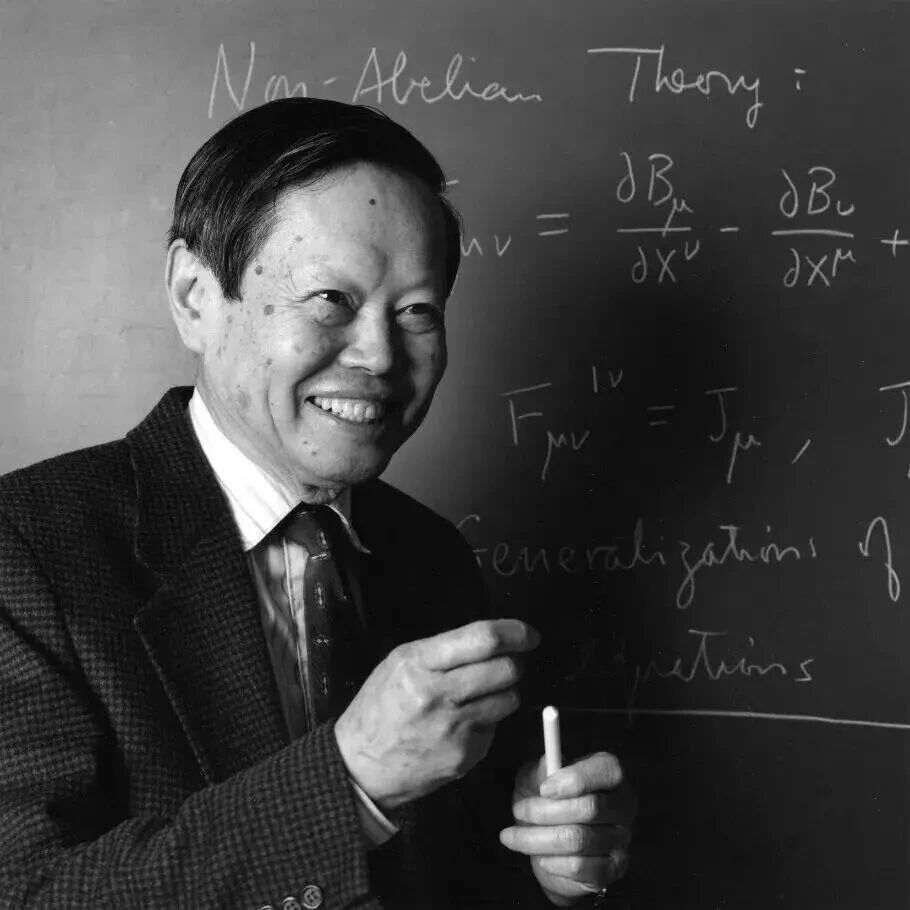
杨—米尔斯规范场论

Search documents
杨振宁先生的“渗透式学习法”,才是年轻人该学的顶级认知模型
首席商业评论· 2025-10-25 03:52
Core Viewpoint - The article reflects on the life and contributions of Yang Zhenning, emphasizing his scientific achievements, deep sense of national pride, and the impact of his upbringing on his character and academic pursuits [2][4][36]. Group 1: Life and Legacy - Yang Zhenning passed away on October 18, 2025, at the age of 103, marking the end of an era in modern physics [2]. - He is recognized not only for his scientific contributions but also for his role in changing the perception of Chinese people regarding their capabilities [6][10]. - His life journey is described as a complete circle, starting from Tsinghua University, reaching the pinnacle of global science, and ultimately returning to his roots [2][4]. Group 2: Family Influence - The article highlights the significant role of Yang's parents in shaping his character and academic style, with his father emphasizing a balanced education and his mother instilling resilience [10][19]. - Yang's father, Yang Wuzhi, introduced him to a variety of subjects, fostering a love for learning through a patient and guiding approach [12][14]. - His mother, Luo Menghua, despite limited formal education, provided a strong moral foundation and emphasized the importance of perseverance [19][23]. Group 3: Educational Philosophy - Yang Zhenning advocated for "permeation learning" and "interest-driven" study methods, which he believed were essential for scientific research [36][39]. - He emphasized the importance of collaborative discussions in academic pursuits, which he found beneficial throughout his career [33][36]. - His approach to learning and research was characterized by a blend of patience, humility, and a commitment to rigorous inquiry [37][39].

世纪巨星,连通东西——海外媒体致敬杨振宁的科学人生
Ke Ji Ri Bao· 2025-10-20 05:13
Core Viewpoint - The passing of Nobel Prize-winning physicist Yang Chen-Ning at the age of 103 marks the end of an era in the physics community, highlighting his significant contributions to fundamental physics and his role as a bridge between Eastern and Western scientific cultures [1][6]. Contributions to Physics - Yang Chen-Ning made outstanding contributions in various fields including particle physics, field theory, statistical physics, and condensed matter physics [5]. - His work on "parity violation" in collaboration with Li Zhengdao in 1957 fundamentally changed the belief that mirror worlds are indistinguishable, laying the groundwork for the particle physics standard model [5]. - The "Yang-Mills theory," co-developed with Robert Mills, is regarded as one of the cornerstones of modern theoretical physics, comparable to Maxwell's equations and Einstein's theory of relativity [5][6]. Cultural Impact and Legacy - Yang Chen-Ning's life journey reflects the global scientific development and talent mobility of the 20th century, as he moved from China to the United States and later returned to China to promote education and research [7]. - His decision to renounce U.S. citizenship in 2015 to restore his Chinese nationality was widely covered, symbolizing his deep connection to his cultural roots [8]. - Yang's efforts in education, such as the establishment of the "Yang Chen-Ning Scholar Program" at Nanyang Technological University, aimed to inspire young students in science and engineering [9]. Educational Initiatives - Yang Chen-Ning's educational initiatives, including the "Chen Jiageng Youth Invention Award," have encouraged young people to embrace innovative thinking and critical analysis [9]. - His passion for education and foresight in promoting scientific exploration have left a lasting impact, inspiring future generations [9].
杨振宁心系家国——“归根居”前忆先生
Ren Min Ri Bao· 2025-10-18 23:31
Core Points - Renowned physicist Yang Zhenning, a Nobel Prize winner and academician of the Chinese Academy of Sciences, passed away on October 18 in Beijing at the age of 103 [1] Group 1: Personal Background and Contributions - Yang Zhenning was born in 1922 and studied in the United States in the 1940s, later returning to China to contribute to the scientific community [5] - He was awarded the Nobel Prize in Physics in 1957 for his work on "non-conservation of parity in weak interactions," which he co-developed with Li Zhengdao [5][7] - Yang emphasized that his achievements in science helped boost the confidence of the Chinese people, which he considered his most significant contribution [5] Group 2: Academic Influence and Legacy - Yang Zhenning played a crucial role in establishing theoretical physics research institutions in Chinese universities, including Sun Yat-sen University and Nankai University, starting in the 1980s [9] - He served as a mentor to many young scientists and was instrumental in attracting world-class scholars to Tsinghua University [9] - His commitment to education was evident as he taught undergraduate physics courses, inspiring students with his knowledge and experience [10] Group 3: National Pride and Vision - Yang Zhenning expressed a deep sense of national pride, stating that his life was dedicated to the development of China and physics [7][6] - He believed that establishing a truly independent physics center in China was more important than winning a Nobel Prize [8] - His writings reflect optimism about China's future in physics, indicating a belief that the country would shine brightly in the field [11]