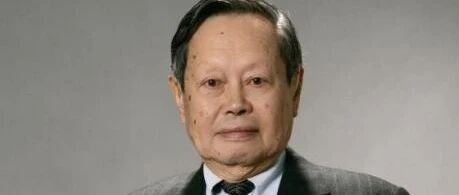
杨 - 巴克斯特方程

Search documents
杨振宁:我一生最重要的贡献,是帮助改变了中国人自己觉得不如人的心理作用
21世纪经济报道· 2025-10-19 07:35
Core Viewpoint - Yang Zhenning is a prominent figure in both Chinese and global scientific communities, known for his significant contributions to physics and his role in fostering academic exchanges between China and the West [1][3][4]. Early Life and Education - Yang Zhenning was born in Hefei and spent his early years in a scholarly environment, influenced by his father, who was the first Chinese to earn a Ph.D. in mathematics from the University of Chicago [1][6]. - He attended the National Southwestern Associated University during World War II, where he shifted his focus from chemistry to physics, laying the groundwork for his future contributions [7][9]. Scientific Contributions - Yang Zhenning's major scientific achievements include the parity non-conservation theory, Yang-Mills theory, and the Yang-Baxter equation, which are considered foundational in modern physics [10][14][15]. - The parity non-conservation theory, developed with Li Zhengdao, challenged the long-held belief in parity conservation in weak interactions, leading to Yang's Nobel Prize in Physics in 1957 [11][13]. - The Yang-Mills theory unified the electromagnetic, weak, and strong forces, providing a mathematical framework for the Standard Model of particle physics [14]. - The Yang-Baxter equation opened new avenues in mathematical physics, influencing numerous fields and recognized by multiple Fields Medalists [15]. Aesthetic and Cultural Integration - Yang Zhenning emphasized the beauty in physics, equating the pursuit of scientific truth with artistic appreciation, and categorized beauty into three levels: phenomenological, descriptive, and structural [17][18]. - His work reflects a blend of Eastern and Western cultural influences, showcasing a deep respect for traditional Chinese values while engaging with modern scientific paradigms [18][20]. Later Life and Contributions to Education - After returning to China, Yang Zhenning dedicated himself to advancing Chinese science and education, taking on roles at Tsinghua University and other institutions to foster research and attract talent [20][21]. - He established platforms for collaboration between Chinese scholars and international academia, significantly impacting the development of basic sciences in China [20][21].

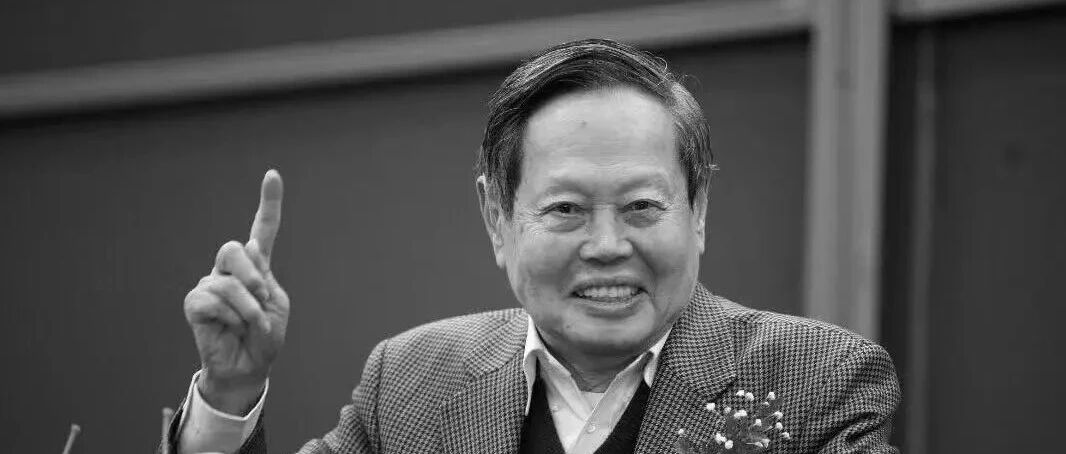
沉痛悼念!杨振宁因病逝世,享年103岁
Zheng Quan Shi Bao Wang· 2025-10-18 05:30
Core Points - Renowned physicist and Nobel laureate Yang Zhenning passed away on October 18, 2025, in Beijing at the age of 103 [1] Group 1: Biography and Education - Yang Zhenning was born in 1922 in Hefei, Anhui, and moved to Tsinghua University in 1929 [3] - He studied at Southwest Associated University in 1938, graduated with a master's degree from Tsinghua University in 1944, and obtained his Ph.D. from the University of Chicago in 1948 [3] - He held various prestigious academic positions, including at Princeton and Stony Brook University, and was a professor at Tsinghua University from 1999 [3] Group 2: Contributions to Physics - Yang Zhenning is considered one of the greatest physicists of the 20th century, contributing significantly to modern physics [4] - He co-developed the Yang-Mills theory, which laid the foundation for the standard model of particle physics, comparable to Maxwell's equations and Einstein's general relativity [4] - He and Li Zhengdao proposed the revolutionary idea of parity violation in weak interactions, earning the Nobel Prize in Physics in 1957 [4] - Yang discovered the Yang-Baxter equation, which opened new directions in statistical physics and quantum groups [4] Group 3: Impact on Education and Science in China - Yang Zhenning was deeply committed to China's educational and scientific development, initiating a wave of visits by Chinese scholars to the U.S. [5] - He established the "Committee for Educational Exchange with China," funding nearly a hundred Chinese scholars to study in the U.S., significantly impacting China's technological advancement [5] - After returning to Tsinghua, he dedicated himself to the development of the Institute for Advanced Study, influencing the reform and development of higher education in China [5]
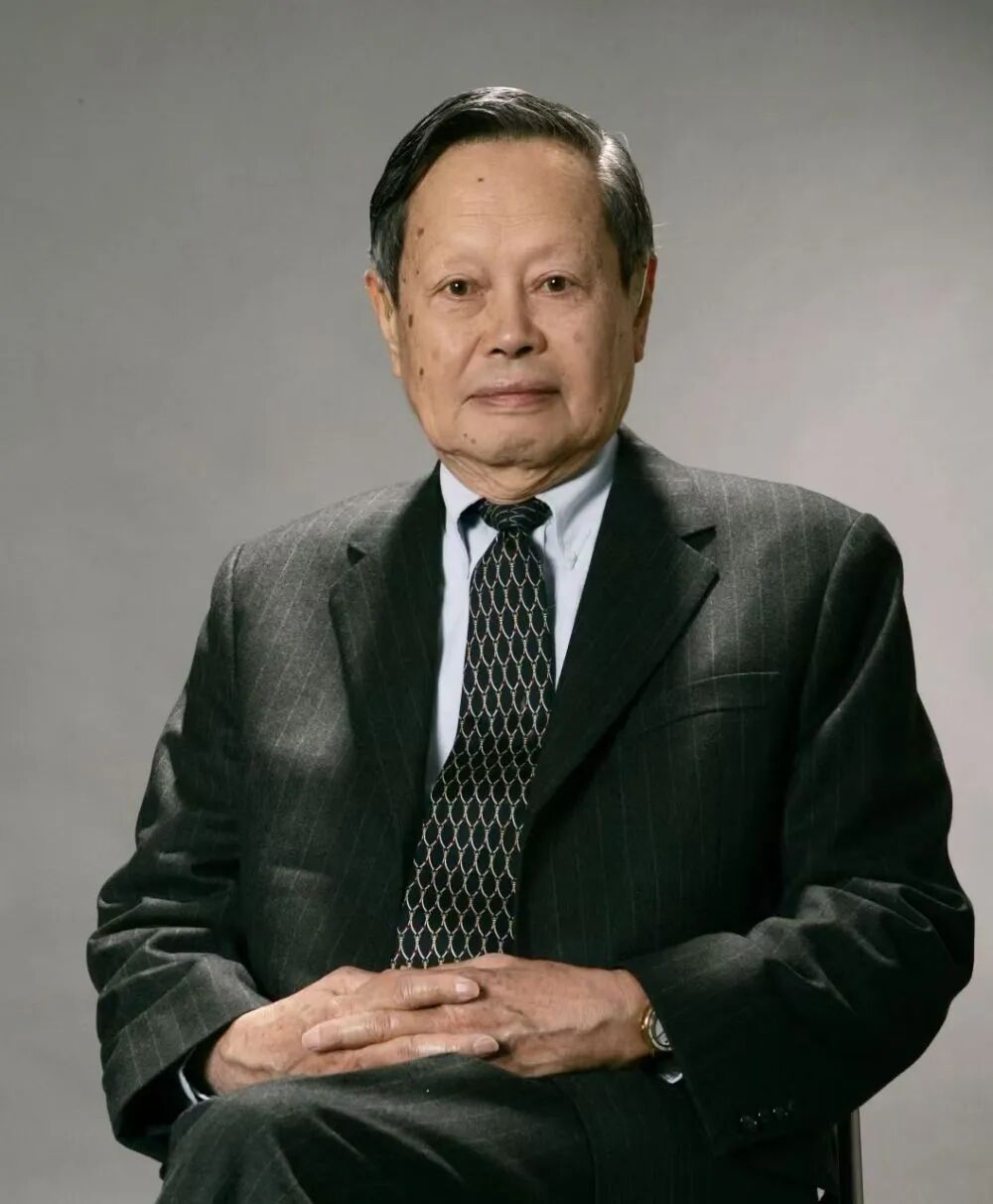
百年求索,赤子之心 ——致敬科学巨擘杨振宁
Mei Ri Jing Ji Xin Wen· 2025-10-18 04:49
Core Viewpoint - The article commemorates the life and contributions of Yang Zhenning, a renowned physicist and Nobel laureate, who passed away at the age of 103, highlighting his significant impact on physics and his deep connection to his homeland [1]. Group 1: Early Life and Education - Yang Zhenning was born in 1922 in Hefei, Anhui, and was influenced by his father, a scholar in modern number theory and algebra [2]. - He spent his childhood in Tsinghua Garden, where he developed an early interest in science, inspired by a book on the latest discoveries in physics [4]. - Yang Zhenning's education continued at Southwest Associated University during the war, where he excelled academically, ranking second among over 20,000 candidates [4]. Group 2: Academic Achievements - Yang Zhenning made groundbreaking contributions to physics, including the Yang-Mills theory and the theory of parity non-conservation in weak interactions, for which he received the Nobel Prize in Physics in 1957 [11][12]. - His work in statistical mechanics led to the development of the Yang-Baxter equation, earning him the Onsager Prize, a prestigious award in physics [12]. Group 3: Contributions to China’s Scientific Development - Yang Zhenning played a crucial role in bridging international scientific communities and introducing modern scientific concepts to China after returning in 1971 [15]. - He advocated for the importance of "developmental research" in China, influencing the country's "863 Program" aimed at advancing high-tech research [18]. - Yang Zhenning established the Tsinghua University Institute for Advanced Study, contributing significantly to the development of theoretical physics and mathematics in China [19]. Group 4: Educational Philosophy and Talent Development - He promoted ideas such as "generalist education" and hands-on training, recommending over 1,200 scholars for overseas training to enhance academic exchange [21]. - Yang Zhenning emphasized the need for strategic allocation of research funding, advising against investments in large particle colliders in favor of more pressing scientific fields [21]. Group 5: Legacy - Yang Zhenning's contributions extend beyond physics; he provided a strategic framework for respecting scientific principles and efficiently allocating technological resources, impacting future generations [23].
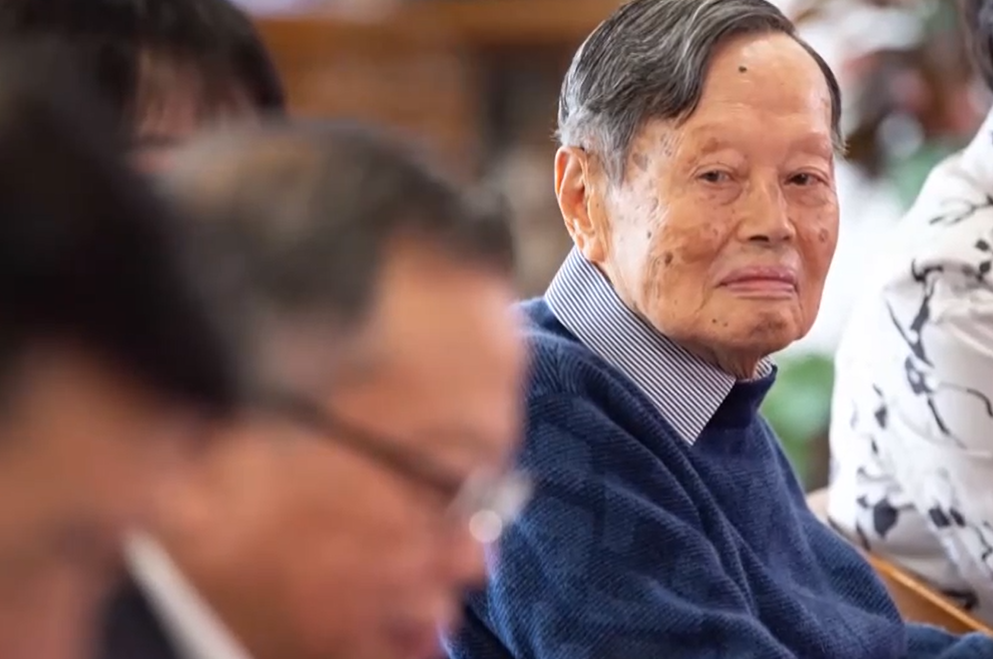
杨振宁教授千古!中国AI计算机产业因他而不同
量子位· 2025-10-18 04:45
Core Viewpoint - The article commemorates the life and contributions of Yang Zhenning, a prominent Chinese theoretical physicist, who passed away at the age of 103, highlighting his significant impact on physics and education in China [1][3]. Contributions to Physics - Yang Zhenning was best known for his collaboration with Li Zhengdao in 1956, proposing the theory of parity violation in weak interactions, which fundamentally changed the understanding of basic symmetries in nature and is considered a milestone in 20th-century physics [3][4]. - He co-developed the Yang-Mills theory in 1954 with Robert Mills, which has had a profound influence on both fundamental physics and modern differential geometry, serving as the foundation for the Standard Model of particle physics [6]. - In 1967, he discovered the Yang-Baxter equation, which became a core tool for solving many integrable systems [6]. Educational Impact - Yang Zhenning was a significant educator, returning to China multiple times since the 1970s to introduce cutting-edge physical theories, such as gauge field theory and statistical mechanics [7]. - He played a crucial role in the establishment of the "Young Scholars Program" at the University of Science and Technology of China in 1978, which laid the groundwork for computer education in China [7]. - His influence extended to other scholars, such as Yao Qizhi, who returned to China to teach at Tsinghua University, inspired by Yang's encouragement [8]. Contributions to Chinese Higher Education - Yang Zhenning was instrumental in founding the Tsinghua University Institute for Advanced Study in 1997, attracting top international scholars to China [8]. - He actively supported the funding of the "Committee for Educational Exchange with China," which helped nearly a hundred Chinese scholars pursue studies in the United States, contributing to China's technological development [12]. - His efforts significantly impacted the reform and development of higher education in China, particularly in the fields of physics and basic sciences [12].
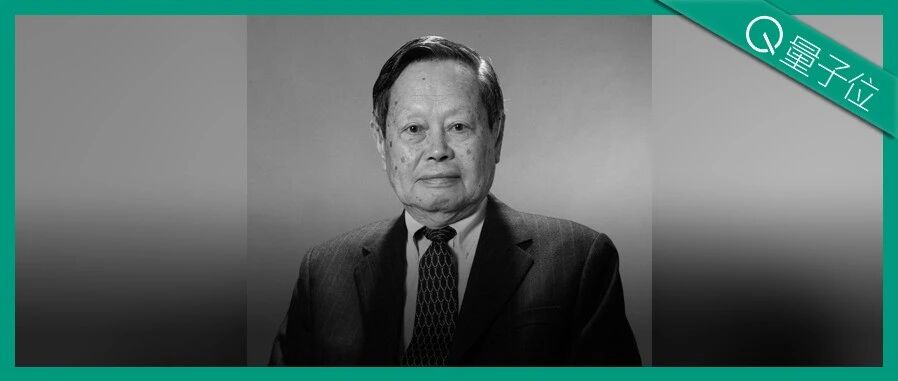
著名物理学家杨振宁先生逝世,享年103岁
机器之心· 2025-10-18 04:41
Core Viewpoint - The article commemorates the life and contributions of renowned physicist Yang Chen-Ning, who passed away at the age of 103, highlighting his significant impact on modern physics and his legacy in scientific research [2][19]. Group 1: Personal Background - Yang Chen-Ning was born in 1922 in Hefei, Anhui, graduated from Southwest Associated University in 1942, and obtained his master's degree in 1944 before pursuing further studies in the United States [8]. - He earned his Ph.D. from the University of Chicago in 1948 and conducted postdoctoral research at the Institute for Advanced Study in Princeton, collaborating with fellow physicist Li Zhengdao for over a decade [8]. Group 2: Major Contributions - Yang's most notable achievement is the discovery of parity non-conservation in weak interactions, which he and Li Zhengdao proposed in 1956, challenging the long-held belief in parity conservation in physics [10][11]. - The Yang-Mills theory, developed in 1954 with Robert Mills, extended the concept of gauge symmetry beyond electromagnetism, forming the mathematical foundation for the Standard Model of particle physics [13]. - He made foundational contributions to statistical mechanics and integrable systems, notably through the Yang-Baxter equation, which has widespread applications in various fields, including quantum field theory and condensed matter physics [14][16]. Group 3: Legacy and Impact - Yang returned to China in his later years, settling at Tsinghua University, where he continued to mentor future generations of scientists [17]. - In 2021, he donated over 2,000 valuable items, including books and manuscripts, to Tsinghua University, leaving a lasting intellectual legacy [17]. - His passing marks the end of an era in physics, but his scientific ideas will continue to guide future explorations of the universe [19].
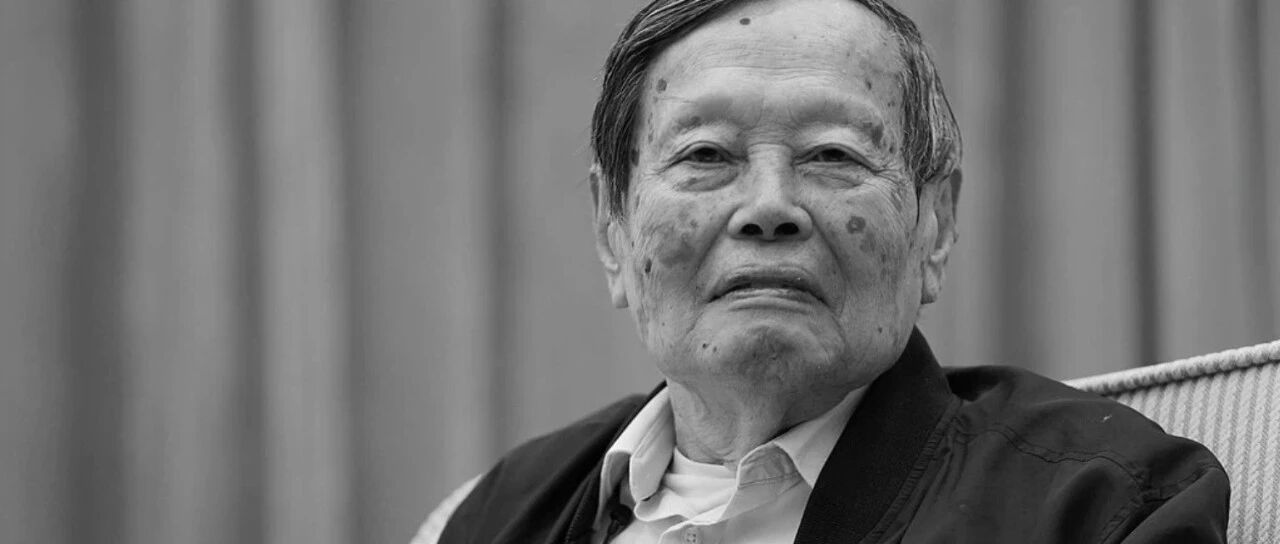
沉痛悼念!杨振宁逝世
中国基金报· 2025-10-18 04:29
Core Viewpoint - The article commemorates the life and contributions of Yang Zhenning, a renowned physicist and Nobel laureate, highlighting his significant impact on modern physics and his dedication to education and scientific development in China [4][5]. Group 1: Personal Background - Yang Zhenning was born in 1922 in Hefei, Anhui, and moved to Tsinghua University in 1929. He studied at Southwest Associated University and later earned a master's degree from Tsinghua University [3]. - He pursued further studies in the United States, obtaining a Ph.D. from the University of Chicago in 1948 and subsequently working at Princeton University [3]. Group 2: Scientific Contributions - Yang Zhenning is recognized as one of the greatest physicists of the 20th century, co-developing the Yang-Mills theory, which laid the groundwork for the standard model of particle physics [4]. - He was awarded the Nobel Prize in Physics in 1957 for his revolutionary ideas on parity violation in weak interactions, becoming one of the first Chinese Nobel laureates [4]. - His work on the Yang-Baxter equation opened new directions in statistical physics and quantum groups, influencing multiple fields within physics [4]. Group 3: Contributions to Education and Science in China - Yang Zhenning played a pivotal role in fostering academic exchanges between China and the United States, initiating a wave of visits by Chinese scholars to the U.S. [5]. - He established the "Committee for Educational Exchange with China," funding nearly a hundred Chinese scholars to study in the U.S., significantly contributing to China's scientific development [5]. - Upon returning to Tsinghua University, he dedicated himself to the development of the Institute for Advanced Study, impacting the reform and growth of higher education in China [5].