统计力学

Search documents
杨振宁:抱薪科学 沐光而行
2 1 Shi Ji Jing Ji Bao Dao· 2025-10-19 07:55
Core Insights - Yang Zhenning holds a unique position in both Chinese and global scientific communities, recognized for his significant contributions to modern physics and his role in enhancing Chinese self-confidence in science [1][3][16] Group 1: Early Life and Education - Yang Zhenning was born on October 1, 1922, in Hefei and spent his early years in a scholarly environment, influenced by his father, who was the first Chinese to earn a Ph.D. in mathematics from the University of Chicago [1][4] - His education was interrupted by the Second Sino-Japanese War, leading him to attend the National Southwestern Associated University, where he developed a strong foundation in physics [6][7] Group 2: Scientific Contributions - Yang Zhenning's major scientific achievements include the parity non-conservation theory, Yang-Mills theory, and the Yang-Baxter equation, which have established him as a master in theoretical physics [8][12][16] - The parity non-conservation theory, developed with Li Zhengdao, challenged the long-held belief in parity conservation in weak interactions, leading to Yang's Nobel Prize in Physics in 1957 [10][11] - The Yang-Mills theory unified electromagnetic, weak, and strong forces, providing a mathematical foundation for the Standard Model of particle physics [12][16] Group 3: Cultural Impact and Legacy - Yang Zhenning emphasized the aesthetic aspects of physics, believing that beauty in scientific theories is essential for understanding and discovery [13][14] - His life and work serve as a bridge between Eastern and Western cultures, reflecting a blend of traditional Chinese values and modern scientific inquiry [14][15] - After returning to China, Yang Zhenning dedicated himself to advancing Chinese science and education, establishing various academic programs and institutions [15][16]
杨振宁:我一生最重要的贡献,是帮助改变了中国人自己觉得不如人的心理作用
21世纪经济报道· 2025-10-19 07:35
Core Viewpoint - Yang Zhenning is a prominent figure in both Chinese and global scientific communities, known for his significant contributions to physics and his role in fostering academic exchanges between China and the West [1][3][4]. Early Life and Education - Yang Zhenning was born in Hefei and spent his early years in a scholarly environment, influenced by his father, who was the first Chinese to earn a Ph.D. in mathematics from the University of Chicago [1][6]. - He attended the National Southwestern Associated University during World War II, where he shifted his focus from chemistry to physics, laying the groundwork for his future contributions [7][9]. Scientific Contributions - Yang Zhenning's major scientific achievements include the parity non-conservation theory, Yang-Mills theory, and the Yang-Baxter equation, which are considered foundational in modern physics [10][14][15]. - The parity non-conservation theory, developed with Li Zhengdao, challenged the long-held belief in parity conservation in weak interactions, leading to Yang's Nobel Prize in Physics in 1957 [11][13]. - The Yang-Mills theory unified the electromagnetic, weak, and strong forces, providing a mathematical framework for the Standard Model of particle physics [14]. - The Yang-Baxter equation opened new avenues in mathematical physics, influencing numerous fields and recognized by multiple Fields Medalists [15]. Aesthetic and Cultural Integration - Yang Zhenning emphasized the beauty in physics, equating the pursuit of scientific truth with artistic appreciation, and categorized beauty into three levels: phenomenological, descriptive, and structural [17][18]. - His work reflects a blend of Eastern and Western cultural influences, showcasing a deep respect for traditional Chinese values while engaging with modern scientific paradigms [18][20]. Later Life and Contributions to Education - After returning to China, Yang Zhenning dedicated himself to advancing Chinese science and education, taking on roles at Tsinghua University and other institutions to foster research and attract talent [20][21]. - He established platforms for collaboration between Chinese scholars and international academia, significantly impacting the development of basic sciences in China [20][21].

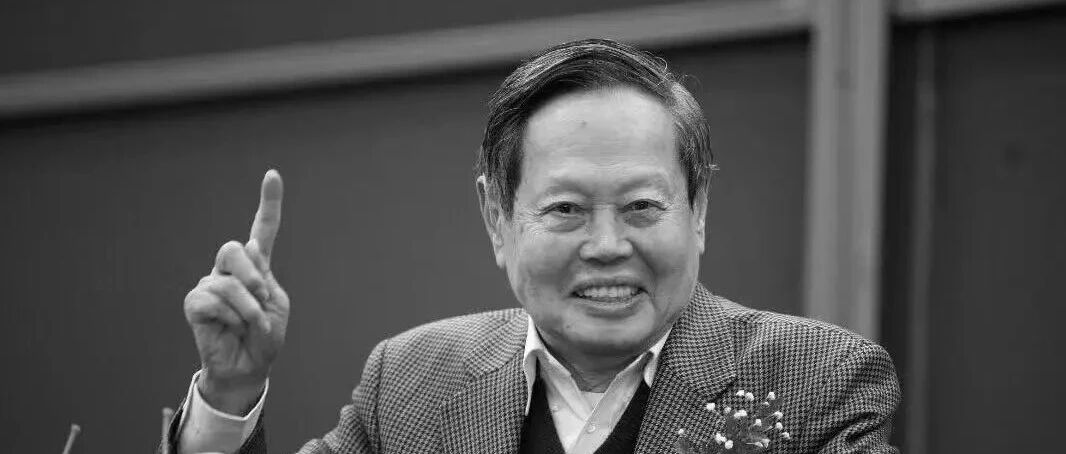
杨振宁的科技遗产
Hu Xiu· 2025-10-18 10:09
Core Viewpoint - The article highlights the significant contributions of Yang Zhenning to Chinese science and technology, emphasizing his role in bridging Eastern and Western scientific communities and inspiring generations of Chinese scientists [1][3][12]. Contributions to Science and Education - Yang Zhenning returned to China in 1971, marking a pivotal moment in Sino-American scientific relations, and dedicated his efforts to fostering friendship and collaboration between Chinese and American scientists [5][6]. - He identified the stagnation in China's scientific community and took action to improve the situation by promoting international exchanges and supporting young scholars to study abroad [7][8]. - Yang personally recommended over 1,200 young scholars for training abroad, many of whom became key figures in China's technological advancement [9]. Impact on Computer Science Education - Yang Zhenning played a crucial role in the establishment of the "Young Class" at the University of Science and Technology of China, which laid the groundwork for computer science education in the country [10]. - He donated significant funds to Tsinghua University, including $1 million to support the establishment of the Advanced Research Center, and chose to forgo his salary to benefit the institution [10]. - His influence extended to the creation of the "Yao Class" at Tsinghua University, which has been recognized as a leading incubator for AI talent in China [11]. Legacy and Influence - Yang Zhenning's achievements inspired a sense of pride among Chinese scientists, helping to alleviate feelings of inferiority and encouraging competition with Western counterparts [14][15]. - He was known for his candid opinions on scientific funding priorities, advocating for investments in areas with higher returns, such as chip technology and life sciences [16]. - His dedication to teaching and mentoring students continued well into his later years, embodying the spirit of a true scholar and leader in the scientific community [18].
痛悼!今天,送别杨振宁先生
Huan Qiu Wang Zi Xun· 2025-10-18 05:38
Core Viewpoint - The article commemorates the life and achievements of Yang Zhenning, a renowned physicist and Nobel laureate, who passed away at the age of 103, highlighting his contributions to physics and his impact on Chinese science and education [1][28]. Group 1: Early Life and Education - Yang Zhenning was born in 1922 in Hefei, Anhui, and developed an early interest in mathematics and physics, inspired by his father's academic background and a book he read in middle school [1][3]. - He attended Southwest Associated University during the Second Sino-Japanese War, where he excelled academically, achieving top scores in various subjects [3][4]. Group 2: Major Scientific Contributions - Yang Zhenning, along with Li Zhengdao, proposed the concept of parity violation in weak interactions in 1956, which was later experimentally confirmed, earning them the Nobel Prize in Physics in 1957 [5][8]. - He co-developed the Yang-Mills theory in 1954, which laid the groundwork for the standard model of particle physics, and discovered the Yang-Baxter equation in 1967, influencing statistical physics and quantum theory [8][25]. Group 3: Contributions to China - After returning to China in 1971, Yang Zhenning played a significant role in promoting scientific research and policy, advising on the importance of basic science and contributing to major scientific projects [10][11]. - He was instrumental in establishing the Tsinghua University Institute for Advanced Study and dedicated efforts to fundraise and support academic development at the university [14][27]. Group 4: Legacy and Recognition - Yang Zhenning's contributions to various fields of physics have had a profound impact, leading to the naming of an asteroid after him, and he is celebrated as one of the greatest physicists of the 20th century [25][27]. - His life is characterized by a commitment to education and science, bridging Eastern and Western cultures, and he is remembered for his humility and dedication to his homeland [27][28].
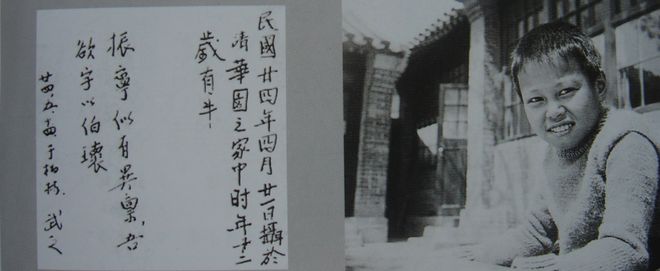
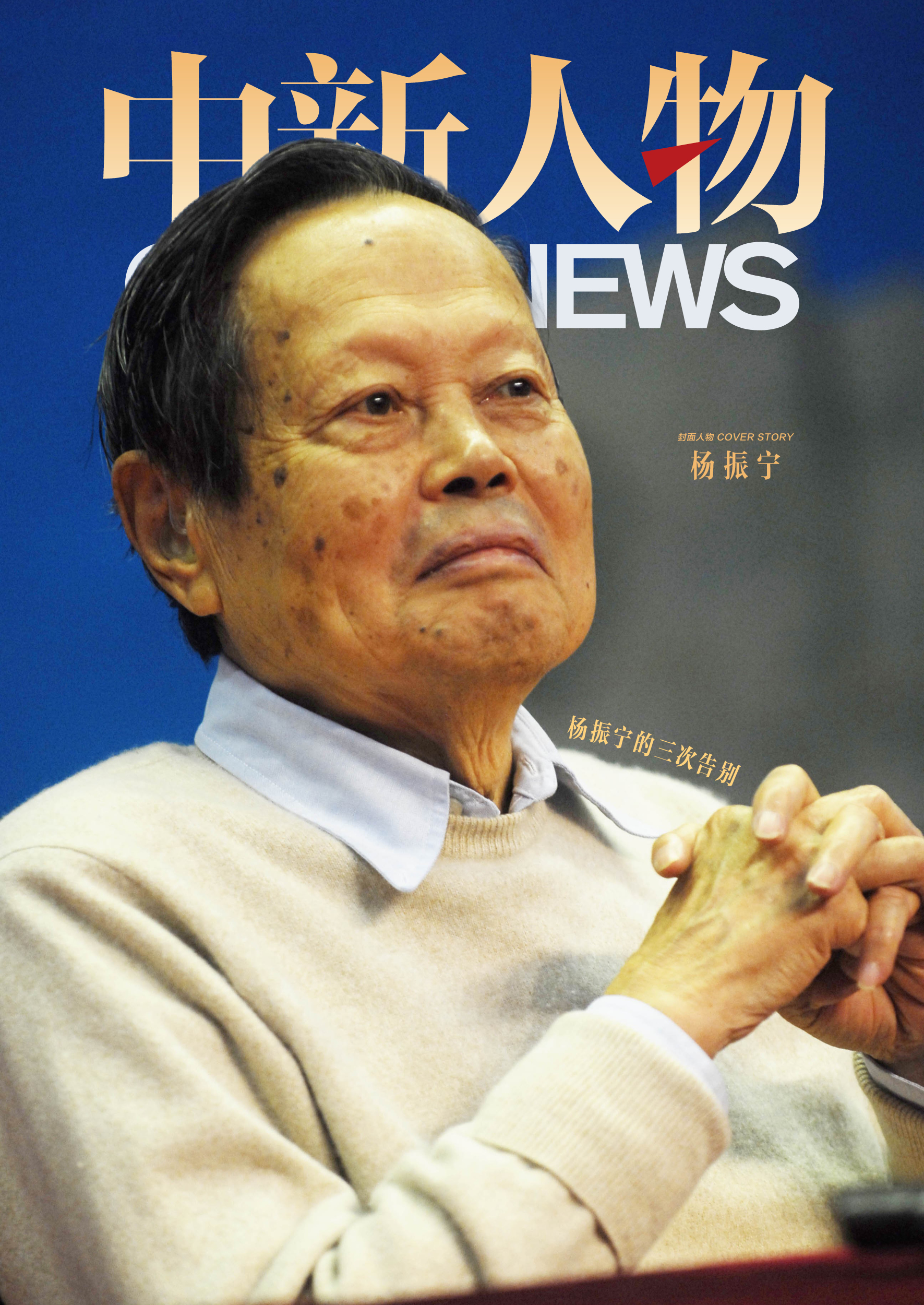
中新人物 | 杨振宁的三次告别
Zhong Guo Xin Wen Wang· 2025-10-18 05:09
Core Points - The article reflects on the life and legacy of Yang Zhenning, a prominent Chinese physicist, who recently passed away at the age of 103, marking the end of an era in modern science [1][2][3] Group 1: Personal Journey - Yang Zhenning's life can be seen as a circle, beginning in 1929 when he moved to Tsinghua University with his father, a significant moment that shaped his academic journey [8][10] - His early education was marked by a strong academic environment at Tsinghua and later at the National Southwestern Associated University during the tumultuous years of the Second Sino-Japanese War [9][12] - Yang's decision to study physics instead of chemistry at the university was pivotal, leading to his eventual contributions to the field [10][12] Group 2: Academic Achievements - Yang Zhenning's groundbreaking work in 1956 with Li Zhengdao on the theory of parity violation earned them the Nobel Prize in Physics in 1957, making him one of the youngest laureates at that time [15][17] - His contributions significantly altered the understanding of natural laws and established him as a leading figure in 20th-century physics [15][18] Group 3: Return to China - After decades in the United States, Yang returned to China in 2003, where he aimed to contribute to education and scientific research, reflecting a deep connection to his homeland [25][28] - He actively participated in the establishment of the Tsinghua University Institute for Advanced Study, helping to attract top-tier scientists to China [21][22] Group 4: Legacy and Impact - Yang Zhenning's commitment to nurturing young talent and advancing scientific research in China was evident in his teaching and mentorship at Tsinghua University [28][31] - His life story serves as an inspiration, illustrating the intersection of personal ambition and national pride, culminating in a legacy that bridges generations [31][32]
突破125年世纪难题!北大校友联手科大少年班才子破解希尔伯特第六问题
量子位· 2025-06-14 08:33
Core Viewpoint - The article discusses a significant breakthrough in addressing Hilbert's sixth problem, which aims to establish a rigorous mathematical foundation for physics, particularly the transition from microscopic particle dynamics to macroscopic fluid behavior [2][13][35]. Summary by Sections Historical Context - Hilbert's sixth problem, proposed in 1900, questions whether physics can be constructed on a strict mathematical basis similar to Euclidean geometry [1][3]. - The challenge involves linking reversible microscopic laws of motion (Newtonian mechanics) with irreversible macroscopic behaviors (described by the Boltzmann equation) [8][9]. Breakthrough Achieved - Mathematicians Deng Yu, Ma Xiao, and Zaher Hani have made a significant advancement by deriving macroscopic gas behavior from microscopic particle models, bridging the gap between Newtonian mechanics and the Boltzmann equation [10][11][13]. - They provided a rigorous proof of the complete transition from Newtonian mechanics to the Boltzmann equation, addressing the "arrow of time" paradox left by Boltzmann [13][35]. Methodology - The solution involves two main steps: first, deriving the Boltzmann equation from Newton's laws through a "dynamical limit," and second, deriving fluid dynamics equations from the Boltzmann equation through a "fluid dynamical limit" [15][23]. - The team initially focused on wave systems before transitioning to particle systems, recognizing the complexity of particle collisions compared to wave interference [18][21]. Detailed Steps - In the first step, they demonstrated that as the number of hard sphere particles approaches infinity and their diameter approaches zero, the single-particle density can be described by the Boltzmann equation [17]. - In the second step, they showed that as the collision rate in the Boltzmann equation approaches infinity, its solution converges to the local Maxwell distribution, corresponding to macroscopic fluid parameters [24][30]. Implications - This work not only marks a major advancement in solving Hilbert's sixth problem but also provides a rigorous mathematical solution to the long-standing paradox of time irreversibility in physics [35][37]. - The findings establish a complete logical chain from Newtonian mechanics to statistical mechanics and fluid mechanics, enhancing the understanding of physical laws across different scales [31][34].