
极端高温

Search documents
智利森林火灾致18人死亡 近8500公顷土地被毁
Zhong Guo Xin Wen Wang· 2026-01-19 04:03
Core Points - The forest fires in Chile have resulted in 18 fatalities, with the number potentially rising as damage assessments continue [1] - The fires have destroyed nearly 8,500 hectares of land, prompting evacuation orders for multiple communities [1] - The Chilean government has declared a state of emergency in the Biobío and Ñuble regions, mobilizing all disaster response resources [1] Group 1 - The fires are currently active in 24 locations across the country, with the largest incidents occurring in the Biobío and Ñuble regions [1] - Approximately 20,000 people have been evacuated due to the fires, and at least 250 homes have been destroyed [1] - Adverse weather conditions, including strong winds and high temperatures, have exacerbated the fire situation, making it difficult for firefighters to control the blazes [2] Group 2 - Extreme heat warnings have been issued for much of Chile, with temperatures expected to reach around 38 degrees Celsius in the capital Santiago and the Biobío region [2] - Since the beginning of the year, Chile and Argentina have faced extreme heat and heatwaves, with significant wildfires reported in Patagonia, Argentina [2]
【环球财经】联合国机构报告警示极端高温对农业构成多重风险
Xin Hua She· 2025-11-21 11:16
Core Insights - The report emphasizes the multiple risks posed by extreme heat to agriculture and food systems, highlighting the urgent need for science-based solutions to enhance resilience and sustainability in agriculture [1][2] Group 1: Impact of Extreme Heat - Extreme heat damages agriculture and livestock, depletes fishery resources, and threatens the livelihoods of approximately 1.23 billion people globally [1] - Climate change significantly increases the risk of death for agricultural workers due to high-temperature operations, with an estimated loss of 470 billion working hours globally in 2021 due to extreme heat [1] Group 2: Predictions and Trends - Predictions using various climate scenarios indicate that the trend of damage to food systems from extreme heat will continue to worsen, with a projected decline in yields of major crops like corn and wheat by 4% to 10% for every 1°C increase in global average temperature [1] Group 3: Case Studies and Recommendations - The report examines case studies from countries such as Pakistan, Morocco, Chile, and Portugal regarding the chain reactions caused by extreme heat and proposes risk governance measures, including sustainable irrigation practices and climate science-guided actions to mitigate climate change [2]
联合国机构报告警示极端高温对农业构成多重风险
Xin Hua Wang· 2025-11-21 10:58
Core Insights - The report emphasizes the multiple risks posed by extreme heat to agriculture and food systems, highlighting the urgent need for science-based solutions to enhance resilience and sustainability [1] Group 1: Impact on Agriculture - Extreme heat damages agriculture and threatens the livelihoods of approximately 1.23 billion people globally [1] - The risk of death for agricultural workers due to high-temperature operations has significantly increased, with an estimated loss of 470 billion work hours globally in 2021 due to extreme heat [1] - Predictions indicate that for every 1 degree Celsius increase in global average temperature, the yields of major crops like corn and wheat are expected to decline by 4% to 10% [1] Group 2: Climate Change Effects - The agricultural sector is one of the most severely affected by climate change, with drought and extreme heat overwhelming traditional risk management measures [1] - Climate change is altering crop yields, livestock productivity, water supply, and ecosystem functions, all of which directly impact food security, livelihoods, nutrition, and biodiversity [1] Group 3: Case Studies and Recommendations - The report examines case studies from countries such as Pakistan, Morocco, Chile, and Portugal regarding the chain reactions caused by extreme heat [2] - It proposes risk governance measures, including the implementation of sustainable irrigation practices and climate science-informed actions to mitigate climate change [2]
美西部极端高温风险预警覆盖人口超百万
Yang Shi Xin Wen Ke Hu Duan· 2025-08-24 23:26
Core Points - The article reports on extreme high-temperature weather conditions affecting the western United States, with a heat risk warning covering approximately 1.2 million people [2] - Weather forecasts indicate that temperatures in regions such as Washington, Oregon, Arizona, and Southern California are expected to reach "dangerous" levels over the weekend [2] - The National Weather Service forecasts the highest temperatures in the Tucson area of Arizona, with expected highs between 39 to 42 degrees Celsius [2]


美国西部热浪灼人 多州气温将达“危险”水平
Xin Hua She· 2025-08-24 12:30
Core Points - The article discusses the extreme heat wave affecting the western United States, particularly in states like Washington, Oregon, Nevada, Arizona, and Southern California, with temperatures reaching dangerous levels [1][2] - Approximately 1.2 million people are under extreme heat risk warnings, with the Tucson area in Arizona forecasted to experience temperatures between 39 to 42 degrees Celsius [1] - The city of Portland, Oregon, recorded a temperature of 38.9 degrees Celsius on August 22, potentially breaking its historical record for that date [1] Group 1 - The extreme heat wave has led to increased medical emergencies and incidents related to heat, with a notable rise in emergency room visits and 911 calls in Portland [2] - A participant in the annual "Mount Hood to Coast" relay marathon collapsed after running 6.4 kilometers due to the extreme heat conditions [2] - Local health officials reported that the weekend typically sees low emergency room traffic, but on August 22, 16 patients were treated, including 6 marathon participants [2] Group 2 - The historical highest temperature recorded in Portland was 46 degrees Celsius in June 2021, which resulted in numerous fatalities, particularly among isolated individuals aged 60 and above [2]
全球多地遭遇极端高温天气
Ren Min Ri Bao· 2025-08-19 22:46
Core Insights - The World Meteorological Organization (WMO) reported that July 2023 was the third hottest July on record globally, following 2023 and 2024 [1] - The average global sea surface temperature in July was also the third highest for the same period, with Arctic sea ice coverage nearing historical lows [1] - The extreme heat and drought have led to significant challenges for public health, infrastructure, and ecosystems, particularly in Europe [1][2] Summary by Sections Climate Impact - Europe is facing severe climate challenges this summer, with extreme heatwaves and widespread wildfires putting pressure on public health systems, infrastructure, and ecosystems [1] - In France, wildfires in the Aude region have burned approximately 16,000 hectares, marking one of the most significant wildfires since 1949 [1] - Spain is also experiencing frequent wildfires, prompting military and emergency services to assist in firefighting efforts [1][2] North America and Asia - North America is grappling with wildfires and high temperatures, with hundreds of fires in Canada affecting air quality across multiple provinces and into the northern United States [2] - In Japan, extreme temperatures reached 41.8 degrees Celsius, breaking national records, while South Korea issued heat warnings [2] - In parts of the Middle East and South Asia, temperatures exceeded 42 degrees Celsius, with some areas surpassing 50 degrees Celsius, leading to power outages and water supply issues [2] Health and Safety Concerns - The WMO highlighted the potential for extreme heat to cause secondary disasters such as landslides and infrastructure damage, posing long-term risks to public safety [3] - Millions of people are affected by health threats, power interruptions, and deteriorating air quality due to extreme heat, with urban and vulnerable communities facing the greatest challenges [3] - The WMO calls for enhanced early warning systems and public health response plans to address the increasing climate risks [3][4] Policy Recommendations - The WMO and WHO emphasize the need for international policy support and action to treat extreme heat as a public health emergency [4] - Implementing heat health warning systems in 57 countries could potentially save nearly 100,000 lives annually [3]
西、葡野火肆虐 多人遇难
Bei Jing Shang Bao· 2025-08-18 16:19
Group 1 - Southern Europe is experiencing the most severe summer wildfires in 20 years, with Portugal reporting a total burned area exceeding 139,000 hectares, which is 17 times higher than the same period last year [1][2] - From July 14 to 15, the burned area in Portugal increased by nearly 64,200 hectares, accounting for 46% of the total burned area this year, with 6,229 wildfires reported, a 79% increase year-on-year [2] - In Spain, wildfires have resulted in 7 fatalities, with the western region being the most severely affected, and over 150,000 hectares of land burned this wildfire season [2][3] Group 2 - Portugal has entered a national state of alert due to extreme heat since July 3, deploying thousands of firefighters and requesting assistance from the EU Civil Protection Mechanism [2] - As of July 16, there are 44 active fire incidents in Portugal, with 4,330 firefighters, 1,400 vehicles, and 25 aircraft involved in firefighting efforts [2] - The wildfires have led to the closure of railways from Madrid to the northwest Galicia region and the shutdown of 10 major roads in Spain [3][4]
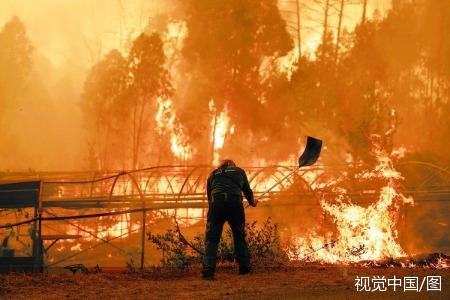
高温持续 欧洲多国山火依然活跃
Yang Shi Xin Wen Ke Hu Duan· 2025-08-15 01:57
Group 1 - Wildfires in central Portugal are causing severe damage to local forests, olive groves, and vineyards, impacting regional ecology and agricultural production [2] - In northwestern Spain, wildfires have led to the emergency closure of parts of the high-speed rail line between Madrid and Galicia, with over 10 active fire points reported [4] - Greece is facing multiple wildfires, with thousands of firefighters engaged in firefighting efforts, and several villages evacuated due to the ongoing crisis [6] Group 2 - The combination of high temperatures, strong winds, and low humidity is complicating firefighting efforts in Greece, making it a challenging battle for local authorities [6] - Thousands of hectares have been burned in Spain, with some fire situations classified as "very serious," leading to the evacuation of thousands of residents [4] - Emergency response mechanisms have been activated in various regions affected by wildfires across Portugal, Spain, and Greece [2][4][6]

世界气象组织等多机构对全球极端高温发出警告
Zhong Guo Xin Wen Wang· 2025-08-09 07:12
Core Insights - The World Meteorological Organization and other agencies have issued warnings about extreme heat, urging countries to enhance early warning systems, develop public health response plans, and improve inter-agency collaboration to address escalating climate risks [1][2] Group 1: Extreme Heat Events - In 2025, global temperatures are expected to break records, with July being the third hottest month on record [1] - Turkey recorded a maximum temperature of 50.5 degrees Celsius, while Sweden and Finland experienced prolonged temperatures above 30 degrees Celsius [1] - Japan recorded a new high of 41.8 degrees Celsius in August, with parts of Pakistan exceeding 42 degrees Celsius and some areas surpassing 45 degrees Celsius [1] Group 2: Impact of Extreme Heat - The ongoing high temperatures have led to severe wildfires, with Canada experiencing its worst wildfire season on record, burning over 6.6 million hectares as of August 3 [1] - Smoke from hundreds of fire points has deteriorated air quality in multiple provinces in Canada and northern U.S. states, even reaching Europe [1] - Countries like Turkey, Greece, and Cyprus have also faced wildfires resulting in casualties and mass evacuations [1] Group 3: Health Risks and Projections - Extreme heat is referred to as a "silent killer," posing long-term threats such as health risks, power outages, and worsening air quality [2] - An estimated 489,000 deaths annually from 2000 to 2019 were linked to heat-related causes, with 45% occurring in Asia and 36% in Europe [2] - Implementing heat health warning systems in 57 countries could potentially save nearly 100,000 lives each year [2]
世界气象组织:极端高温影响全球大量人口
Xin Hua Wang· 2025-08-08 13:24
Group 1 - The World Meteorological Organization (WMO) highlights the impact of extreme heat on a large global population, exacerbated by wildfires and air pollution, emphasizing the need for improved early warning systems and health action plans related to heat [1][2] - Recent data indicates that July 2025 was the third hottest July on record globally, with average sea surface temperatures also being the third highest recorded [1] - In Europe, countries like Sweden and Finland experienced prolonged periods of temperatures above 30 degrees Celsius, while Southeast Europe faced heatwaves and wildfires [1] Group 2 - Extreme heat has contributed to devastating wildfires in Cyprus, Greece, and Turkey, leading to evacuations and fatalities [2] - Hundreds of wildfires in Canada from late July to early August have resulted in deteriorating air quality across multiple provinces and northern U.S. states [2] - The WMO is committed to enhancing early warning systems related to heat and is collaborating with various partners to advance health action plans addressing heat-related issues [2]