
极端高温天气

Search documents
澳大利亚东南部遇热浪 澳网调整赛事
Jing Ji Guan Cha Wang· 2026-01-27 14:56
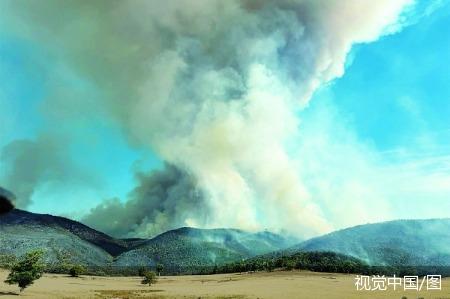
Group 1 - The extreme heat wave in southeastern Australia has led to record high temperatures, with Melbourne experiencing temperatures exceeding 45 degrees Celsius and the Marli region reaching 48.9 degrees Celsius, setting a new record for Victoria [1] - The Australian Open, taking place in Melbourne, has activated its extreme heat response plan, adjusting outdoor match schedules and potentially closing venue roofs due to the high temperatures [1] - There are currently six major fire hotspots in Victoria, with three being out of control, and a significant fire in the Otways region has burned approximately 10,000 hectares, destroying at least three buildings [1] Group 2 - The ongoing extreme heat has exacerbated disaster management pressures, especially in communities still recovering from previous large-scale bushfires [2] - Australia experiences frequent summer bushfires, with notable incidents such as the "Black Saturday" fires in February 2009, which resulted in 173 fatalities, and the severe bushfire season from September 2019 to March 2020, which burned 125,000 square kilometers and destroyed over 3,000 homes, leading to at least 33 deaths [2]
澳大利亚南部热浪引发林火
Bei Jing Shang Bao· 2026-01-08 15:45
Core Insights - Australia is currently experiencing a severe heatwave, with temperatures exceeding 40 degrees Celsius in several cities, leading to increased fire risks and power supply strain [1][2]. Group 1: Weather Conditions - The Australian Bureau of Meteorology has issued severe or extreme heat warnings for New South Wales, Victoria, South Australia, and Tasmania, indicating a high risk of fire in Victoria and South Australia [2]. - A very hot air mass from Western Australia is causing temperatures to rise, with some areas expected to exceed 45 degrees Celsius [2]. - In Victoria, temperatures reached 44 degrees Celsius, with Melbourne hitting 41 degrees Celsius [2]. Group 2: Fire Risks and Power Supply - South Australia and Victoria have issued extreme fire danger weather warnings for the 9th, with northern regions of South Australia experiencing sustained high temperatures [2]. - In Adelaide, temperatures reached 43 degrees Celsius, leading to increased power grid load and over 2,000 households experiencing power outages [3]. - The current weather conditions are described as the worst in nearly six years, reminiscent of the severe bushfire season from September 2019 to March 2020, which resulted in significant destruction [3].

【微特稿·社会与生活】高温致韩国蔬果价格暴涨 一个西瓜合173元人民币
Sou Hu Cai Jing· 2025-08-04 05:19
Group 1: Price Increases in Agricultural Products - The prices of agricultural products in South Korea, including watermelon, tomatoes, peaches, and cabbage, have significantly increased due to extreme heat conditions [1] - The average retail price of watermelon has reached 33,337 KRW (approximately 173 RMB), marking a 33.7% increase compared to the previous month and a 17.6% increase year-on-year [1] - Tomato prices have surged to an average of 6,716 KRW (35 RMB) per kilogram, reflecting a nearly 70% increase from the previous month and over 42% from the same period last year [1] - The average price for a pack of 10 peaches is 21,133 KRW (109 RMB), showing substantial increases both month-on-month and year-on-year [1] - Cabbage prices have surpassed 6,000 KRW (31 RMB) per head, reaching 6,114 KRW (32 RMB), which is a 68% increase from the previous month and an 11.2% increase year-on-year [1] Group 2: Impact of Weather Conditions - South Korea is experiencing one of the most severe heatwaves on record, with the Korea Meteorological Administration reporting 15 days in July where temperatures reached 33 degrees Celsius or higher, which is more than four times the historical average of 3.4 days since 1973 [2] - The country recorded 23 "tropical nights" in July, where nighttime temperatures remained above 25 degrees Celsius, marking the highest number since records began in 1973 [2] Group 3: Government Response - The South Korean government has announced plans to take measures to stabilize the market supply of key agricultural products in response to the rising prices [1]
韩国今夏已有16人死于高温相关疾病
news flash· 2025-08-01 02:17
Core Insights - The South Korean Disease Control and Prevention Agency reported 16 deaths due to heat-related illnesses over the past two months due to extreme high temperatures [1] - A heat-related illness monitoring and warning system was initiated on May 15, 2023, by the South Korean Disease Control and Prevention Agency [1] - As of July 30, 2023, a total of 2,900 patients have been reported in South Korea suffering from heat-related illnesses [1]
高温叠加大风 西班牙与葡萄牙山火肆虐
news flash· 2025-07-31 04:47
Core Viewpoint - The ongoing wildfires in Spain and Portugal are exacerbated by extreme heat and strong winds, making them difficult to control, with significant areas already burned and a large number of firefighters deployed to combat the blazes [1] Summary by Relevant Sections Wildfire Situation in Spain - In Spain, wildfires have been raging, particularly in Ávila province, where a fire that started on the 27th has burned approximately 3,000 hectares [1] - Another wildfire in Cáceres province has also burned around 2,500 hectares [1] - The local government describes the situation as "extremely complex," with over 500 personnel involved in firefighting efforts [1] Wildfire Situation in Portugal - Portugal is facing similar challenges, with around 3,000 firefighters deployed to combat wildfires in the northern and central regions [1] - Some fire situations in central Portugal have been brought under control, but a fire in the Peneda-Gerês National Park remains unresolved [1] - The Portuguese Institute of Ocean and Atmosphere reports that large areas of Portugal are under high to extreme fire risk levels [1] Climate Change Impact - Experts warn that climate change is intensifying the frequency and severity of droughts and wildfires, as evidenced by the current extreme heat affecting multiple Mediterranean and Balkan countries, including Greece, Italy, Bulgaria, and Croatia [1]
适老化避暑应该成为社会服务优先项
Bei Jing Qing Nian Bao· 2025-07-24 01:02
Group 1 - The article highlights the increasing presence of elderly individuals in public spaces to escape the heat, indicating a need for a comprehensive "age-friendly" cooling system from homes to cities [1] - It points out that elderly people are particularly vulnerable to heat-related illnesses due to decreased physiological regulation and chronic health conditions, exacerbated by social isolation [1] - The article notes that while some commercial spaces provide air conditioning, ageism persists, and community services often overlook heat prevention in their regular offerings [1] Group 2 - To address the challenges faced by the elderly during high temperatures, a foundational service network is proposed, including the establishment of "cooling stations" equipped with basic medical supplies [2] - The article suggests that local units should maintain dynamic records of elderly individuals living alone and that healthcare providers should implement emergency plans for heatwaves [2] - It emphasizes the need for public spaces to adopt age-friendly cooling standards and encourages social initiatives to support elderly individuals during extreme heat [2]
报告显示全球半数人口去年多经历至少30天极端高温天气
news flash· 2025-06-04 03:02
Core Insights - The report indicates that approximately half of the global population experienced at least 30 additional days of extreme high-temperature weather in the past year due to climate change driven by human activities [1] Summary by Categories Climate Change Impact - The report highlights that 67 extreme high-temperature events occurred globally between May 1, 2024, and May 1, 2025, as analyzed from meteorological data [1] - Many heat-related deaths remain unreported or misdiagnosed as heart disease or kidney failure, indicating a significant underestimation of the health impacts of extreme heat [1] Vulnerable Populations - Low-income communities and vulnerable groups, such as the elderly and those with chronic illnesses, are particularly susceptible to the effects of extreme heat [1]