
生物育种

Search documents
满怀豪情赴盛会 履职尽责献良策
Hai Nan Ri Bao· 2026-01-26 01:16
Group 1 - The representatives and committee members attending the provincial two sessions in Haikou are filled with enthusiasm and a sense of responsibility, bringing high-quality proposals and suggestions to the conference [2] - The focus of the discussions includes the development of the modern service industry as a key component of Hainan's free trade port, emphasizing the need for enhanced professional services to meet the demands of incoming foreign trade enterprises [3] - A total of 682 proposals have been received by the proposal group of the Political Consultative Conference, covering various aspects such as economic, political, cultural, social, and ecological development [3] Group 2 - The representatives are particularly interested in topics such as the promotion of traditional medicine, improvements in public welfare, and the development of high-efficiency tropical agriculture [2] - There is a call for the integration of legal, tax, and accounting services to provide comprehensive support for businesses in Hainan's free trade port [3] - The emphasis on cultural development aims to leverage Hainan's unique historical and cultural elements to enhance the competitiveness of the cultural and tourism industries [3]
新型储能纳入政府投资基金投向!国家首次作出系统规范
中关村储能产业技术联盟· 2026-01-13 12:15
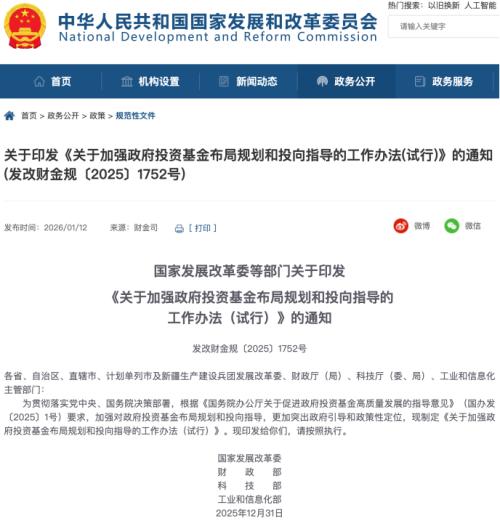
Core Viewpoint - The article discusses the implementation of a new regulatory framework for government investment funds in China, aimed at optimizing their layout and guiding investment directions to support national strategies and industrial upgrades [2][3][4]. Group 1: Government Investment Fund Overview - Government investment funds are established by various levels of government to guide social capital in supporting industry development and innovation through market-oriented methods such as equity investment [2][12]. - The new framework includes a systematic approach to fund layout and investment direction, marking the first national-level regulation of government investment funds [2][4]. Group 2: Supported Investment Areas - The framework identifies key investment areas, including: - Emerging and future industries such as information technology, new energy, advanced manufacturing, and artificial intelligence [2][3]. - Upgrading traditional industries and supporting high-quality development in manufacturing [3][4]. - Promoting the digital economy through initiatives like "AI+" and the application of 5G technology [3][4]. Group 3: Policy Measures - The framework outlines 14 policy measures focusing on three main aspects: where to invest, how to invest, and who manages the funds [3][4]. - It emphasizes early, small, long-term investments in hard technology and aims to prevent homogeneous competition and crowding out of social capital [11][12]. Group 4: Evaluation Management - An evaluation management method has been established to assess the investment direction of government funds, focusing on compliance with national planning and industry directories [4][5]. - The evaluation system includes three main indicators: policy compliance (60% weight), optimization of productivity layout (30% weight), and policy execution capability (10% weight) [6][7]. Group 5: Specific Evaluation Indicators - The evaluation indicators cover aspects such as support for new productivity, technology innovation, green development, and the promotion of private investment [29][33]. - Specific metrics include the proportion of investments in encouraged industries, the effectiveness of fund management, and the impact on social welfare [29][33][40].


重磅利好!万亿级“国家队”投向明确了
Zhong Guo Jing Ji Wang· 2026-01-13 02:32
Core Viewpoint - The Chinese government has established a systematic framework for the development and direction of government investment funds, marking the first time such guidelines have been issued at the national level [1]. Group 1: Policy Framework - The "Work Method" outlines three main aspects: where to invest, how to invest, and who manages the funds, proposing 14 policy measures [3]. - The framework emphasizes supporting major strategies and key areas, particularly in sectors where market resources are insufficient, promoting deep integration of technological and industrial innovation, and focusing on nurturing emerging pillar industries [3]. Group 2: Investment Guidance - Funds must align with national major plans and encourage industries listed in the national industrial directory, while avoiding investments in restricted, eliminated, or prohibited sectors [3]. - Provincial development and reform departments are tasked with creating lists of key investment areas to optimize fund allocation [3]. Group 3: Evaluation Metrics - The "Management Method" establishes three primary indicators: 1. Policy compliance (60% weight), assessing the fund's role in supporting new productive forces, technological innovation, and green development [4]. 2. Optimization of productive layout (30% weight), evaluating alignment with national regional strategies and effective capacity utilization [5]. 3. Policy execution capability (10% weight), focusing on fund efficiency and the professional level of fund managers [5]. Group 4: Focus Areas - The investment focus includes emerging industries such as next-generation information technology, new energy, high-end equipment, and green technology, as well as future industries like the metaverse, brain-computer interfaces, and generative artificial intelligence [5].
科研成果从实验室走向产业一线
Xin Lang Cai Jing· 2026-01-07 22:24
Group 1 - The first "Artificial Intelligence +" innovation competition in Beijing involved 921 undergraduate students from 55 universities, focusing on real industry challenges [1] - The competition adopted a model where enterprises posed questions and students provided solutions, promoting a positive cycle of education and technology talent development [1][2] - The event highlighted the importance of interdisciplinary knowledge in solving industry-specific problems, as demonstrated by students' projects in medical imaging and smart cleaning robots [2] Group 2 - A new integrated circuit innovation research institute has been established in Beijing Economic and Technological Development Area, fostering collaboration between top universities and leading semiconductor companies [3] - The research institute employs a talent cultivation model that involves direct engagement of graduate students in the entire integrated circuit industry chain, guided by dual mentors from academia and industry [3] - Over 300 faculty and students have initiated 74 collaborative projects, achieving breakthroughs in key technologies such as new logic and memory chips [3][4] Group 3 - A virtuous cycle of education, talent, and innovation is forming, with the government promoting integrated innovation platforms in various fields including integrated circuits and artificial intelligence [4] - The collaboration between educational institutions and industry aims to cultivate multi-skilled professionals who understand technology, market dynamics, and management [4]
中农种源获中科创星A+轮投资:打造领先的猪设计育种技术平台
IPO早知道· 2026-01-06 01:19
Core Viewpoint - Zhongnong Zongyuan is a leading pig breeding technology platform in China, combining top-notch research capabilities with mature industrialization abilities, recently completing an A+ round of financing to further its technology development and commercialization [3][5]. Group 1: Company Overview - Zhongnong Zongyuan was established in October 2022 and is a national high-tech enterprise incubated by the Shenzhen Agricultural Genomics Research Institute of the Chinese Academy of Agricultural Sciences [3]. - The company has completed several rounds of financing amounting to hundreds of millions of RMB, with notable investors including Sequoia China Seed Fund and Lenovo Ventures [3]. - The company has established a collaborative network across multiple locations in Shenzhen, Tianjin, Hainan, and Wuhan, focusing on disruptive breeding technology and disease model creation [3]. Group 2: Technology and Product Development - Zhongnong Zongyuan has developed a diverse product pipeline, including standardized disease model pigs for new drug development and disease research [4]. - The company has achieved a full-chain technology closed loop from design breeding to production application, leveraging its leading somatic cell cloning technology and proprietary "Zongyuan Zhixin" liquid phase chip [5]. - The company is positioned favorably in the context of global regulatory policy optimization for gene-edited animals, with significant developments in the U.S. and EU regarding gene editing regulations [5]. Group 3: Strategic Importance and Market Position - The company aims to drive independent innovation in animal breeding technology and ensure genetic resource security, aligning with China's agricultural technology and seed industry revitalization strategies [6]. - Zhongnong Zongyuan's focus on precision editing for key traits such as disease resistance and meat quality is expected to provide a competitive edge in the breeding industry, particularly in the context of China's reliance on imported breeding stock [6]. - The company is set to expand its breeding bases and international market presence, with plans to establish subsidiaries in Hainan, Tianjin, and Wuhan, and a new subsidiary in Hunan [5][6]. Group 4: Investment and Future Growth - The recent financing round will primarily support the advancement of core product lines, expansion of breeding bases, and international market strategies [5]. - The company is anticipated to experience explosive growth as domestic and international regulatory policies for gene editing become clearer, enhancing its market share and technological barriers [7].

国务院国资委:加强农业关键核心技术攻关和科技成果高效转化应用 提升农业供给保障能力
智通财经网· 2026-01-05 10:49
Core Viewpoint - The State-owned Assets Supervision and Administration Commission (SASAC) emphasizes the importance of supporting agricultural development and rural revitalization, focusing on key areas such as biotechnology, agricultural machinery, and food security [1][2]. Group 1: Agricultural Development - The meeting highlighted the need for SASAC to enhance its role in agricultural development, particularly in biotechnology, agricultural machinery, pesticides, fertilizers, and increasing grain production [1][3]. - There is a strong emphasis on improving agricultural supply security, technological innovation capabilities, sustainable development, and the ability to utilize international resource markets [3]. Group 2: Rural Revitalization - SASAC aims to transition from temporary assistance to a normalized support phase for rural areas, ensuring that assistance effectively benefits local communities and prevents large-scale poverty [3]. - The commission plans to support the cultivation of county-level industries that benefit farmers and improve their participation in industrial development [3]. Group 3: Infrastructure and Governance - The meeting discussed the importance of enhancing rural infrastructure and living conditions, drawing on the "Ten Million Project" experience to improve rural governance and cultural standards [1][3]. - There is a focus on increasing the quality and effectiveness of rural talent training and development [1][3].
国资委:聚焦生物育种、农机装备、农药化肥、粮食增产等领域 加强农业关键核心技术攻关和科技成果高效转化应用
Jing Ji Guan Cha Wang· 2026-01-05 10:43
Core Viewpoint - The State-owned Assets Supervision and Administration Commission (SASAC) emphasizes the importance of enhancing agricultural capabilities and ensuring food security through technological advancements and infrastructure improvements [1] Group 1: Agricultural Development - The meeting focuses on better serving the construction of a strong agricultural nation by concentrating on key areas such as biotechnology, agricultural machinery, pesticides, fertilizers, and increasing grain production [1] - There is a call to strengthen the research and application of core agricultural technologies and efficiently convert scientific achievements into practical applications [1] Group 2: Food Security and Sustainability - The initiative aims to enhance the agricultural supply guarantee capacity, technological innovation capability, sustainable development ability, and international resource market utilization [1] - The goal is to maintain the bottom line of national food security through these enhancements [1] Group 3: Rural Development - The meeting also highlights the importance of promoting livable and workable beautiful rural areas by learning from the "Ten Million Project" experience [1] - There is a focus on improving rural infrastructure and living environments, enhancing rural governance, and building a civilized rural culture [1] - The initiative includes improving the quality and effectiveness of rural talent training and development [1]
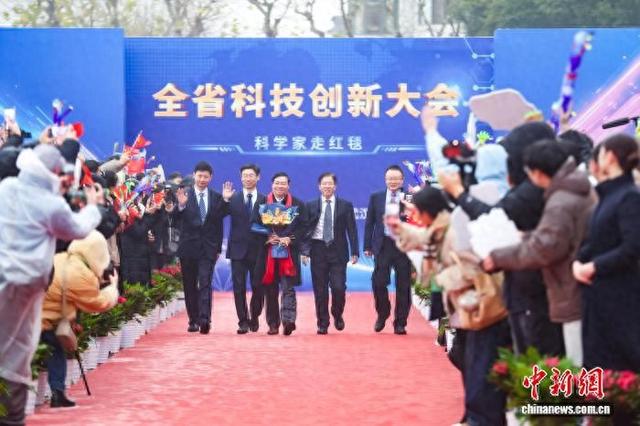
湖北“科学之星”齐聚 院士专家亮相红毯
Xin Lang Cai Jing· 2026-01-04 04:33
Group 1 - The 2026 Hubei Province Science and Technology Innovation Conference commenced in Wuhan, showcasing various experts and technology enterprise leaders sharing their innovation stories [1] - New academicians were highlighted, including Yinzhuoping from Huazhong University of Science and Technology, Tang Huiming from China University of Geosciences, and Liu Quansheng from Wuhan University, each contributing significantly to their respective fields [3] - Hubei has been recognized for its substantial innovation achievements, consistently ranking in the top five nationally for the number of national science and technology awards received [3] Group 2 - Hubei currently hosts 1 national laboratory, 35 national key laboratories, and has established 10 Hubei laboratories, with a total of 163 national-level innovation platforms and 525 new R&D institutions, all ranking among the top in the country [4] - The province anticipates the addition of over 5,000 high-tech enterprises and the registration of more than 45,000 technology-based small and medium-sized enterprises by 2025 [4]
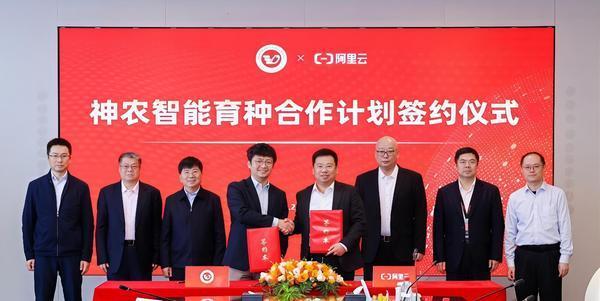
用AI设计种子,中科院遗传发育所接入千问打造育种“数字大脑”
Huan Qiu Wang Zi Xun· 2025-12-29 08:07
Core Insights - The collaboration between the Institute of Genetics and Developmental Biology and Alibaba Cloud aims to launch a Smart Breeding Program, which will create a standardized phenotypic data collection system and a digital brain for plant breeding [1][3]. Group 1: Collaboration Details - The Smart Breeding Program will utilize AI technology to automate the collection and analysis of vast biological omics data, transitioning from traditional experience-based breeding to intelligent design breeding [3][4]. - The partnership will leverage Alibaba Cloud's full-stack AI infrastructure to build a research support system encompassing hardware, cloud platforms, and the digital brain [3]. Group 2: Technological Implementation - A digital twin experimental platform for plant breeding will be co-developed to validate the decision-making effectiveness of the digital brain [3]. - The digital brain will serve as the core decision-making layer, utilizing extensive data from the Institute of Genetics and Developmental Biology to enhance breeding precision and efficiency [3]. Group 3: Strategic Importance - The collaboration is expected to significantly boost China's original innovation capabilities in biological breeding, providing robust technological support for national food security [4]. - The Qianwen platform has become a universal technical base for research, serving over 300 research institutions and universities, indicating its widespread acceptance and utility in the scientific community [4].
合肥大四牌楼商圈将推进能级跃升
Xin Lang Cai Jing· 2025-12-28 17:20
Group 1 - The core viewpoint highlights the continuous consumption vitality in the Dasi Paolou business district of Luyang District, with 51 international first-line brands and regional flagship stores opening, capturing 90% of the high-end luxury market share in the province [1][3] - Luyang District's GDP is projected to reach 140 billion yuan by 2025, marking a 26.8% increase from the end of the 13th Five-Year Plan, and crossing three hundred billion thresholds [1] - The service industry is expected to account for over 80% of GDP during the 14th Five-Year Plan, with significant achievements in the new economy and manufacturing sectors [1][3] Group 2 - The district aims to enhance its role as a core area for international consumption, integrating urban innovation and cultural heritage, while promoting economic quality and reasonable growth [2] - Luyang District is focusing on deepening the integration of scientific innovation and industry, supporting leading enterprises in technology upgrades and R&D investments [4] - The district plans to increase public welfare spending, with over 170 billion yuan allocated for public welfare this year, representing 90% of public financial expenditure [4][5] Group 3 - Urban management improvements include the renovation of 128 back streets and alleys, and the construction of new parking spaces, enhancing urban infrastructure [5] - Environmental quality has improved significantly, with a notable decrease in PM2.5 and PM10 levels, and a 100% excellent water quality rate in local reservoirs [5] - Employment has increased by over 39,000 this year, with new educational facilities providing over 3,600 additional school places [5]