
民用航空安全保障

Search documents
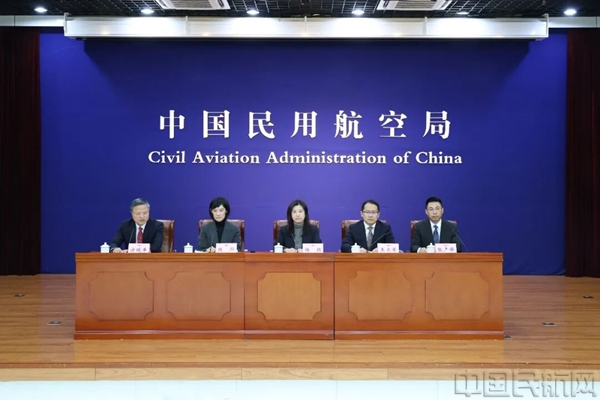
民航局解读新修订民用航空法:全维度完善民航法治体系 为行业高质量发展护航
Zhong Guo Min Hang Wang· 2026-01-19 13:05
Core Viewpoint - The newly revised Civil Aviation Law of the People's Republic of China, consisting of 16 chapters and 262 articles, will take effect on July 1, 2026, and aims to enhance flight safety, passenger rights, and industry development [1][3]. Group 1: Flight Safety and Management - The revision strengthens flight safety and operational safety through improved airworthiness management and the establishment of a dedicated chapter on civil aviation security [3]. - It optimizes the entry conditions for transport and general aviation enterprises and increases penalties for violations [3][4]. Group 2: Industry Development - The law supports the development of new business models in general aviation and low-altitude economy, simplifying approval processes and enhancing resource allocation [3][4]. - A new chapter on "Development Promotion" outlines policies to support the civil aviation manufacturing industry, key technology research, and international cooperation [3]. Group 3: Passenger Rights Protection - The law introduces a dedicated chapter on passenger rights protection, systematizing and legalizing previous regulations [4]. - It mandates airlines to improve transport contract terms, enhance personal information protection, and optimize processes for handling flight delays or cancellations [3][4]. Group 4: Regulatory Improvements - The law encourages innovative regulatory methods using big data and emphasizes strict penalties for actions that threaten aviation safety and passenger rights [3][4]. - It expands the types and scope of administrative penalties to enhance legal deterrence [3]. Group 5: Airport Management - The revision establishes a structured legal framework for airports, categorizing them into general provisions, transport airports, and general airports [7]. - It recognizes civil airports as public infrastructure and outlines responsibilities for various stakeholders in airport construction and operation [7].

中国修改民用航空法 促进民航领域国际合作和对外开放
Zhong Guo Xin Wen Wang· 2025-12-27 09:02
Core Viewpoint - The revised Civil Aviation Law in China, effective from July 1, 2026, aims to enhance international cooperation and openness in the civil aviation sector, providing institutional guarantees and policy support for the industry's development [1][2]. Group 1: International Cooperation and Market Openness - The new law emphasizes equal benefit and win-win cooperation, promoting international collaboration in civil aviation and participation in the formulation of international aviation standards [1]. - It aims to advance high-level openness in the civil aviation transport market and enhance international competitiveness, including provisions for opening air rights based on agreements with foreign governments [1]. Group 2: Low-altitude Economy Development - The law includes multiple institutional arrangements for the development of the low-altitude economy, clarifying the national policy direction to promote this sector [1]. - It mandates measures to optimize low-altitude airspace resource allocation and the establishment of regulatory service platforms for civil low-altitude flight and applications [1]. Group 3: Aviation Safety and Passenger Rights - The revised law strengthens civil aviation safety assurance systems, granting captains the authority to take necessary measures in special circumstances [2]. - It includes a dedicated chapter on safety management responsibilities, security checks, and the formulation and filing of safety plans, prohibiting actions that jeopardize civil aviation transport safety [2]. - Passenger rights protection is highlighted, requiring airlines and airport operators to minimize delays or cancellations due to their own reasons and to enhance communication regarding ticket changes and accommodation arrangements for affected passengers [2].
加强旅客权益保障
Xin Lang Cai Jing· 2025-12-22 18:17
Core Viewpoint - The draft amendment of the Civil Aviation Law has been submitted for the third review, focusing on enhancing passenger rights protection and addressing issues related to flight delays and cancellations [1] Group 1: Passenger Rights Protection - The third draft includes new provisions aimed at strengthening the protection of passenger rights, particularly concerning flight delays and cancellations [1] - Public air transport enterprises and airport operators are required to reasonably arrange capacity and allocate resources to minimize delays or cancellations caused by their own reasons [1] - There is an obligation for public air transport enterprises and airport operators to promptly and accurately inform passengers about the reasons for flight delays or cancellations and provide updates on flight status [1] Group 2: Aviation Safety Assurance - The draft also stipulates that when the safety operation assurance capability of air transport enterprises or civil airports is insufficient, they may take appropriate measures [1]